Physiology
Exercise physiology — how the body responds and adapts to training stress.

Muscle Damage and Repair Mechanisms — The Cellular Biology of Recovery
Explains the cellular biology of muscle damage and repair in footballers, from mechanical disruption through inflammation to satellite-cell regeneration.
Read More →
Exercise Immunology in Football — Managing the Open Window
Explains the immunology behind footballers' infection risk, covering the open-window effect, salivary IgA monitoring and stress-driven immune suppression.
Read More →
Diversity and Population Differences in Football Science — Rethinking Universal Norms
Explores how ancestry-linked traits like heat tolerance and sickle cell trait shape football performance and risk, questioning uniform fitness norms.
Read More →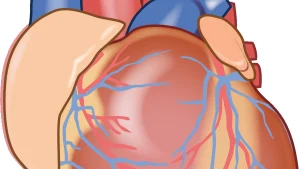
Long-Term Cardiac Adaptations in Football — From the Athlete’s Heart to Arrhythmia Risk
Traces football's cardiac adaptations from the beneficial athlete's heart to the arrhythmia risk now emerging in some former players.
Read More →
Inflammatory Biomarkers and Training Load — Translating Immunology to Football Practice
Traces the inflammatory cascade triggered by training, from early cytokine release to later repair, and how markers inform load monitoring.
Read More →
Travel, Jet Lag, and Football Performance — Managing Circadian Disruption
Explains the circadian biology behind jet lag, why eastward and westward travel differ in impact, and how clubs manage disruption around fixtures.
Read More →
Metabolomics in Sport Science — Reading the Metabolic Signature of Football Performance
Introduces metabolomics as a way to read the full metabolic state behind football performance, beyond single biomarkers, and its early uses.
Read More →
Muscle Architecture and Football Performance — Why Structure Determines Function
Explains how fascicle length and pennation angle, measured by ultrasound, shape the force-speed trade-off and inform training design.
Read More →
Epigenetics and Training Adaptation — How Exercise Rewrites the Genome Without Changing DNA
Explains how training alters gene expression without changing DNA, through mechanisms like methylation, shaping long-term adaptation to exercise.
Read More →
Genetics and Football Performance — What DNA Can and Cannot Tell Us
Genetics and football performance: what direct-to-consumer DNA testing can and cannot tell athletes.
Read More →We use cookies to improve your experience and measure traffic. Google Analytics and any future advertising cookies only run after you accept. Privacy Policy