Preview
Hüseyin Akbulut, MSc (2026). Performance Routines: Switching the Brain into Competition Mode. Sporeus. Retrieved, November 22, 2026. https://sporeus.com/en/science/pre-performance-routines-psychology/
Before every serve Rafael Nadal adjusts his shorts, shirt and hair in the same order and bounces the ball several times. Michael Phelps listened to music on his headphones and swung his arms in the same way before his races. Jonny Wilkinson took the same steps and brought his hands together in the same way before every goal kick. These routines are not superstition. There is a solid neuropsychological mechanism behind them, and sport psychology has studied it for decades.
Table of Contents
What Is a Routine, and How Does It Differ from a Ritual?
A pre-performance routine (PPR) is a consistent, deliberate sequence of behaviours and thoughts carried out just before a competition or a critical performance attempt. Its essential difference from superstition or ritual is that a routine is functional: its purpose is to optimise the athlete’s psychological and physiological state. A ritual rests on a symbolic or magical connection, and its justification comes from belief rather than function.
Routines include behavioural components (warm-up movements, equipment checks, a set order) and psychological components (self-talk statements, visualisation, a breathing protocol). The combination of the two produces the strongest effect.
The Neural Mechanism: Why Does the Brain Like Routines?
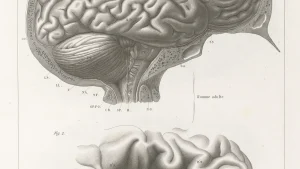
Routine behaviours are encoded in automatic processing pathways in which the basal ganglia play a central role. A routine reinforced by repetition lets the nervous system switch into a familiar, predictable circuit. Its contribution to performance works through several mechanisms:
- Attentional focus: the routine directs attention to tasks one after another, filtering out irrelevant stimuli and reducing noise.
- Buffering anxiety: following a familiar sequence strengthens the sense of control. Uncertainty is one of the strongest triggers of anxiety, and a routine turns uncertainty into structure.
- Optimal arousal: the routine acts as a personalised tool for reaching the individual zone of optimal functioning (IZOF, in Turkish). Some athletes need calming routines, others activating ones.
- A mental link with past success: the same routine activates the same neural networks. Because those networks are associated with earlier successful performances, the routine becomes a trigger for confidence.
How to Design an Effective Pre-performance Routine
| Phase | Timing | Content | Purpose |
|---|---|---|---|
| Physical preparation | 45 to 60 min before competing | Warm-up, equipment preparation, food and drink | Optimal physical state |
| Mental settling | 30 to 45 min before | Music, meditation, isolation or social contact | Adjusting arousal |
| Focus phase | 15 to 20 min before | Visualisation, reviewing strategy, self-talk | Mental preparation, rehearsing the plan |
| Activation | Last 5 to 10 min | Breathing protocol, cue words, a power posture or movement | Final arousal adjustment, locking in focus |
The Habit Loop and Why Routines Last
Charles Duhigg’s habit loop model (cue, routine, reward) explains why pre-performance routines reinforce themselves over time. Stimuli that act as cues (putting on equipment, the music in the changing room, the start of the warm-up) automatically steer the brain into the rest of the routine. A successful performance acts as the reward and strengthens the loop.
The same structure also explains why disrupting a routine causes problems. In unfamiliar settings such as the Olympic Games, with different changing rooms, different timing and different procedures, routines break down. That is why elite athletes make sure their routines depend not on a specific physical setting but on portable cues: a particular piece of music, a set number of breaths, a particular phrase, things that can be done anywhere.
Practical Steps to Build a Routine
Developing a personal pre-performance routine takes trial and error. The first step is to map current behaviour: what do you do, think and feel before you compete? On that base, add components deliberately, test them in low-pressure settings and revise them based on feedback. This cyclical process produces a routine that is individual and evidence-based.
A routine is the bridge that carries preparation into the moment of competition. Building it means winning an important part of the race before it starts.
References
- Cotterill S. (2010). Pre-performance routines in sport: current understanding and future directions. International Review of Sport and Exercise Psychology, 3(2): 132-153. doi:10.1080/1750984X.2010.488269
- Rupprecht AGW, Tran US, Gröpel P. (2021). The effectiveness of pre-performance routines in sports: a meta-analysis. International Review of Sport and Exercise Psychology. doi:10.1080/1750984X.2021.1944271
- Duhigg C. (2012). The Power of Habit: Why We Do What We Do in Life and Business. New York: Random House. ISBN 978-1400069286

Hüseyin Akbulut is the founder of Sporeus and author of THRESHOLD (EŞİK), a 540-page Turkish-language book on endurance science.
- 540pp THRESHOLD Book
- MSc Sport Sciences
- Marmara University
What Is a Routine, and How Does It Differ from a Ritual?
A pre-performance routine (PPR) is a consistent, deliberate sequence of behaviours and thoughts carried out just before a competition or a critical performance attempt. Its essential difference from superstition or ritual is that a routine is functional: its purpose is to optimise the athlete's psychological…
The Neural Mechanism: Why Does the Brain Like Routines?
Routine behaviours are encoded in automatic processing pathways in which the basal ganglia play a central role. A routine reinforced by repetition lets the nervous system switch into a familiar, predictable circuit. Its contribution to performance works through several mechanisms:
How to Design an Effective Pre-performance Routine PhaseTimingContentPurpose Physical preparation45 to 60 min before competingWarm-up, equipment preparation, food and drinkOptimal physical state Mental settling30 to 45 min beforeMusic, meditation, isolation or social contactAdjusting arousal Focus phase15 to 20 min beforeVisualisation, reviewing strategy, self-talkMental preparation, rehearsing the plan ActivationLast 5 to 10 minBreathing protocol, cue words, a power posture or movementFinal arousal adjustment, locking in focus The Habit Loop and Why Routines Last
Charles Duhigg's habit loop model (cue, routine, reward) explains why pre-performance routines reinforce themselves over time. Stimuli that act as cues (putting on equipment, the music in the changing room, the start of the warm-up) automatically steer the brain into the rest of the routine.…
Practical Steps to Build a Routine
Developing a personal pre-performance routine takes trial and error. The first step is to map current behaviour: what do you do, think and feel before you compete? On that base, add components deliberately, test them in low-pressure settings and revise them based on feedback. This…