Preview
Hüseyin Akbulut, MSc (2026). Cryotherapy for Athletes: Separating Evidence from Marketing. Sporeus. Retrieved, September 25, 2026. https://sporeus.com/en/sport/cryotherapy-evidence-review/
Cryotherapy for Athletes: Separating Evidence from Marketing
Cold therapy has been used in sport for decades, from a bag of ice on a swollen ankle to elaborate whole-body cryotherapy chambers promising accelerated recovery, reduced inflammation, and performance enhancement. The global cryotherapy market has grown rapidly, with commercial cold therapy centers springing up near training facilities worldwide. But what does the peer-reviewed evidence actually show? The answer requires separating three distinct modalities — cold water immersion, ice application, and whole-body cryotherapy — and examining the specific evidence for each, including the increasingly uncomfortable question of whether cold therapy blunts long-term adaptation.
Table of Contents
Cold Water Immersion: The Most Studied Modality
Cold water immersion (CWI), or ice baths, is the most extensively researched form of cryotherapy in sport. The typical protocol involves full-body immersion (waist to neck) in water at 10–15°C for 10–15 minutes post-exercise.
The proposed mechanisms are multiple: vasoconstriction reduces blood flow and edema, cold reduces nerve conduction velocity (reducing pain perception), hydrostatic pressure may enhance lymphatic drainage, and the temperature gradient affects metabolic waste clearance. In practice, meta-analyses show consistent evidence for specific outcomes:
| Outcome | Evidence | Effect Size |
|---|---|---|
| Delayed onset muscle soreness (DOMS) reduction | Strong | Moderate — approximately 20–30% less soreness 24–72h post-exercise |
| Perceived recovery | Strong | Consistently improved subjective wellbeing |
| Creatine kinase reduction | Moderate | Inconsistent across studies; effect likely modest |
| Performance recovery (repeated sprints next day) | Moderate | Small but consistent improvement vs. passive rest |
| Inflammation markers (CRP, IL-6) | Moderate | Reduced acutely, but significance unclear |
| Aerobic performance recovery | Moderate | Beneficial in repeated-day scenarios (e.g., tournament play) |
CWI appears most beneficial in scenarios requiring repeated performance across consecutive days — tournament formats, multi-day cycling races, or back-to-back training sessions — where blunting acute soreness and improving subjective recovery has genuine practical value for the next day’s performance.
The Adaptation Blunting Problem
The most significant controversy in cryotherapy research is not whether it reduces soreness — it does — but whether chronic use impairs training adaptation. This concern is supported by multiple lines of evidence.
Cold application post-exercise attenuates the inflammatory response that is partly responsible for driving long-term adaptations. Satellite cell activation, mTORC1 signaling, and mitochondrial biogenesis are all partially modulated by the local inflammation that follows hard training. Cold immersion that reduces this inflammation also appears to reduce some downstream adaptive signals.
A landmark study by Llion Roberts and colleagues (2015) found that athletes who performed 12 weeks of resistance training followed by CWI gained significantly less muscle mass and strength than those who performed active recovery. Satellite cell accumulation and muscle fiber hypertrophy were both impaired in the cold group.
For endurance adaptations, the picture is more complex. Some studies suggest CWI impairs mitochondrial biogenesis when used routinely after endurance training, while others show no effect. The dose-dependence (how often cold is applied per week) appears critical but is not yet well-characterized.
The practical implication: CWI should be used selectively — prioritized when next-day performance matters (competition windows, tournaments) and avoided during high-adaptation training blocks where maximizing the training stimulus is the goal. Using cold therapy every day after every session is likely counterproductive for long-term development.
Whole-Body Cryotherapy: The Chamber Experience
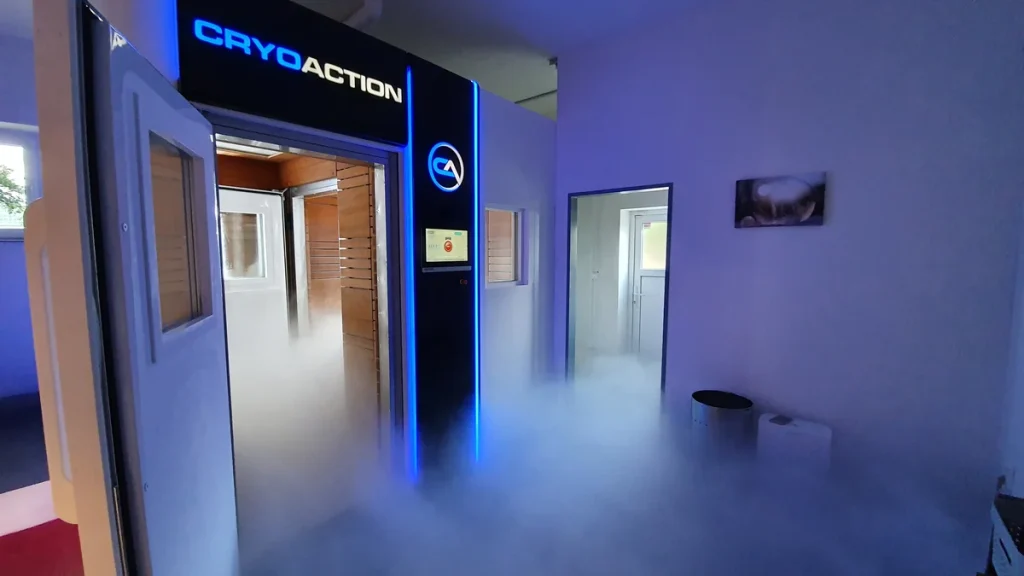
Whole-body cryotherapy (WBC) involves brief exposure (2–4 minutes) to extremely cold air (−100°C to −160°C) in a cryotherapy chamber. The marketing surrounding WBC chambers is often extravagant, promising benefits ranging from rapid recovery to anti-aging to mental health improvement.
The evidence base for WBC is considerably thinner than for CWI. A 2017 Cochrane Review examining WBC for preventing and treating muscle soreness after exercise concluded that there was “insufficient high-quality evidence to draw conclusions.” More recent reviews have been similarly cautious.
- Core body temperature changes minimally during 3-minute WBC (skin temperature falls dramatically, but core temperature changes by only 0.5–1°C), calling into question whether WBC produces the same physiological effects as sustained CWI.
- Subjective recovery benefits are consistently reported in WBC studies, but distinguishing placebo effects from genuine physiological effects is methodologically challenging in unblinded trials.
- WBC costs 10–20 times more per session than a home ice bath, with no evidence of superior outcomes.
- Serious adverse events (frostbite, asphyxiation from liquid nitrogen exposure) have been documented in poorly regulated facilities.
Practical Recommendations
A rational cryotherapy protocol for athletes should reflect the evidence rather than marketing:
- Use CWI (10–15 minutes at 10–15°C) selectively after competitions or during tournament periods when repeated-day performance is required.
- Avoid routine post-training CWI during strength or hypertrophy training blocks where maximizing adaptation is the priority.
- An effective ice bath requires no facility investment — a household bathtub with ice achieves the same temperature as commercial ice baths at a fraction of the cost.
- Whole-body cryotherapy chambers are not supported by evidence sufficient to justify their cost premium over CWI.
- The subjective wellbeing improvements from cold therapy are real and should not be dismissed — psychological recovery has performance value. But athletes should understand this is the primary documented benefit, not a dramatic physiological repair.
Cold therapy is a useful, selectively applied recovery tool — not the transformation catalyst that commercial providers suggest. The science supports ice baths as a practical, affordable DOMS and subjective recovery intervention within a periodized recovery framework that also protects training adaptation.
References
- Roberts LA, Raastad T, Markworth JF, et al. (2015). Post-exercise cold water immersion attenuates acute anabolic signalling and long-term adaptations in muscle to strength training. The Journal of Physiology, 593(18): 4285-4301. doi:10.1113/JP270570
- Costello JT, Baker PRA, Minett GM, Bieuzen F, Stewart IB, Bleakley C. (2015). Whole-body cryotherapy (extreme cold air exposure) for preventing and treating muscle soreness after exercise in adults. Cochrane Database of Systematic Reviews, (9): CD010789. doi:10.1002/14651858.CD010789.pub2
- Bleakley C, McDonough S, Gardner E, Baxter GD, Hopkins JT, Davison GW. (2012). Cold-water immersion (cryotherapy) for preventing and treating muscle soreness after exercise. Cochrane Database of Systematic Reviews, (2): CD008262. doi:10.1002/14651858.CD008262.pub2
Cold Water Immersion: The Most Studied Modality
Cold water immersion (CWI), or ice baths, is the most extensively researched form of cryotherapy in sport. The typical protocol involves full-body immersion (waist to neck) in water at 10–15°C for 10–15 minutes post-exercise.
The Adaptation Blunting Problem
The most significant controversy in cryotherapy research is not whether it reduces soreness — it does — but whether chronic use impairs training adaptation. This concern is supported by multiple lines of evidence.
Whole-Body Cryotherapy: The Chamber Experience
Whole-body cryotherapy (WBC) involves brief exposure (2–4 minutes) to extremely cold air (−100°C to −160°C) in a cryotherapy chamber. The marketing surrounding WBC chambers is often extravagant, promising benefits ranging from rapid recovery to anti-aging to mental health improvement.
Practical Recommendations
A rational cryotherapy protocol for athletes should reflect the evidence rather than marketing: