Preview
Hüseyin Akbulut, MSc (2026). Football Neuroscience: How the Brain Controls Movement and Learning. Sporeus. Retrieved, November 1, 2026. https://sporeus.com/en/psychology/football-neuroscience-brain-movement-learning/
Introduction
Every technical action in football: a first touch, a turn, a shot, is controlled by the brain. The speed, accuracy, and automaticity of these actions depend on how the nervous system has been structured by years of practice. Neuroscience has revealed that football skill is not stored in muscles but in neural circuits: dense, myelinated pathway networks that become faster and more accurate through deliberate repetition. Understanding the neurological basis of football skill acquisition, and what training conditions most effectively drive neural adaptation, is the most fundamental scientific basis for technical coaching.
Table of Contents
The Science
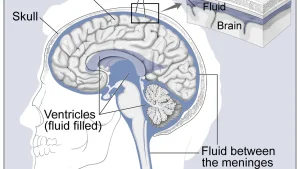
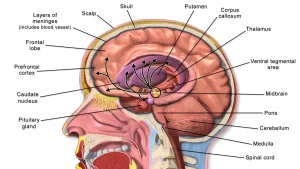
Motor learning occurs through the formation and strengthening of neural circuits across three brain regions:
Motor cortex (primary and premotor): Plans, initiates, and executes voluntary movement. Repeated accurate execution of a movement pattern consolidates the motor cortical representation of that pattern, the neural equivalent of a well-worn path becoming a motorway. Cortical representations are “use-dependent”, they strengthen with practice and weaken with disuse.
Cerebellum: The brain’s movement accuracy computer. Receives copies of intended movement signals from the motor cortex, compares actual sensory feedback with predicted feedback, and generates error signals that refine subsequent execution. The cerebellum is responsible for the smooth, precise execution of complex movements, particularly those requiring timing and coordination. Cerebellar learning is slow (requires thousands of repetitions) but produces extremely durable, automatised skills.
Basal ganglia: Involved in action selection and habit formation. Selects which motor programmes to execute from stored repertoires and suppresses competing alternatives. Basal ganglia circuits convert deliberate, attentionally demanding movement into automatic, low-cognitive-load execution, the transition from novice to expert performance.
Myelination is the key structural change underlying skill development: myelin sheaths around axons (produced by oligodendrocytes, stimulated by repeated electrical activity) increase neural conduction velocity by up to 100×. Practising a skill fires specific circuits; myelin wraps these circuits; subsequent activations are faster and more reliable. This is the molecular basis of “practice makes perfect”, more precisely, structured, high-quality practice creates myelinated circuits, and myelin is the physical substrate of expertise.
Neuroplasticity in learning: The brain regions controlling skills (motor cortex representation area, cerebellar circuits) are measurably larger in experienced players compared to age-matched non-players. These structural differences emerge over years of deliberate practice.
What Research Says
Wright et al. (2013) demonstrated, using functional MRI, that expert football players showed significantly different brain activation patterns during visual observation of football-specific scenes compared to novices, with experts activating motor planning regions and cerebellar circuits, while novices primarily activated only visual processing areas. The expert brain is “running simulations” of actions while observing them; the novice brain is only seeing.
Yarrow et al. (2009) published a comprehensive review in Nature Reviews Neuroscience of the neural basis of expert athletic performance, confirming the role of superior perceptual anticipation, superior motor imagery capacity, and reduced prefrontal involvement (less conscious deliberation) in expert performers. The shift from prefrontal (deliberate) to cerebellar/basal ganglia (automatic) control is the neural signature of expertise.
Scholz et al. (2009) demonstrated via diffusion tensor MRI that individuals who improved their juggling skill over 6 weeks showed measurable increases in white matter (myelinated axon tracts) in posterior parietal cortex, confirming that even short-term motor skill learning produces detectable structural brain changes. If 6 weeks of juggling restructures the brain, the cumulative effects of 10,000 hours of deliberate football practice are profound.
Did You Know? Research on footballers’ brains at elite development academies shows that players who began technical training before age 12 show superior motor cortex representation of football-specific movements compared to equally experienced players who began training later. The “critical window” for establishing the densest, most efficient neural circuits for technical football skills overlaps with the primary skill acquisition age (8–13 years) identified in talent development research, a convergence of neuroscience and practice theory that reinforces why early technical experience matters.
Applied to Football
Neuroscience-informed coaching for skill development:
- High repetition, variable context. Myelination requires repeated activation, but variable practice (different angles, speeds, and game contexts for the same skill) builds more adaptive circuits than blocked practice (repeating the exact same situation). Vary drill conditions while maintaining high repetition volume.
- Eliminate punishment for errors during technical learning. Error signals from the cerebellum are the necessary learning mechanism. Environments where errors are punished create anxiety that activates the amygdala, disrupting the prefrontal-cerebellar circuits needed for learning. Correct, don’t punish.
- Use sleep as a learning tool. Motor memories consolidate during sleep, a slow-wave sleep process in which the day’s practiced movements are strengthened in the hippocampus and transferred to cortical circuits. Post-training sleep accelerates skill retention. Evening technical sessions (followed by sleep) show superior next-day retention compared to morning sessions.
- Limit verbal instructions during performance. Verbal coaching activates prefrontal (deliberate) processing that competes with automatic cerebellar/motor circuit activation. Reserve corrections for between-drill periods, not during execution. External focus cues (Article 21) activate the correct circuits; internal focus cues (thinking about mechanics) activate the wrong ones.
- Develop motor imagery practice. Players who mentally rehearse skills (imagining executing a pass, a shot, a defensive movement with full perceptual detail) show detectable neural circuit strengthening in imaging studies. Incorporate 5–10 minutes of structured mental rehearsal before technical sessions, it is not mysticism; it is cerebellar circuit pre-activation.
The Short Version
- Football skill is stored in neural circuits (motor cortex, cerebellum, basal ganglia), not muscles
- Myelination: insulating neural axons, is the physical basis of expertise; it requires thousands of high-quality repetitions
- Expert players activate motor simulation regions when observing football; novices only activate visual areas
- Variable practice (changing context for the same skill) builds more adaptable circuits than blocked practice
- Sleep consolidates motor memories: evening technical training with subsequent sleep produces superior retention
References
- Yarrow, K., Brown, P., & Krakauer, J. W. (2009). Inside the brain of an elite athlete: the neural processes that support high achievement in sports. Nature Reviews Neuroscience, 10(8), 585–596.
- Scholz, J., Klein, M. C., Behrens, T. E. J., & Johansen-Berg, H. (2009). Training induces changes in white-matter architecture. Nature Neuroscience, 12(11), 1370–1371.
- Wright, M. J., Bishop, D. T., Jackson, R. C., & Abernethy, B. (2013). Brain regions concerned with the identification of deceptive soccer moves by higher-skilled and lower-skilled players. Frontiers in Human Neuroscience, 7, 851.
Next in Series: Blood Flow Restriction Training: The High-Efficiency Rehabilitation Tool

Hüseyin Akbulut is the founder of Sporeus and author of THRESHOLD (EŞİK), a 540-page Turkish-language book on endurance science.
- 540pp THRESHOLD Book
- MSc Sport Sciences
- Marmara University
Introduction
Every technical action in football: a first touch, a turn, a shot, is controlled by the brain. The speed, accuracy, and automaticity of these actions depend on how the nervous system has been structured by years of practice. Neuroscience has revealed that football skill is…
The Science
Motor learning occurs through the formation and strengthening of neural circuits across three brain regions:
What Research Says
Wright et al. (2013) demonstrated, using functional MRI, that expert football players showed significantly different brain activation patterns during visual observation of football-specific scenes compared to novices, with experts activating motor planning regions and cerebellar circuits, while novices primarily activated only visual processing areas. The…
Applied to Football
Neuroscience-informed coaching for skill development: