Preview
Hüseyin Akbulut, MSc (2026). ACL Injury Biomechanics: Why Certain Movements Cause Rupture and How to Prevent Them. Sporeus. Retrieved, November 22, 2026. https://sporeus.com/en/sport/acl-biomechanics-injury-prevention-football/
Introduction
ACL rupture is one of football’s most serious injuries: a typical absence of 9 to 12 months, surgical reconstruction, intensive rehabilitation and a persistent risk of reinjury. Despite decades of research, ACL injury rates in professional football have not fallen convincingly, and female footballers suffer ACL injuries at roughly two to eight times the rate of male players at equivalent levels. Understanding the biomechanical mechanisms of ACL injury, and the neuromuscular risk factors that can be modified, is the foundation of effective prevention.
Table of Contents
The Science
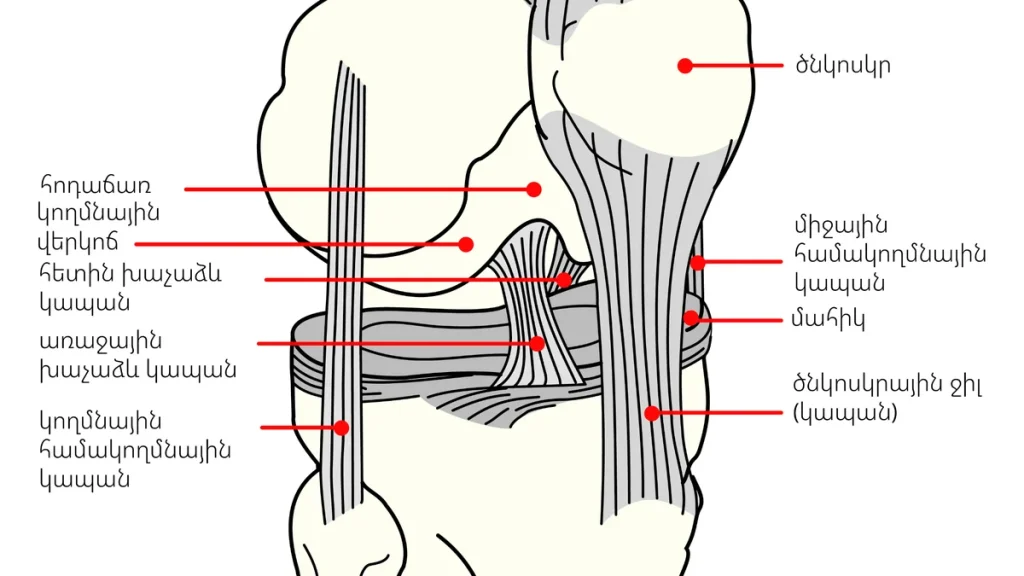
ACL anatomy and function: the anterior cruciate ligament is an intra-articular ligament running from the lateral femoral condyle to the front of the tibial plateau. Its primary function is to resist anterior translation and internal rotation of the tibia, and it contains mechanoreceptors that contribute to knee proprioception. ACL strain is highest with the knee close to full extension, especially when anterior shear, valgus and internal rotation loads combine: exactly the loading pattern of cutting, landing and deceleration in football.
Injury mechanisms: roughly 70% or more of ACL injuries in football occur through non-contact or indirect-contact mechanisms:
- Cutting: a single-leg cut at high speed generates knee valgus and tibial internal rotation; if the neuromuscular system fails to control these forces, ACL strain can exceed the ligament’s capacity.
- Landing: a single-leg or asymmetric landing with the knee nearly straight produces a quadriceps-dominant force that pulls the tibia forward and loads the ACL.
- Deceleration: stopping abruptly from high speed while pivoting produces the same valgus and internal rotation pattern.
Modifiable risk factors:
- Quadriceps dominance: a high ratio of quadriceps to hamstring activation during landing and cutting. The hamstrings co-contract to protect the ACL by resisting anterior tibial translation; poor hamstring recruitment leaves the ligament exposed.
- Dynamic knee valgus: excessive inward collapse of the knee during landing or cutting concentrates stress on the ACL. Contributors include hip abductor and external rotator weakness, limited hip control, foot pronation and neuromuscular control deficits.
- Landing technique: a stiff landing (upright trunk, knee nearly straight at initial contact) produces higher peak joint loads than a soft landing with the hip and knee flexed.
- Female-specific factors: hormonal influences on ligament laxity, a narrower intercondylar notch, differences in lower limb alignment and differences in neuromuscular activation all appear to contribute to the higher ACL injury rate in women.
The FIFA 11+: the most evidence-supported injury prevention warm-up in football. It is a structured warm-up of about 20 minutes that replaces the standard warm-up and contains strength, balance and landing mechanics components aimed at the modifiable risk factors above.
What Research Says
In a prospective study in the American Journal of Sports Medicine, Hewett and colleagues (2005) showed that the knee abduction (valgus) moment during a drop-jump landing, measured with 3D motion analysis, predicted subsequent ACL injury in female athletes with 78% sensitivity and 73% specificity. This made valgus mechanics a primary screening target.
Myklebust and colleagues (2003) carried out one of the first large ACL prevention trials, in Norwegian female team handball. The overall fall in ACL injuries did not reach statistical significance, but in the elite division the players who completed the neuromuscular training programme had a substantially lower risk than those who did not. The study laid the groundwork for neuromuscular ACL prevention, and it also showed how much depends on compliance.
In their cluster-randomised trial in the BMJ, Soligard and colleagues (2008) found that young female footballers in Norway whose teams used the FIFA 11+ programme had about 32% fewer injuries overall and about 45% fewer severe injuries over one season than teams doing their usual warm-up.
Did You Know? Despite strong evidence for the FIFA 11+ and similar neuromuscular warm-ups, adherence in football is often low; in the Norwegian handball trial only a minority of teams followed the programme well. The gap between evidence and practice in ACL prevention is not mainly a research problem. It is an implementation problem: finding the time, teaching coaches to deliver the programme correctly and keeping adherence up across a whole season.
Applied to Football
Implementing ACL prevention:
- Replace the standard warm-up with the FIFA 11+. At all levels, ages and in both sexes. Around 20 minutes is the investment; few other single interventions have comparable evidence.
- Add drop-jump screening. Observe knee valgus at initial contact in a bilateral drop jump from a box. Players with clear dynamic valgus are the priority for specific valgus control work.
- Make hip strength a fixed part of strength training. Single-leg squats, lateral band walks and similar exercises: hip abductor and external rotator strength is a key contributor to dynamic knee valgus control.
- Coach landing mechanics in every jumping drill. A soft landing (flexed knee and hip, controlled trunk, active glutes) is a teachable skill. Do not let players land stiff-legged without correction: the habit forms in training before it fails in a match.
- Prioritise hamstring strength, especially in female players. The Nordic hamstring curl or equivalent eccentric hamstring loading belongs in every programme. A low hamstring-to-quadriceps strength ratio is a commonly used risk marker that justifies targeted work.
Key Takeaways
- Most ACL injuries in football are non-contact: biomechanics and neuromuscular control are the main modifiable risk factors.
- The knee valgus moment during landing predicted ACL injury with 78% sensitivity in a prospective study of female athletes.
- The FIFA 11+ reduced overall injuries by about a third and severe injuries by almost half in young female footballers.
- Quadriceps dominance, hip weakness and stiff landing mechanics are the modifiable risk factors.
- Female players have a two- to eight-fold higher ACL injury rate; hormonal, anatomical and neuromuscular factors contribute, and prevention programmes work in female players.
References
- Hewett, T. E., Myer, G. D., Ford, K. R., Heidt, R. S., Colosimo, A. J., McLean, S. G., van den Bogert, A. J., Paterno, M. V., & Succop, P. (2005). Biomechanical measures of neuromuscular control and valgus loading of the knee predict anterior cruciate ligament injury risk in female athletes: a prospective study. American Journal of Sports Medicine, 33(4), 492–501.
- Soligard, T., Myklebust, G., Steffen, K., Holme, I., Silvers, H., Bizzini, M., Junge, A., Dvorak, J., Bahr, R., & Andersen, T. E. (2008). Comprehensive warm-up programme to prevent injuries in young female footballers: cluster randomised controlled trial. BMJ, 337, a2469.
- Myklebust, G., Engebretsen, L., Brækken, I. H., Skjølberg, A., Olsen, O. E., & Bahr, R. (2003). Prevention of anterior cruciate ligament injuries in female team handball players: a prospective intervention study over three seasons. Clinical Journal of Sport Medicine, 13(2), 71–78.

Hüseyin Akbulut is the founder of Sporeus and author of THRESHOLD (EŞİK), a 540-page Turkish-language book on endurance science.
- 540pp THRESHOLD Book
- MSc Sport Sciences
- Marmara University
Introduction
ACL rupture is one of football's most serious injuries: a typical absence of 9 to 12 months, surgical reconstruction, intensive rehabilitation and a persistent risk of reinjury. Despite decades of research, ACL injury rates in professional football have not fallen convincingly, and female footballers suffer…
The Science
ACL anatomy and function: the anterior cruciate ligament is an intra-articular ligament running from the lateral femoral condyle to the front of the tibial plateau. Its primary function is to resist anterior translation and internal rotation of the tibia, and it contains mechanoreceptors that contribute…
What Research Says
In a prospective study in the American Journal of Sports Medicine, Hewett and colleagues (2005) showed that the knee abduction (valgus) moment during a drop-jump landing, measured with 3D motion analysis, predicted subsequent ACL injury in female athletes with 78% sensitivity and 73% specificity. This…
Applied to Football
Implementing ACL prevention: