Preview
Hüseyin Akbulut, MSc (2026). Kilian Jornet and the Fat-Oxidation Capacity of an Elite Ultra-Trail Athlete. Sporeus. Retrieved, October 2, 2026. https://sporeus.com/en/science/kilian-jornet-ultra-endurance-fat-oxidation-capacity/
The Athlete in One Paragraph
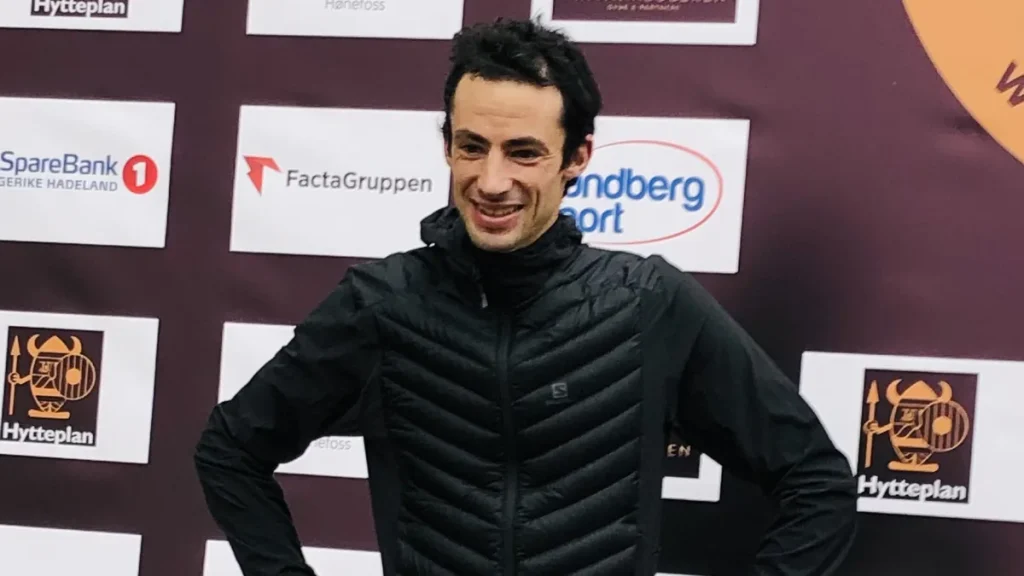
Kilian Jornet (b. 1987-10-27, Sabadell, Catalonia, Spain) is an ultra-trail runner and ski-mountaineer whose racing record across UTMB, Hardrock, the Skyrunner World Series, and the high-altitude objectives of Everest and Denali has redefined the upper bound of human mountain endurance. Listed at 1.71 m and roughly 57 kg, he carries the canonical mountain-endurance physique — small frame, low fat mass, lean lower-body musculature with disproportionately well-developed calf and ankle complex — into a discipline whose decisive hours sit beyond the time horizon of any traditional aerobic event. The interesting case for sport science is that an ultra-trail event of six hours, twelve hours, or longer is not simply a marathon scaled up; it is a metabolic problem in which carbohydrate availability is exhausted long before the finish line, and the athlete who keeps moving is the athlete whose mitochondria can shift the substrate mix toward fat oxidation at race-relevant intensities. The variable underneath that pattern is fat-oxidation capacity at sub-threshold intensity — the rate at which fatty acids can be mobilised, transported, and oxidised in the working muscle while the athlete is still moving at competitive ultra-pace.
Table of Contents
The Physiology — what fat-oxidation capacity actually means
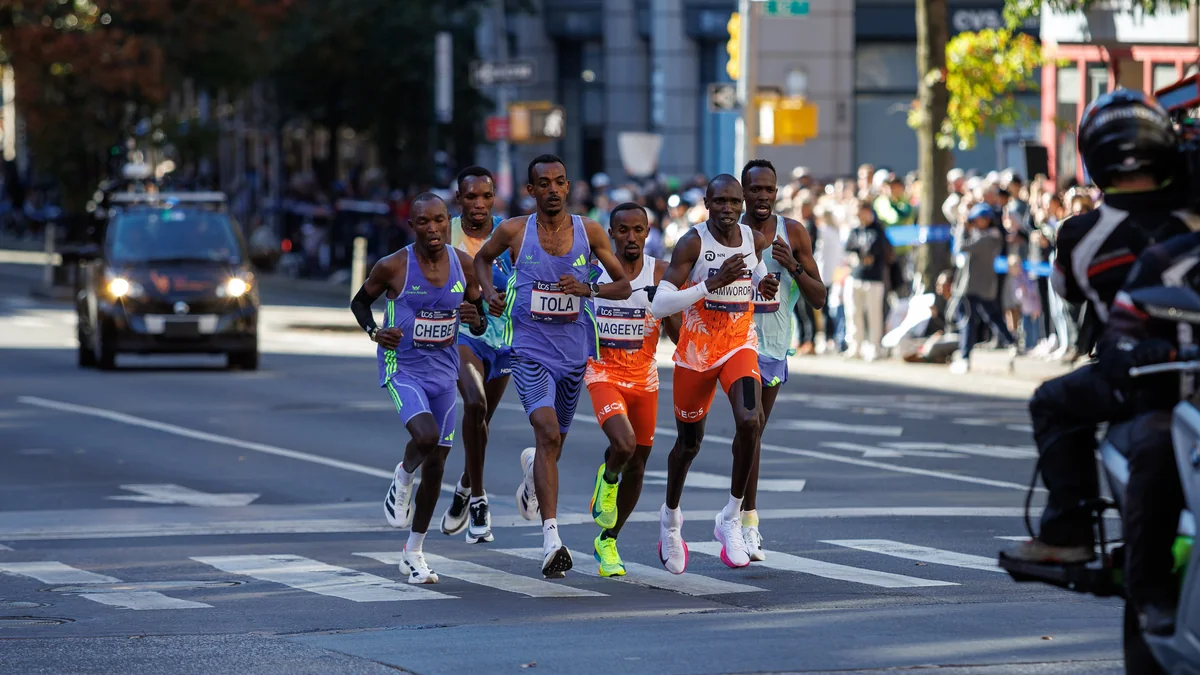
Endurance performance, in the Joyner and Coyle framework, is a multiplicative interaction of VO₂max, lactate threshold, and exercise economy [1]. For events under three hours that framework explains most of the variance; for events of six hours and longer, a fourth factor becomes decisive — the metabolic substrate the working muscle is actually able to burn at the chosen intensity. Total-body carbohydrate stores are bounded; muscle glycogen, liver glycogen, and exogenous in-race intake together cover only a few hours of moderate-to-hard exercise. Beyond that horizon, the athlete who has not trained the fat-oxidation pathway slows; the athlete who has, keeps moving at a closely-related pace.
Fat-oxidation capacity is the integrated output of several sub-systems. Mitochondrial density determines how many oxidative engines are available per unit muscle mass; capillary network density determines how rapidly oxygen and free fatty acids can be delivered to those engines; the enzymatic machinery — beta-oxidation, the carnitine shuttle, the citric-acid cycle and the electron-transport chain — determines the rate at which fat-derived acetyl-CoA can be processed. Saunders and colleagues’ framework for running economy — stride mechanics, tendon stiffness, neuromuscular efficiency, accumulated training history [2] — overlaps significantly with the determinants of long-duration substrate flexibility, because the same mitochondrial-rich slow-twitch fibres that produce economical strides are the fibres that oxidise fat best.
The threshold-based framework still applies to ultra-trail, but the relevant threshold is sub-aerobic — the maximal fat-oxidation rate (FATmax) typically sits well below the lactate threshold, and the ultra-trail athlete spends most of the race close to FATmax rather than close to threshold. Faude and colleagues catalogued the methods used to identify the lactate threshold and showed that the chosen method matters less than the underlying biology [3]; the same logic applies to the fat-oxidation curve, where the substrate-mix crossover point is the meaningful state variable, not the laboratory protocol that estimates it. Helgerud and colleagues’ interval-training work showed that aerobic-system adaptations driven by structured intervals raise the sustainable submaximal velocity in trained athletes [4]; the long, low-intensity volume that ultra-trail athletes accumulate sits below those intervals and drives a different set of mitochondrial and capillary adaptations specifically biased toward fat-oxidation throughput.
The Stølen physiology-of-soccer review, while modality-specific to football, formalises the generalisable principle that endurance performance over multi-hour exposures depends on the cumulative interaction of cardiac, metabolic, and substrate-availability constraints [5]. Ultra-trail athletes operate exactly in this convergence zone for six-plus hours, with the additional load that the terrain itself — vertical gain, technical descents, eccentric quadriceps loading — adds neuromuscular and structural fatigue on top of the metabolic problem.
The Case — Jornet as fat-oxidation lens
Jornet’s race repertoire across the Skyrunner series, UTMB-format ultra-trails, and high-altitude mountaineering objectives is the cleanest applied demonstration of the principle. Ultra-trail outcomes for an athlete of his anthropometry — 1.71 m, ~57 kg, lean — depend disproportionately on the metabolic pivot from carbohydrate-dominant to fat-dominant fuelling, because absolute carbohydrate stores at his body mass are small and cannot be stretched to fill a multi-hour event without substrate-mix flexibility [1, 3]. The athlete who hits the wall in an ultra is not the athlete with too few stores; he is the athlete whose mitochondrial machinery cannot oxidise fat fast enough to defend the race pace once those stores are depleted.
His anthropometry is consistent with the mountain-endurance archetype. Low absolute body mass keeps the climbing-rate cost low on long vertical ascents and keeps the eccentric load on the quadriceps during descents within tolerable bounds; Saunders’ framework of stride mechanics, tendon stiffness, and accumulated training history [2] reads, in a mountain context, as a description of an athlete whose calf-ankle stiffness profile and accumulated volume have shifted his economy toward the technical, undulating terrain that defines ultra-trail.
The race strategy itself is the operational expression of the underlying physiology. An ultra-trail athlete’s pacing — restrained early-event intensity that stays close to FATmax, deliberate downshifting on climbs to keep glycolytic recruitment minimal, conservative carbohydrate intake matched to the actual oxidation rate rather than to the perceived hunger, and a consistent late-event pace that reflects the unbroken fat-oxidation pathway — is not stylistic conservatism; it is the only allocation of a multi-hour metabolic budget that respects the underlying substrate biology when total-body carbohydrate becomes the rate-limiting state variable [3, 4, 5].
(Performance data: ITRA / UTMB)
What This Means for the Reader
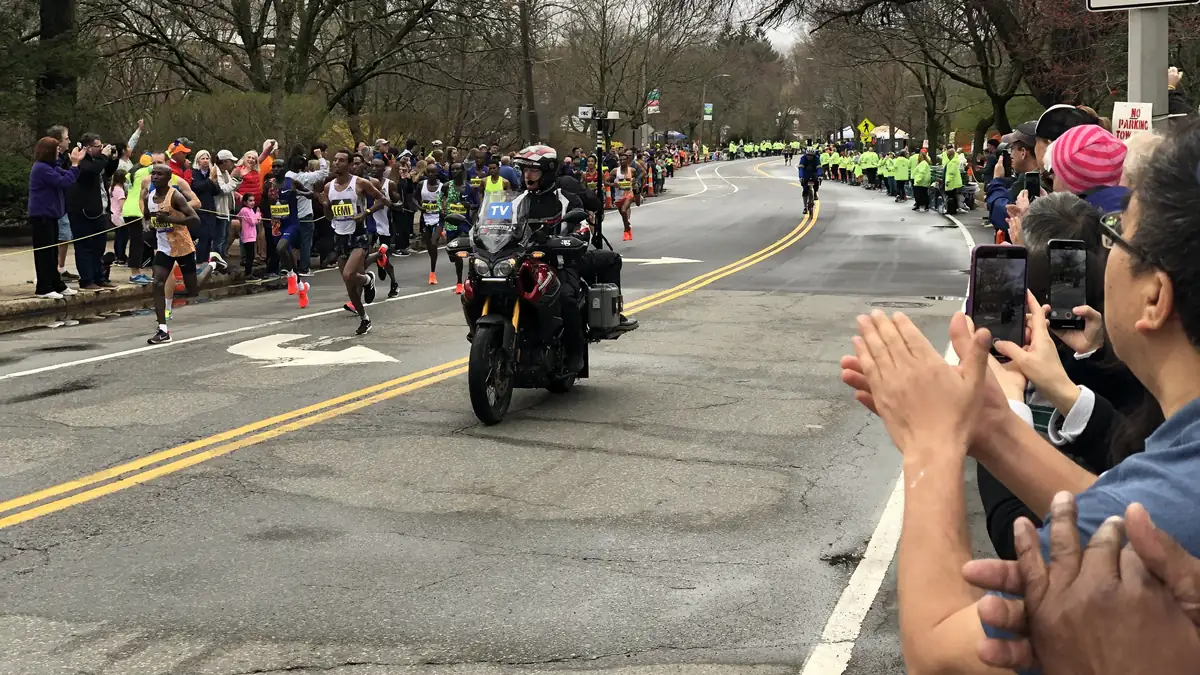
For the developing trail athlete, the takeaway is that the ultra is a substrate-flexibility problem, not just an aerobic-ceiling problem. Many runners moving up from marathon to ultra simply lengthen their long run while keeping the intensity profile constant; the higher-yield block is a long, low-intensity Zone 2 phase — multi-hour, conversational-pace volume specifically below the carbohydrate-dominant intensity — that drives the mitochondrial and capillary adaptations underneath fat-oxidation capacity [4, 5]. The ultra time falls because the substrate pivot is sharper and lower-glycogen-cost, not because the run ceiling rose.
The second implication is fuelling discipline. The athlete who races the first hours of an ultra at marathon-pace intensity converts a larger share of the day’s substrate budget into early-stage glycogen depletion that the late-event fat pathway cannot replace; intentional early-pace conservatism is the only allocation that respects the substrate biology of the events that follow [1, 3]. The fastest runner in the first three hours of an ultra is, very often, not the fastest runner across the line.
The diagnostic question for the athlete: at what intensity, expressed as a heart rate or pace I can sustain for four-plus hours conversationally, does my fat-oxidation rate sit — and is my long-volume training pushing that intensity upward, or am I unconsciously running every long run too hard?
References
- Joyner MJ, Coyle EF. (2008). Endurance exercise performance: the physiology of champions. J Physiology, 586(1): 35–44. doi:10.1113/jphysiol.2007.143834
- Saunders PU, Pyne DB, Telford RD, Hawley JA. (2004). Factors affecting running economy in trained distance runners. Sports Medicine, 34(7): 465–485. doi:10.2165/00007256-200434070-00005
- Faude O, Kindermann W, Meyer T. (2009). Lactate threshold concepts: how valid are they? Sports Medicine, 39(6): 469–490. doi:10.2165/00007256-200939060-00003
- Helgerud J, Engen LC, Wisløff U, Hoff J. (2001). Aerobic endurance training improves soccer performance. MSSE, 33(11): 1925–1931. doi:10.1097/00005768-200111000-00019
- Stølen T, Chamari K, Castagna C, Wisløff U. (2005). Physiology of soccer: an update. Sports Medicine, 35(6): 501–536. doi:10.2165/00007256-200535060-00004
Performance data (descriptive only): ITRA / UTMB.
The Athlete in One Paragraph
Kilian Jornet (b. 1987-10-27, Sabadell, Catalonia, Spain) is an ultra-trail runner and ski-mountaineer whose racing record across UTMB, Hardrock, the Skyrunner World Series, and the high-altitude objectives of Everest and Denali has redefined the upper bound of human mountain endurance. Listed at 1.71 m and…
The Physiology — what fat-oxidation capacity actually means
Endurance performance, in the Joyner and Coyle framework, is a multiplicative interaction of VO₂max, lactate threshold, and exercise economy [1]. For events under three hours that framework explains most of the variance; for events of six hours and longer, a fourth factor becomes decisive —…
The Case — Jornet as fat-oxidation lens
Jornet's race repertoire across the Skyrunner series, UTMB-format ultra-trails, and high-altitude mountaineering objectives is the cleanest applied demonstration of the principle. Ultra-trail outcomes for an athlete of his anthropometry — 1.71 m, ~57 kg, lean — depend disproportionately on the metabolic pivot from carbohydrate-dominant to…
What This Means for the Reader
For the developing trail athlete, the takeaway is that the ultra is a substrate-flexibility problem, not just an aerobic-ceiling problem. Many runners moving up from marathon to ultra simply lengthen their long run while keeping the intensity profile constant; the higher-yield block is a long,…