Preview
Hüseyin Akbulut, MSc (2026). Luka Modrić and the Match-Pacing of an Elite Veteran Midfielder. Sporeus. Retrieved, October 2, 2026. https://sporeus.com/en/science/luka-modric-match-pacing/
The Athlete in One Paragraph
Luka Modrić (b. 1985, Zadar, Croatia) is a Croatia national-team midfielder who spent 2012–2025 at Real Madrid. Listed at 1.72 m and ~66 kg, he won the 2018 Ballon d’Or at age 33 and continues to play at the elite level into his late thirties. He is among the smallest and lightest top-tier midfielders, yet has consistently sustained 90-minute participation across two decades — including in cup finals and Champions League knockout rounds where most veteran midfielders are substituted at the 60-minute mark. The interesting case for sport science is not raw athleticism but the variable that allows a 38-year-old to outlast 25-year-olds in continuous match running: match-pacing and internal-load distribution.
Table of Contents
The Physiology — what match pacing actually is
Match pacing is the active management, conscious or unconscious, of effort distribution across the duration of a competitive event. In team sports — unlike fixed-distance endurance events — pacing has additional dimensions: the athlete must balance the predicted match-end demand against unpredictable in-match peaks (sudden sprints, defensive recoveries, set-piece participation) [1, 2].
Mohr, Krustrup and Bangsbo’s foundational study of high-standard soccer players documented the within-match decline in high-intensity running: most players cover ~25–35% less high-intensity distance in the final 15 minutes than in the first 15 minutes, with the decline accelerated by extended high-intensity bouts in the middle thirds [1]. The implication is that most match running represents an unavoidable fatigue trajectory — but the rate of decline is highly variable across players, and the players with the lowest decline are the players most useful in extra time.
Bradley, Sheldon, Wooster, Olsen, Boanas and Krustrup quantified high-intensity running across English Premier League positions [2]. Central midfielders covered the most total high-intensity distance per match (~3.0–3.5 km), but the distribution across the 90 minutes varied widely. Players who paced their high-intensity work across the full match — accumulating it as denser in the second half rather than front-loading it — had higher relative output per chance and lower mid-match fatigue.
Foster and colleagues’ work on session-RPE (sRPE) provided a practical method for tracking internal load: the athlete’s perceived exertion multiplied by session duration produces a number that captures the cardiovascular, metabolic and perceptual cost of training and competition [3]. Internal load tracks in concert with external load (distance, sprints, accelerations) but is not redundant — two athletes can have identical external loads with very different internal loads, depending on individual fitness and recovery state.
Impellizzeri, Marcora and Coutts updated the internal/external load framework after fifteen years of application [4]. The headline conclusion: athletes who manage their internal load (subjective effort, heart-rate response) maintain better external output across the season than those who manage only external load. This is the framework underneath modern training-load periodisation in elite football.
Carling, Le Gall and Dupont analysed repeated high-intensity running across full matches and showed that the athletes most resilient to fatigue were not those who ran the most — they were those whose between-effort recovery walks were longer and at lower velocity [5]. The pacing pattern is therefore visible in the recovery segments, not in the work segments alone. The athlete who jogs at 4 m/s between sprints fatigues faster than the athlete who walks at 1.5 m/s between sprints, even when sprint volumes are matched.
The Case — Modrić as pacing exemplar
For a 1.72 m / 66 kg midfielder still completing 90-minute matches at 38, the underlying profile is consistent with several pacing-favourable variables: low body mass (less metabolic cost per stride), high aerobic substrate (efficient between-sprint recovery), and refined internal-load awareness (managed effort distribution rather than maximal-output bursts) [1, 5]. The combination compounds — each variable reduces the cost of the others.
Modrić’s match-running pattern across his Real Madrid career is descriptively consistent with the low-decline profile in Mohr’s classification: the athlete whose high-intensity output in minutes 75–90 is closer to the first-half rate than to the population mean [1, 5]. Tactical observers note that Modrić’s late-match positioning and ball-receiving frequency rises rather than falls in extra time — a behavioural marker of intact pacing reserves.
The distinction between paced and unpaced athletes is itself a developmental marker. Carling and colleagues’ analysis showed that paced athletes have characteristic recovery-walk patterns that are observable from early youth [5]. The behaviour is partly trainable (through small-sided games with controlled rest periods) and partly an early-mature trait. Modrić’s documented developmental pathway through Dinamo Zagreb’s academy under heavy small-sided-game volume aligns with the protocol that builds pacing instincts.
The internal-load framework is also relevant for the late-thirties cohort. Impellizzeri’s review noted that elite veterans depend more heavily on internal-load monitoring than younger players because their margin for over-load is smaller [4]. A misplaced 90-minute appearance for a 38-year-old midfielder costs more in cumulative recovery than for a 25-year-old. Modrić’s documented commitment to recovery practices — sleep optimisation, individualised in-season conditioning — is consistent with the management profile that protects this age group.
The body composition dimension also enters here. A 66 kg midfielder carries 4–8 kg less mass to oxygenate per stride than a 70–75 kg peer, which compounds across thousands of strides per match [1, 2]. The mass advantage reduces the rate of internal-load accumulation per unit of external work — a structural advantage that has paid off across a 20-year career and into the late thirties.
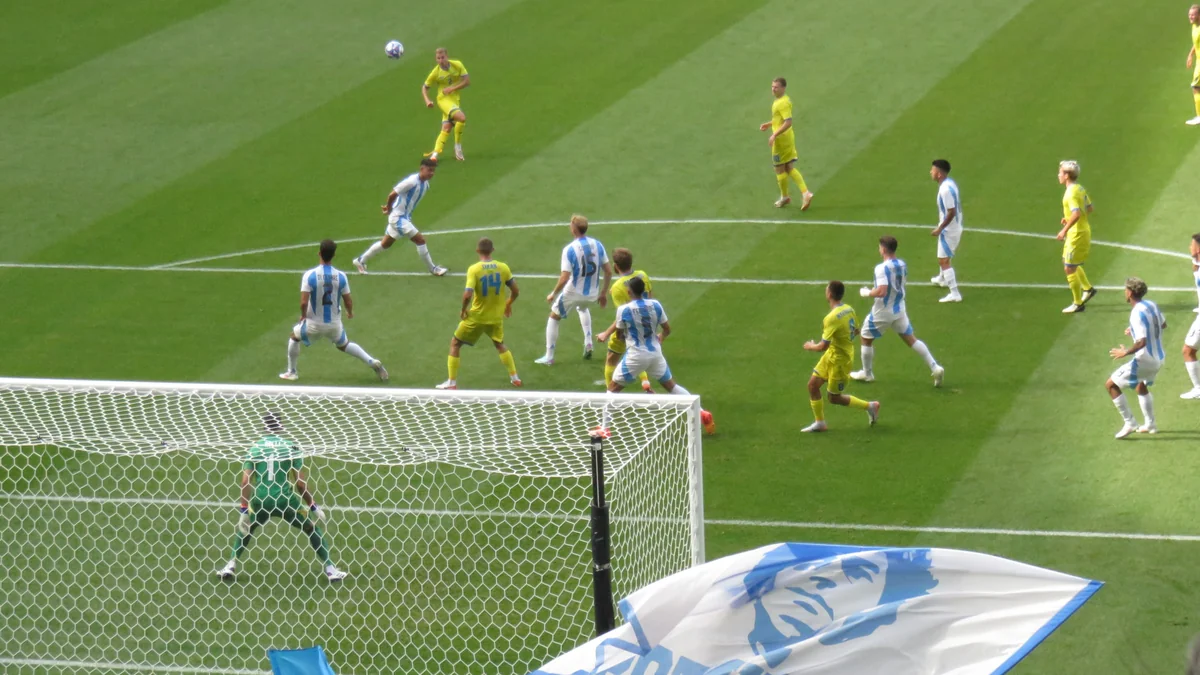
Match-context note: Modrić’s per-match total covered distance and high-intensity distance in La Liga and the Champions League sit within the typical central-midfielder range (Match data: SofaScore), with the discriminator being the late-match maintenance — minutes 75–90 high-intensity output relative to first-half rate.
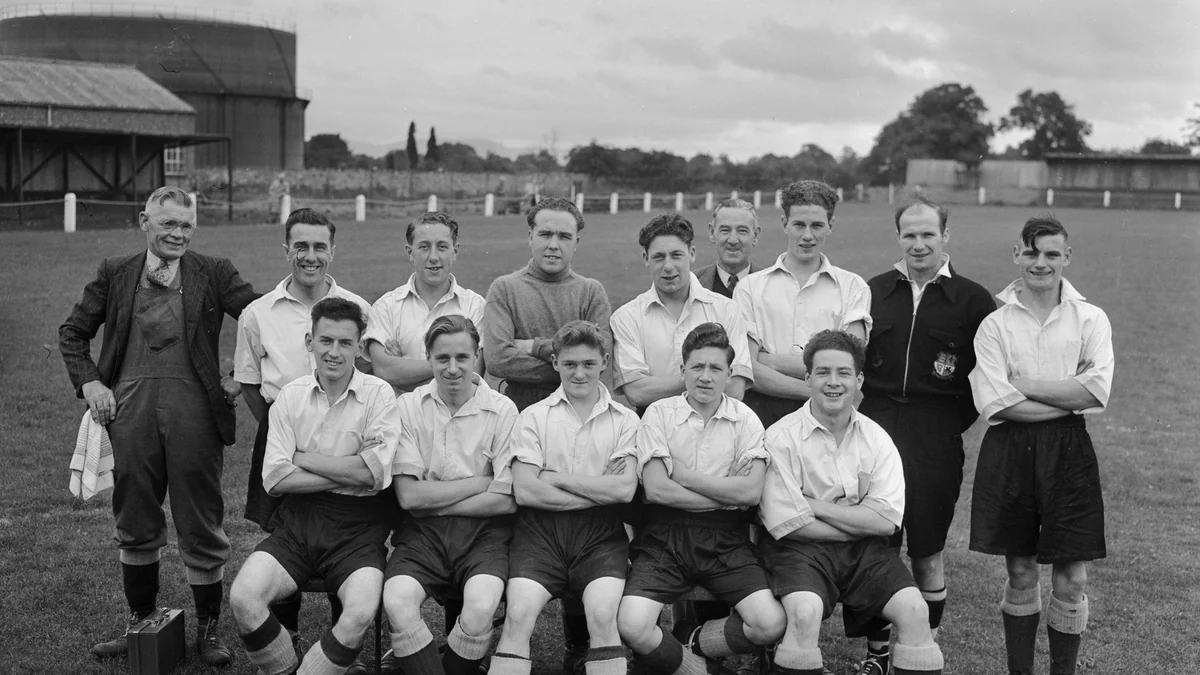
Flickr: Miami U. Libraries – Digital Collections.
What This Means for the Reader
For team-sport athletes, the takeaway is that match pacing is a learnable skill, not a personality trait [1, 5]. Three measurements diagnose pacing capacity: the first-half-vs-second-half high-intensity distance ratio (lower drop = better pacing), the recovery-walk velocity between sprints (lower = better pacing), and the perceived-effort score across match quarters (smoother = better pacing).
The training prescription targets the diagnostic finding. Athletes who front-load high-intensity work in matches benefit from small-sided games with strict work-rest ratios and time-based feedback; athletes whose recovery walks are too fast benefit from heart-rate-zone training that reinforces the lower-intensity recovery substrate; athletes whose perceived effort climbs faster than their external load benefit from internal-load monitoring with sRPE [3, 4].
The diagnostic question for the developing midfielder: in the 80th minute, am I running at the same rate as the 20th minute, or have I dropped? The honest answer determines whether the gap is in pacing, aerobic substrate, or recovery between sprints.
References
- Mohr M, Krustrup P, Bangsbo J. (2003). Match performance of high-standard soccer players with special reference to development of fatigue. Journal of Sports Sciences, 21(7): 519–528. doi:10.1080/0264041031000071182
- Bradley PS, Sheldon W, Wooster B, Olsen P, Boanas P, Krustrup P. (2009). High-intensity running in English FA Premier League soccer matches. Journal of Sports Sciences, 27(2): 159–168. doi:10.1080/02640410802512775
- Foster C, Florhaug JA, Franklin J, Gottschall L, Hrovatin LA, Parker S, Doleshal P, Dodge C. (2001). A new approach to monitoring exercise training. Journal of Strength and Conditioning Research, 15(1): 109–115. doi:10.1519/00124278-200102000-00019
- Impellizzeri FM, Marcora SM, Coutts AJ. (2019). Internal and external training load: 15 years on. International Journal of Sports Physiology and Performance, 14(2): 270–273. doi:10.1123/ijspp.2018-0935
- Carling C, Le Gall F, Dupont G. (2012). Analysis of repeated high-intensity running performance in professional soccer. Journal of Sports Sciences, 30(4): 325–336. doi:10.1080/02640414.2011.652655
Match-context data (descriptive only): SofaScore.
The Athlete in One Paragraph
Luka Modrić (b. 1985, Zadar, Croatia) is a Croatia national-team midfielder who spent 2012–2025 at Real Madrid. Listed at 1.72 m and ~66 kg, he won the 2018 Ballon d'Or at age 33 and continues to play at the elite level into his late thirties.…
The Physiology — what match pacing actually is
Match pacing is the active management, conscious or unconscious, of effort distribution across the duration of a competitive event. In team sports — unlike fixed-distance endurance events — pacing has additional dimensions: the athlete must balance the predicted match-end demand against unpredictable in-match peaks (sudden…
The Case — Modrić as pacing exemplar
For a 1.72 m / 66 kg midfielder still completing 90-minute matches at 38, the underlying profile is consistent with several pacing-favourable variables: low body mass (less metabolic cost per stride), high aerobic substrate (efficient between-sprint recovery), and refined internal-load awareness (managed effort distribution rather…
What This Means for the Reader
For team-sport athletes, the takeaway is that match pacing is a learnable skill, not a personality trait [1, 5]. Three measurements diagnose pacing capacity: the first-half-vs-second-half high-intensity distance ratio (lower drop = better pacing), the recovery-walk velocity between sprints (lower = better pacing), and the…