Preview
Hüseyin Akbulut, MSc (2026). Sergio Llull and the EuroLeague Veteran-Creator Load-Management Profile. Sporeus. Retrieved, October 9, 2026. https://sporeus.com/en/science/sergio-llull-euroleague-veteran-creator-load-management/
The Athlete in One Paragraph
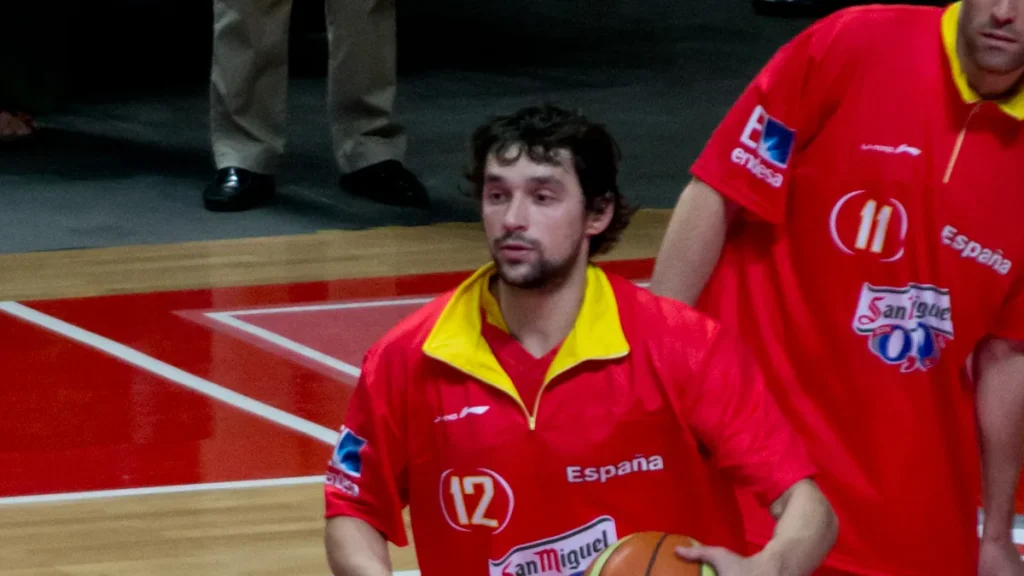
Sergio Llull (b. 1987-11-15) has spent his EuroLeague career as a Spanish combo guard with Real Madrid (still his club as of September 2026), and what now sets him apart in European basketball is creative output kept alive through careful in-season load management. At 1.90 m and ~84 kg, he is the obvious reference for a question every ageing playmaker meets sooner or later: how does a body keep delivering elite possessions across a 40-minute game, then across a 35-game-plus regular season and the playoffs that follow? Single highlights say little about that. What matters for sport science is the physiological and cognitive scaffolding underneath, framed in this profile as Veteran creator load management — the trainable pieces of aging-athlete load management and neuromuscular maintenance, and how they fit together into the consistency the EuroLeague asks of a creator deep into his career.
Table of Contents

The Physiology — what veteran creator load management actually measures
Every minute a veteran creator plays has a price, and load management begins by pricing it. Reviewing the match-play literature systematically, Stojanović and colleagues characterise basketball as short, high-intensity efforts punctuated by brief active and passive recoveries, with mean intensities placing it firmly in high-intensity intermittent territory [1]. The time-motion analysis of elite young players by Ben Abdelkrim, El Fazaa and El Ati exposes the grain of that load — dozens of activity changes each minute, repeated jumps, shuffles, accelerations and decelerations — with heart rate at or above the lactate threshold through much of the game [2]. An older guard cannot spend all of those efforts equally; the point of managing his load is to keep them sharp in the minutes that decide results.
For a veteran creator, the cognitive reservoir is often the asset most worth protecting. Fatigue narrows perception in crowded half-court traffic and exposes the limits of visual search; Abernethy found that visual search strategies — where a player looks, when, and for how long — separate elite from sub-elite performers in racket and team sports [3]. Vickers’ quiet-eye research builds on this, linking the duration and stability of the last fixation before a key motor action to success rates in shooting and passing [4]. For an experienced combo guard, whether a possession ends in a good play or a turnover usually hinges less on athleticism than on what the eyes pick up and how the decision follows.
Keeping a veteran’s legs under his playmaking is, in the end, a training problem. Cormie, McGuigan and Newton map what can be trained in maximal neuromuscular power — how much force the athlete can produce, how quickly (rate of force development), and at what movement velocity — and find that heavy lifting paired with ballistic, velocity-biased work is the combination that pays off [5]. For a creator trying to preserve playmaking output through the second half of a long career, none of those bases can be maintained on its own: strength, cognition and the energy systems have to be kept up together, or the reservoir quietly narrows.
The Case — Sergio Llull as a veteran creator load management archetype
Llull’s frame — 1.90 m, ~84 kg, a combo guard’s build — has to carry a long EuroLeague season, and a load profile that lets a veteran guard keep peak-minute quality works only if two things hold at once: a broad energy-system reservoir, and decision-making that stays intact when he is tired [1, 2]. When either gives way, the weakness shows up as a late-game collapse. His current role puts him right on that seam, because the skill, pace and judgement that define a veteran creator are the same qualities his body must keep underwriting through every week of the EuroLeague schedule.
Body size works both for and against an ageing combo guard. Llull’s conventional build supports the on-court edge behind playmaking output preserved across the second half of a long career, yet moving even that frame explosively still draws on an absolute strength reservoir [5]. The payoff shows most in the longer EuroLeague playoff run: a compressed, dense schedule exposes any physiological soft spot, so the veteran who keeps the best strength per kilogram and the cleanest motor pattern for his size is the one whose output stays level [1, 2].
Experience is what gives Sergio Llull’s archetype its character, and experience lives mostly in perception. At the top level, what decides possessions is less how quickly the body travels than how efficiently the eyes and prefrontal cortex carve up the floor and settle on an action while the clock shrinks [3, 4]. A veteran creator earns his minutes by fixing his gaze steadily, sensing a passing lane before it opens, and still finishing the play as three defenders collapse on him; that skill is what keeps his box score intact deep into a playoff series. EuroLeague rosters overflow with athletes, so a long career is separated by judgement that repeats through late-game minutes against Europe’s toughest defences [3, 4].
Descriptive context: over his career sample, Sergio Llull’s per-game EuroLeague production ranks in the upper band among players at his position (figures from EuroLeague.net and Basketball-Reference, cited for background rather than analysis).
What This Means for the Reader
For a guard hoping to extend a creative career, the lesson is that EuroLeague output depends on three reservoirs — energy systems, neuromuscular power and decisional cognition — and the one that erodes first becomes the ceiling [1, 2, 3, 4, 5]. Managing load on one side only, whether conditioning, strength or skill, lets that ceiling drop sooner than maintaining all three together.
For a veteran creator, the three measurements double as a load-management dashboard. A graded exercise test or an in-season heart-rate-recovery profile tracks the energy-system reservoir; a strength benchmark relative to body mass and a countermovement-jump test track neuromuscular maintenance; a video-based decision-accuracy benchmark tracks the cognitive reservoir. Drift in any of them is the early signal that the player is sliding from late-game presence toward late-game decline, and a cue to adjust load before the drop shows up in games. The guiding question: when my fourth-quarter output dips, is the engine shrinking, is power leaking, or have my eyes stopped reading the floor?
References
- Stojanović E, Stojiljković N, Scanlan AT, Dalbo VJ, Berkelmans DM, Milanović Z. (2018). The activity demands and physiological responses encountered during basketball match-play: a systematic review. Sports Medicine, 48(1): 111–135. doi:10.1007/s40279-017-0794-z
- Ben Abdelkrim N, El Fazaa S, El Ati J. (2007). Time-motion analysis and physiological data of elite under-19-year-old basketball players during competition. British Journal of Sports Medicine, 41(2): 69–75. doi:10.1136/bjsm.2006.032318
- Abernethy B. (1991). Visual search strategies and decision-making in sport. International Journal of Sport Psychology, 22(3-4): 189–210.
- Vickers JN. (2007). Perception, Cognition, and Decision Training: The Quiet Eye in Action. Human Kinetics. doi:10.5040/9781492595519
- Cormie P, McGuigan MR, Newton RU. (2011). Developing maximal neuromuscular power: Part 1 — biological basis of maximal power production. Sports Medicine, 41(1): 17–38. doi:10.2165/11537690-000000000-00000
Match-context data (descriptive only): EuroLeague.net / Basketball-Reference.

Hüseyin Akbulut is the founder of Sporeus and author of THRESHOLD (EŞİK), a 540-page Turkish-language book on endurance science.
- 540pp THRESHOLD Book
- MSc Sport Sciences
- Marmara University
The Athlete in One Paragraph
Sergio Llull (b. 1987-11-15) has spent his EuroLeague career as a Spanish combo guard with Real Madrid (still his club as of September 2026), and what now sets him apart in European basketball is creative output kept alive through careful in-season load management. At 1.90…
The Physiology — what veteran creator load management actually measures
Every minute a veteran creator plays has a price, and load management begins by pricing it. Reviewing the match-play literature systematically, Stojanović and colleagues characterise basketball as short, high-intensity efforts punctuated by brief active and passive recoveries, with mean intensities placing it firmly in high-intensity…
The Case — Sergio Llull as a veteran creator load management archetype
Llull's frame — 1.90 m, ~84 kg, a combo guard's build — has to carry a long EuroLeague season, and a load profile that lets a veteran guard keep peak-minute quality works only if two things hold at once: a broad energy-system reservoir, and decision-making…
What This Means for the Reader
For a guard hoping to extend a creative career, the lesson is that EuroLeague output depends on three reservoirs — energy systems, neuromuscular power and decisional cognition — and the one that erodes first becomes the ceiling [1, 2, 3, 4, 5]. Managing load on…