Preview
Hüseyin Akbulut, MSc (2026). Mike James and the EuroLeague Iso-Creator Anaerobic-Burst Profile. Sporeus. Retrieved, October 14, 2026. https://sporeus.com/en/science/mike-james-basketball-euroleague-iso-creator-anaerobic-bursts/
The Athlete in One Paragraph
Mike James (b. 1990-08-18), an American point guard who played his EuroLeague minutes with AS Monaco from 2021 to 2026, is known across European basketball for isolation scoring resting on short anaerobic bursts he can repeat possession after possession. Listed at 1.83 m and ~84 kg, he embodies an archetype that fans and analysts in the league argue about constantly. For sport science the useful question is not a particular highlight but the machinery behind it: which physiological and cognitive capacities let a player built like him keep producing elite one-on-one output through a 40-minute game, then through a regular season of 35-plus EuroLeague games and the playoffs beyond. That machinery is summarised here as Iso creator anaerobic bursts — the trainable determinants of repeated-sprint ability and ATP-PCr recovery in elite guards, and the way they combine into the consistency the EuroLeague demands.
Table of Contents
The Physiology — what iso creator anaerobic bursts actually measures
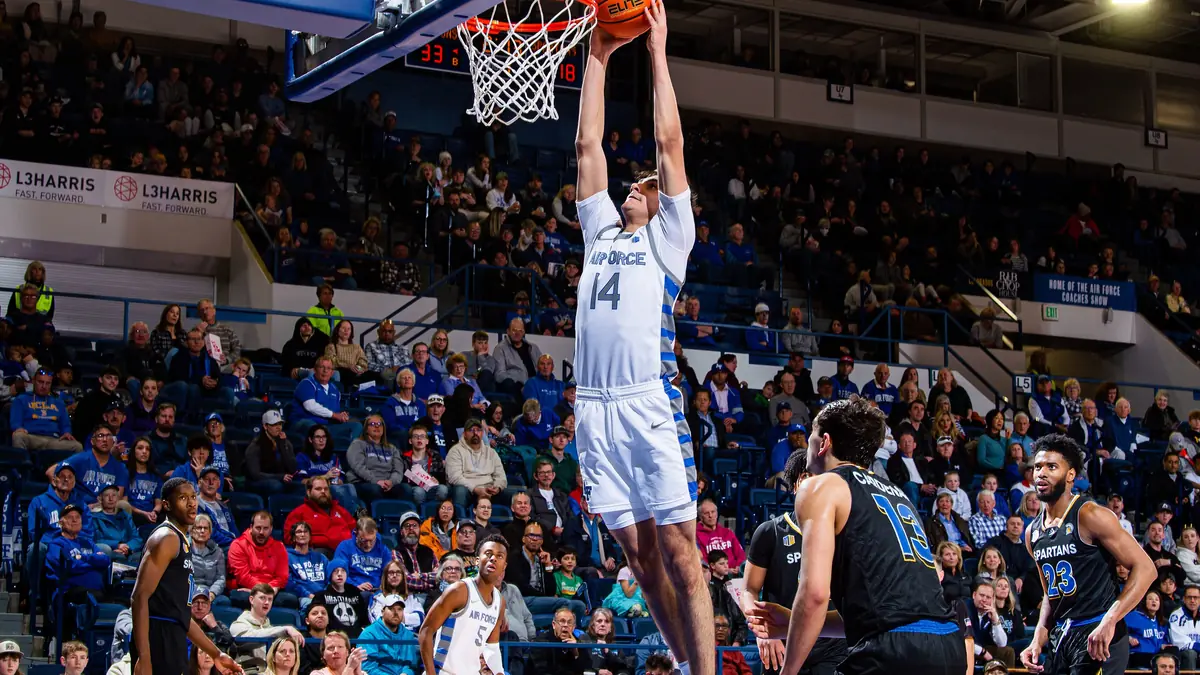
Before any burst, there is the game it happens in. Stojanović and colleagues, surveying basketball’s match-play demands systematically, find a sport of brief hard efforts linked by short active and passive recoveries, intense enough on average to count as high-intensity intermittent exercise [1]. Ben Abdelkrim, El Fazaa and El Ati tracked elite young players and logged dozens of changes of activity each minute — jumps, shuffles, accelerations, decelerations — with heart rate spending long periods at or above the lactate threshold [2]. For an isolation guard like Mike James, each of those efforts is one more burst the energy systems must refill before the next possession asks for another.
A one-on-one scorer still has to see before he bursts. Under fatigue, perception narrows and visual search becomes the bottleneck for choices made in a crowded half-court; Abernethy demonstrated that where, when and how long an athlete looks separates elite from sub-elite performers in racket and team sports [3]. Vickers’ quiet-eye research adds the finishing detail: a longer, steadier final fixation just before the decisive action goes with higher success in shooting and passing [4]. For an iso point guard late in the clock, the explosive first move only pays off if the read that precedes it — shoot, drive or kick out — stays sharp when the legs are already tired.
An iso scorer’s first step is a trainable quality. Cormie, McGuigan and Newton’s work on building maximal neuromuscular power names its ingredients — top-end strength, the rate at which force is developed, and velocity of movement — and shows the best gains arrive when heavy resistance training is combined with ballistic, speed-oriented training [5]. Yet a guard who manufactures his points across many short max-effort possessions needs more than power alone: his reservoir is only wide enough if strength, energy systems and cognition are built side by side rather than one at a time.
The Case — Mike James as an iso creator anaerobic bursts archetype
Late in the shot clock, Mike James has to find yet another burst. At 1.83 m and ~84 kg, the point guard needs ATP-PCr recovery that supports repeated late-clock iso bursts, and that recovery holds only when a deep energy-system reservoir sits alongside decision-making that fatigue has not dulled [1, 2]; lose either one and a fourth-quarter collapse reveals the weak foundation. His present role lives at exactly that crossover — skill, pace and judgement define an isolation creator, and his body has to back them up through everything a EuroLeague season asks.
Size is a double-edged factor for an isolation guard. At 1.83 m, James’s frame shapes the advantage he draws from creating scoring chances over many short max-effort possessions, while propelling any body explosively across the floor still requires an absolute strength reservoir [5]. When the longer EuroLeague playoff run arrives, with shorter gaps and denser games punishing physiological soft spots, it is strength relative to body mass plus a clean motor pattern at that size that keeps an iso creator’s output from wobbling [1, 2].
Before the first step comes a read, and that read gives Mike James’s archetype its identity. Elite decision-makers are separated less by body speed than by how efficiently their eyes and prefrontal cortex sort a cluttered scene and commit to the next action as the clock drains [3, 4]. An isolation guard who can keep a steady fixation, spot a kick-out window as help rotates, and still complete the chosen move with three defenders closing is the one whose numbers survive the late games of a playoff series. Plenty of EuroLeague players are explosive; what separates this archetype is judgement that repeats in crunch minutes against the continent’s strongest defences [3, 4].
Mike James’s career EuroLeague numbers per game, read purely as background, sit in the top tier of point guards in his cohort; the data come from EuroLeague.net and Basketball-Reference and describe rather than explain.
What This Means for the Reader
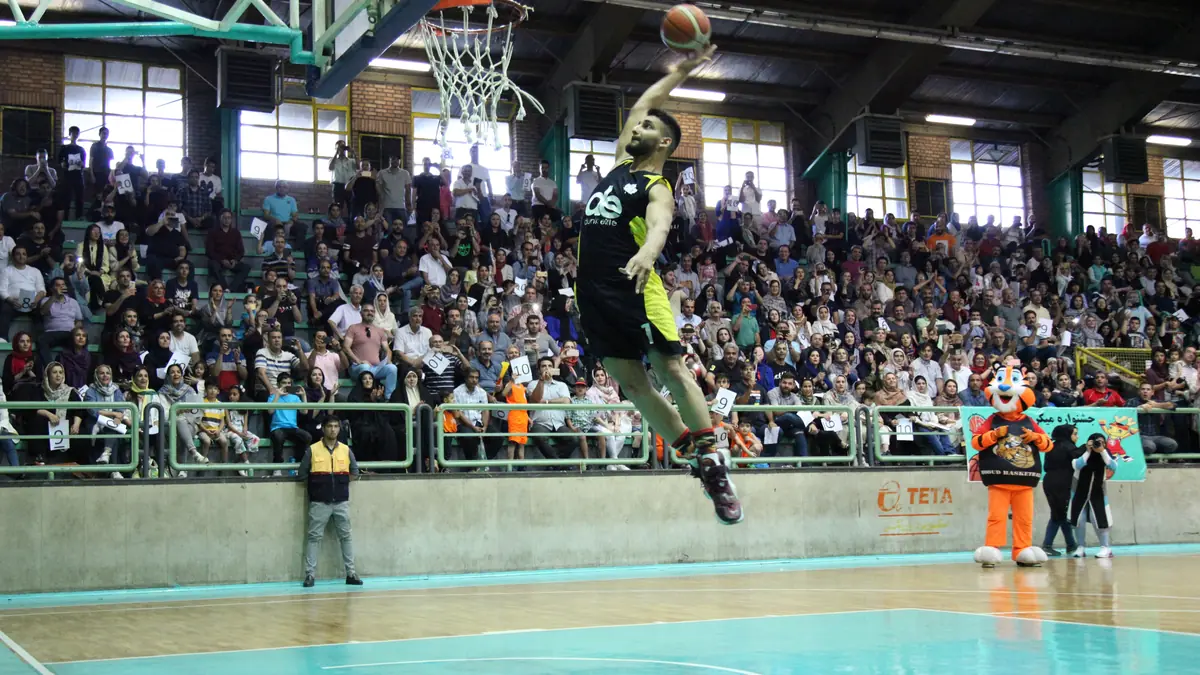
What a young iso-minded guard should take from this profile: EuroLeague output draws on three reservoirs — energy systems, neuromuscular power and decisional cognition — and whichever one is shortest sets the ceiling [1, 2, 3, 4, 5]. Repeatable bursts need all three growing together; chasing only conditioning, only strength or only skill leaves a player short against rivals who build the full set.
For a burst-dependent creator, three tests reveal which reservoir runs dry first: a graded exercise test or in-season heart-rate-recovery tracking for the energy systems that refuel each burst, a body-mass-relative strength benchmark plus a countermovement jump for the neuromuscular power behind the first step, and a video-based decision-accuracy task for the read that chooses when to go. Slippage in any one of them flags a drift toward late-game fade rather than late-game presence. The question a developing iso guard should ask: when my fourth-quarter bursts lose their bite, is the engine too small, is power leaking, or have my eyes stopped reading the defence?
References
- Stojanović E, Stojiljković N, Scanlan AT, Dalbo VJ, Berkelmans DM, Milanović Z. (2018). The activity demands and physiological responses encountered during basketball match-play: a systematic review. Sports Medicine, 48(1): 111–135. doi:10.1007/s40279-017-0794-z
- Ben Abdelkrim N, El Fazaa S, El Ati J. (2007). Time-motion analysis and physiological data of elite under-19-year-old basketball players during competition. British Journal of Sports Medicine, 41(2): 69–75. doi:10.1136/bjsm.2006.032318
- Abernethy B. (1991). Visual search strategies and decision-making in sport. International Journal of Sport Psychology, 22(3-4): 189–210.
- Vickers JN. (2007). Perception, Cognition, and Decision Training: The Quiet Eye in Action. Human Kinetics. doi:10.5040/9781492595519
- Cormie P, McGuigan MR, Newton RU. (2011). Developing maximal neuromuscular power: Part 1 — biological basis of maximal power production. Sports Medicine, 41(1): 17–38. doi:10.2165/11537690-000000000-00000
Match-context data (descriptive only): EuroLeague.net / Basketball-Reference.

Hüseyin Akbulut is the founder of Sporeus and author of THRESHOLD (EŞİK), a 540-page Turkish-language book on endurance science.
- 540pp THRESHOLD Book
- MSc Sport Sciences
- Marmara University
The Athlete in One Paragraph
Mike James (b. 1990-08-18), an American point guard who played his EuroLeague minutes with AS Monaco from 2021 to 2026, is known across European basketball for isolation scoring resting on short anaerobic bursts he can repeat possession after possession. Listed at 1.83 m and ~84…
The Physiology — what iso creator anaerobic bursts actually measures
Before any burst, there is the game it happens in. Stojanović and colleagues, surveying basketball's match-play demands systematically, find a sport of brief hard efforts linked by short active and passive recoveries, intense enough on average to count as high-intensity intermittent exercise [1]. Ben Abdelkrim,…
The Case — Mike James as an iso creator anaerobic bursts archetype
Late in the shot clock, Mike James has to find yet another burst. At 1.83 m and ~84 kg, the point guard needs ATP-PCr recovery that supports repeated late-clock iso bursts, and that recovery holds only when a deep energy-system reservoir sits alongside decision-making that…
What This Means for the Reader
What a young iso-minded guard should take from this profile: EuroLeague output draws on three reservoirs — energy systems, neuromuscular power and decisional cognition — and whichever one is shortest sets the ceiling [1, 2, 3, 4, 5]. Repeatable bursts need all three growing together;…