Preview
Hüseyin Akbulut, MSc (2026). Kostas Sloukas and the EuroLeague Pace-Controller Game-Tempo Profile. Sporeus. Retrieved, November 9, 2026. https://sporeus.com/en/science/kostas-sloukas-euroleague-pace-controller-game-tempo/
The Athlete in One Paragraph
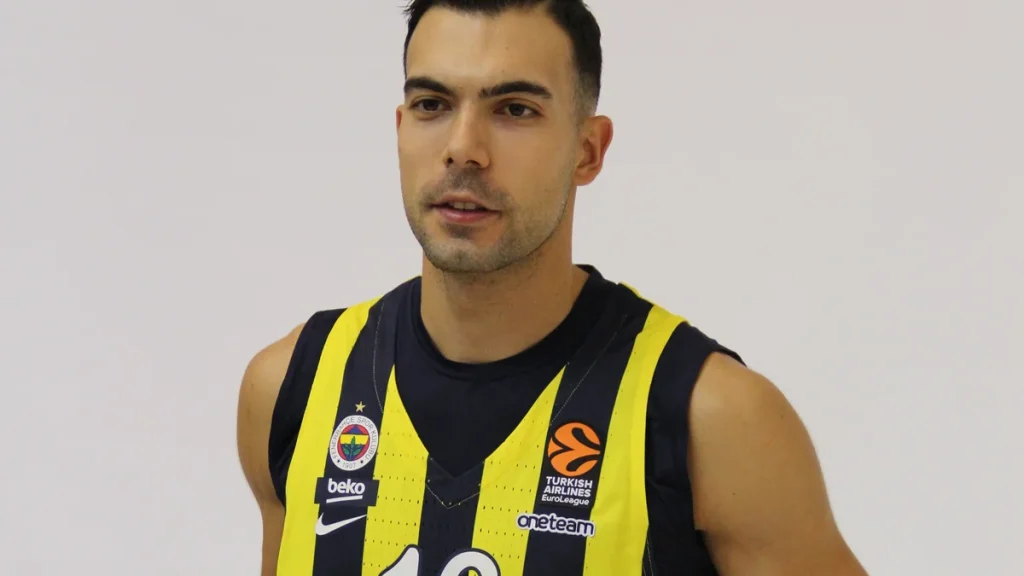
Kostas Sloukas (b. 1990-01-15) is a Greek combo guard who, across European basketball, is associated with controlling game tempo and the economy of possessions from the point. Listed at 1.90 m and ~86 kg and as of September 2026 with Panathinaikos, he anchors an archetype the EuroLeague discusses constantly. For sport science, the case lies not in individual highlights but in the physiological and cognitive architecture that allows a player of his profile to keep delivering elite output over 40 minutes, then over a 35-plus-game regular season and the playoffs. This profile calls it Pace-controller game tempo, the trainable determinants of tempo control and possession economy in elite point guards, and how they combine to deliver the consistency the EuroLeague demands.
Table of Contents
The Physiology: what pace-controller game tempo actually measures
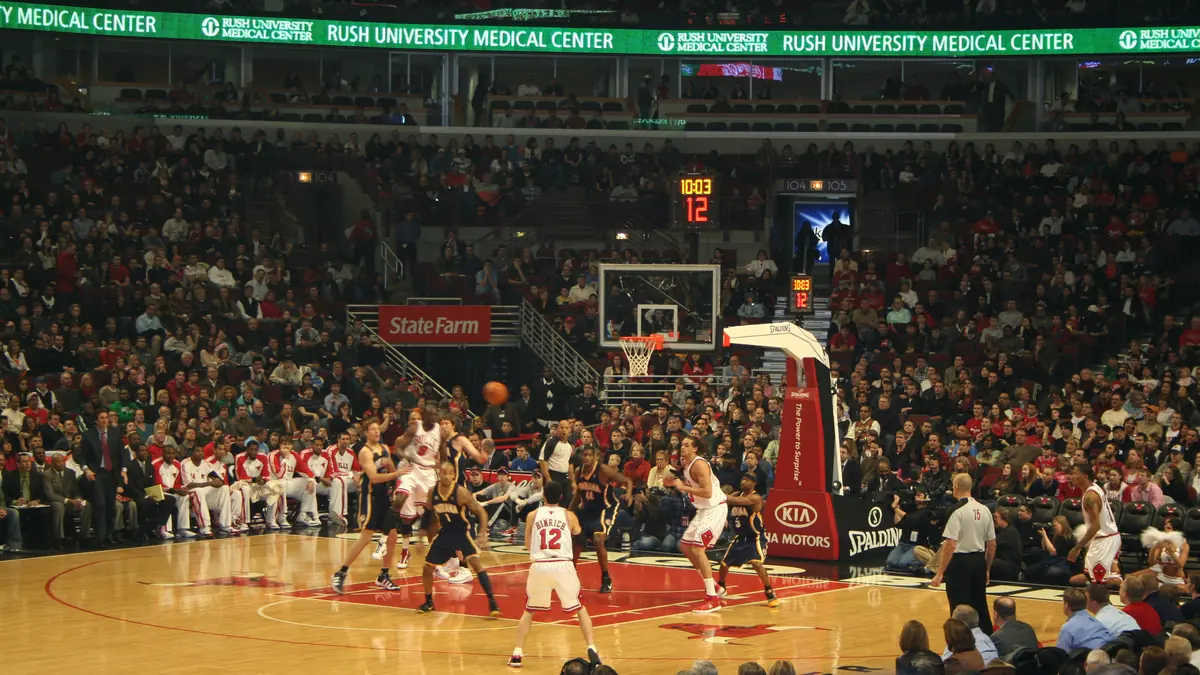
A pace controller’s command of game tempo is exercised inside a sport that rarely lets anyone settle. Stojanović and colleagues’ systematic review of basketball match-play demands frames the game as short, intense efforts strung together with brief active or passive recoveries, with average intensities that locate it in the high-intensity intermittent category [1]. Ben Abdelkrim, El Fazaa and El Ati’s time-motion analysis of elite young players fills in the detail a point guard lives with: dozens of activity changes a minute, jumps, shuffles, accelerations and decelerations, and heart rate running at or above the lactate threshold for much of the game [2]. Choosing when to push and when to slow the ball down happens under exactly that load.
Tempo control is, above all, a perceptual skill. Reading the floor in heavy traffic is limited by how fatigue narrows perception and by how far visual search can stretch; Abernethy demonstrated that where a player looks, at what moment and for how long separates elite from sub-elite performers in racket and team sports [3]. Vickers’ quiet-eye research adds that the length and steadiness of the last fixation before a key motor action tracks success in shooting and passing [4]. For a combo guard deciding the pace of each possession, the difference between a well-timed set and a wasted trip is usually not about athleticism but about what he sees and how quickly he decides.
Even a guard who slows the game down needs power in reserve. Cormie, McGuigan and Newton’s framework lists the trainable determinants of maximal neuromuscular power as strength, force-development rate and velocity of movement, and shows heavy strength work alongside ballistic, velocity-biased work to be the productive combination [5]. For a player whose role is slowing pace at the right moments and managing possessions, the reservoir is wide enough only if strength, cognitive and energy-system bases grow in parallel.
The Case: Kostas Sloukas as a pace-controller game tempo archetype
Sloukas, at 1.90 m and ~86 kg, needs a tempo-control profile that survives elite European defences game after game through a EuroLeague season. That repeatability comes from a wide energy-system reservoir paired with intact decision-making; if either fails, a late-game collapse exposes a weak physiological foundation [1, 2]. His current role lies at exactly this junction, because the skill, pace and judgement that define a pace controller rely on a body that can support them through everything the EuroLeague calendar schedules.
A combo guard’s conventional build has two sides for a pace controller. For Sloukas it adds to the advantage tied to slowing pace at the right moments and managing possessions, and it also means an absolute strength reservoir is required whenever the body has to move explosively across the floor [5]. When the longer EuroLeague playoff run compresses the schedule and punishes physiological soft spots, the guard with the best strength per kilogram and the cleanest motor pattern for his size holds the steadiest profile [1, 2].
Kostas Sloukas’s archetype is identified by his reading of the game’s rhythm. Among elite players, the decisive difference is not how fast the body moves but how cleanly the eyes and prefrontal cortex map the floor and choose the next action as time runs short [3, 4]. A pace controller who holds a steady fixation, sees a passing window before it opens, and still executes as three defenders converge keeps his box score alive late in a playoff series. EuroLeague rosters hold plenty of athletic talent; the differentiator is judgement that repeats through late-game minutes against Europe’s best defences [3, 4].
In descriptive terms, Sloukas’s career per-game numbers in EuroLeague competition place him toward the top of his positional group; EuroLeague.net and Basketball-Reference supply this context, not a performance claim.
What This Means for the Reader
For a developing guard who wants to run a game, the point is that managing tempo rests on three reservoirs, energy systems, neuromuscular power and decisional cognition and the thinnest one limits everything else [1, 2, 3, 4, 5]. A guard who works only on fitness, only in the weight room, or only on skill drills will find his ceiling sooner than rivals who grow all three in step.
For a young pace controller, three measurements show which reservoir is running short: a graded exercise test or in-season heart-rate-recovery tracking for energy systems, a strength benchmark relative to body mass alongside a countermovement jump for neuromuscular output, and a video-based decision-accuracy test for cognition. Drift on any of them signals that late-game control is starting to slip into late-game decline. The guard’s own diagnostic: when my grip on the tempo loosens in the fourth quarter, is the engine too small, is my power leaking, or have I stopped reading the floor?
References
- Stojanović E, Stojiljković N, Scanlan AT, Dalbo VJ, Berkelmans DM, Milanović Z. (2018). The activity demands and physiological responses encountered during basketball match-play: a systematic review. Sports Medicine, 48(1): 111–135. doi:10.1007/s40279-017-0794-z
- Ben Abdelkrim N, El Fazaa S, El Ati J. (2007). Time-motion analysis and physiological data of elite under-19-year-old basketball players during competition. British Journal of Sports Medicine, 41(2): 69–75. doi:10.1136/bjsm.2006.032318
- Abernethy B. (1991). Visual search strategies and decision-making in sport. International Journal of Sport Psychology, 22(3-4): 189–210.
- Vickers JN. (2007). Perception, Cognition, and Decision Training: The Quiet Eye in Action. Human Kinetics. doi:10.5040/9781492595519
- Cormie P, McGuigan MR, Newton RU. (2011). Developing maximal neuromuscular power: Part 1, biological basis of maximal power production. Sports Medicine, 41(1): 17–38. doi:10.2165/11537690-000000000-00000
Match-context data (descriptive only): EuroLeague.net / Basketball-Reference.

Hüseyin Akbulut is the founder of Sporeus and author of THRESHOLD (EŞİK), a 540-page Turkish-language book on endurance science.
- 540pp THRESHOLD Book
- MSc Sport Sciences
- Marmara University
The Athlete in One Paragraph
Kostas Sloukas (b. 1990-01-15) is a Greek combo guard who, across European basketball, is associated with controlling game tempo and the economy of possessions from the point. Listed at 1.90 m and ~86 kg and as of September 2026 with Panathinaikos, he anchors an archetype…
The Physiology: what pace-controller game tempo actually measures
A pace controller's command of game tempo is exercised inside a sport that rarely lets anyone settle. Stojanović and colleagues' systematic review of basketball match-play demands frames the game as short, intense efforts strung together with brief active or passive recoveries, with average intensities that…
The Case: Kostas Sloukas as a pace-controller game tempo archetype
Sloukas, at 1.90 m and ~86 kg, needs a tempo-control profile that survives elite European defences game after game through a EuroLeague season. That repeatability comes from a wide energy-system reservoir paired with intact decision-making; if either fails, a late-game collapse exposes a weak physiological…
What This Means for the Reader
For a developing guard who wants to run a game, the point is that managing tempo rests on three reservoirs, energy systems, neuromuscular power and decisional cognition and the thinnest one limits everything else [1, 2, 3, 4, 5]. A guard who works only on…