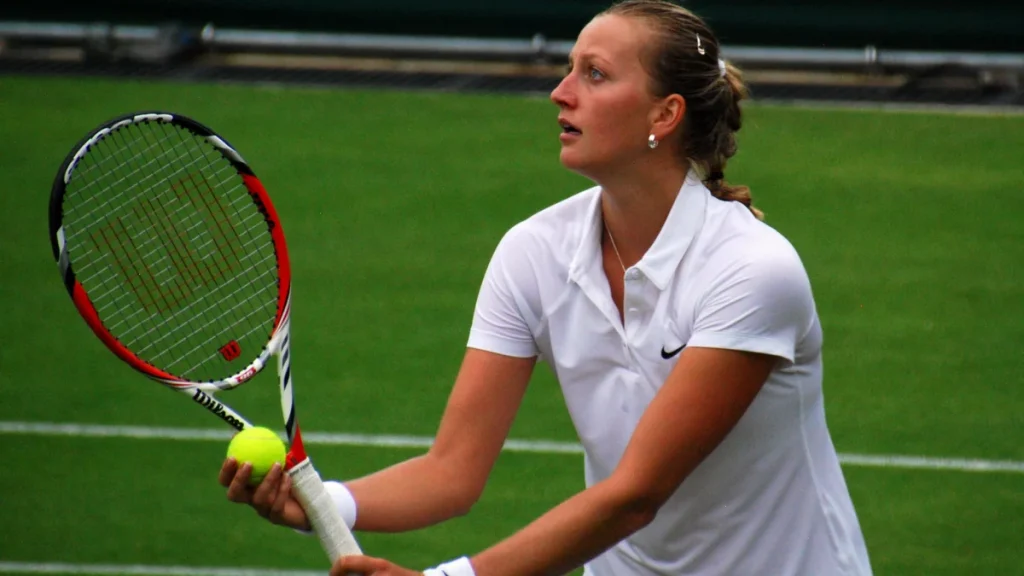
Preview
Emre Köse (2026). The Counter-Puncher’s Edge: Defense as a Winning Style. Sporeus. Retrieved, September 17, 2026. https://sporeus.com/en/tennis/counter-puncher-defense-winning/
In a sport increasingly dominated by aggressive baseliners, the counter-puncher should logically be extinct. Modern equipment favors aggression. Modern surfaces favor power. The whole infrastructure of contemporary tennis seems built for the player who hits big, attacks first, and ends points quickly.
Table of Contents
- What a Counter-Puncher Actually Does
- Why Counter-Punchers Still Succeed
- The Famous Modern Examples
- What the Style Demands
- When Counter-Punching Fails
- How an Amateur Can Build the Style
- What This Means for Amateur Tournament Play
- The Style Choice as a Long-Term Decision
- One Thing to Do on Court Tomorrow
And yet counter-punchers persist. Players who don’t have the biggest serves, the heaviest forehands, or the most aggressive game styles still make their way into the top 20 — sometimes the top 5. They do it by exploiting a different kind of edge: defensive consistency, opponent-error generation, and physical-mental endurance that grinds aggressive players down.
This article is about how the counter-puncher style still wins in modern tennis, what skills it requires, and what it implies for amateur players who might naturally suit the style.
What a Counter-Puncher Actually Does
A counter-puncher is a player whose primary tactical mode is defense. They retrieve, they extend rallies, they make opponents hit one more ball. Their game is built around:
Element 1: Court coverage. Exceptional movement, particularly defensive movement. The counter-puncher gets to balls that other players would let go.
Element 2: Defensive consistency. Few unforced errors, even from difficult positions. Every ball comes back, even if it’s slow or short.
Element 3: Opponent attrition. Long rallies that test the opponent’s patience, fitness, and shot-making capacity. The counter-puncher waits for the opponent to make mistakes.
Element 4: Sudden offensive transitions. When the opportunity arrives — a short ball, a tired opponent, a tactical opening — the counter-puncher can suddenly attack. The pivot from defense to offense is part of the style.
Element 5: Mental durability. The capacity to absorb pressure, endure long matches, and stay engaged through hours of defensive play.
Together, these elements produce a player who wins by extending the contest rather than by ending it quickly. The opponent gets frustrated, takes risks, and produces errors. The counter-puncher wins points they didn’t create.
Why Counter-Punchers Still Succeed
Several structural reasons the style remains viable.
Reason 1: Aggressive baseliners have error rates. A player who hits with high pace and topspin also produces unforced errors. A counter-puncher who keeps the ball in play long enough harvests those errors. Tour-level data shows that even top aggressive baseliners have unforced-error rates of 15-25% — the counter-puncher’s opportunity.
Reason 2: Fitness disparity. Counter-punchers are typically among the most physically fit players on tour. In long matches, the aggressive baseliner’s pace degrades. The counter-puncher’s defensive consistency is more stable. The fifth set often goes to the player who is fresher.
Reason 3: Mental disparity. Counter-punchers have learned to handle pressure differently. Their game doesn’t depend on hitting winners; it depends on making opponents miss. The mental challenge is different — patience over execution. Some players have great mental fortitude for this; many don’t.
Reason 4: Surface variation. Slower surfaces (clay, slower hard courts) strongly favor counter-punchers. The pace gap between aggressive baseliners and counter-punchers narrows on slower courts. The geometric advantage of long rallies compounds.
Reason 5: Aging adaptation. Many top counter-punchers continue performing at high levels into their late 30s. The style demands less physical peak and more sustained capacity. Aggressive baseliners typically decline more rapidly with age.
The Famous Modern Examples
Several recent players illustrate the style:
Diego Schwartzman (1.70m tall, no big weapons) reached world #8 primarily through counter-punching. His court coverage, defensive consistency, and opponent-frustration capacity allowed him to compete with much physically larger players.
Daniil Medvedev uses counter-punching as part of a hybrid game. His defensive court coverage is elite, and his game shifts to defense in many situations where other players would try to be offensive.
Andy Murray (in his prime years) was a counter-puncher who could also attack when needed. His style was the modern hybrid — defensive base with offensive flexibility.
Casper Ruud combines clay-court counter-punching with selective aggression. His tour results show the durability of the style at modern pace.
These players aren’t relics. They are competing successfully against aggressive baseliners by exploiting the gaps that the dominant style leaves open.
What the Style Demands
Building a counter-puncher game requires:
Demand 1: Exceptional fitness. The style is the most physically demanding archetype in tennis. Long rallies, court coverage, long matches — all expensive. The counter-puncher who isn’t fit becomes a baseliner who isn’t aggressive.
Demand 2: Reliable, deep ground strokes. The shots don’t need to be weapons, but they have to land deep and in play with very high reliability. Short or wild balls give opponents the attacks they want.
Demand 3: Strong defensive movement. The capacity to retrieve balls from difficult positions, recover quickly, and convert defense into neutral position.
Demand 4: Patience and mental endurance. Long matches won at the margin require the capacity to maintain focus when nothing dramatic is happening. Aggressive baseliners win or lose points quickly; counter-punchers experience matches as endurance events.
Demand 5: Selective offensive moments. A pure defender loses. A counter-puncher recognizes when the opponent is vulnerable and attacks at the right moment. The pivot is part of the style.
When Counter-Punching Fails
Three situations where counter-punching doesn’t work:
Failure 1: Against players with exceptional ground-stroke depth and consistency. Some aggressive baseliners are so reliable that the counter-puncher cannot extract errors. They produce point after point of well-struck balls. The counter-puncher’s tactic — wait for the mistake — fails because the mistake doesn’t come.
Failure 2: Against players with great drop shots and net play. Counter-punchers play deep behind the baseline. Opponents who can pull them forward and finish at net exploit this position. The counter-puncher is structurally vulnerable to short-ball-and-net-approach combinations.
Failure 3: On very fast surfaces. Grass courts, fast indoor hard courts — these compress rallies and favor the aggressive baseliner. The counter-puncher loses time and angle on every shot. Defensive players have always struggled at Wimbledon.
These failures are why the pure counter-puncher style is rare. The hybrid version, where counter-punching is the default but offensive flexibility is maintained, is more sustainable.
How an Amateur Can Build the Style
If counter-punching appeals to you, the development path is:
Stage 1: Build fitness. Without exceptional fitness, the style doesn’t work. Aerobic capacity (VO₂max in the upper appropriate range), alactic capacity, recovery between points. Months of dedicated fitness work, alongside tennis.
Stage 2: Build consistency. Practice neutral-pace cross-court rallies to extreme lengths. Goal: 30+ shot cooperative rallies without errors. The mechanical reliability is the foundation.
Stage 3: Build defensive movement. Court coverage drills. Lateral bounds, court sprints, recovery footwork. The capacity to retrieve from corner to corner repeatedly.
Stage 4: Build the transition shot. When you do get an attackable ball, you have to attack it. The pivot from defense to offense is critical. (See the transition-shot article in this series.)
Stage 5: Build mental endurance. Long practice matches. Drills with consequences. Mental visualization. The capacity to stay engaged through extended exchanges.
This is a multi-year project. Counter-punchers don’t develop quickly. The style rewards long-term commitment.
What This Means for Amateur Tournament Play
Counter-punching is particularly well-suited to amateur tournament tennis where:
- Many opponents are aggressive baseliners with high error rates
- Match conditions favor extended rallies (hot weather, slower surfaces)
- Fitness is often a discriminator (some amateurs are very fit; many are not)
- Mental endurance separates competitors
An amateur counter-puncher who has done the development work can win against opponents who would technically have “better” tennis. The style exploits weaknesses that most amateurs have.
The Style Choice as a Long-Term Decision
A reminder from the aggressive-baseliner article: your game style is a multi-year identity, not a temporary tactical setting. Choosing counter-puncher means committing to a development path: build the fitness, the consistency, the movement, the mental durability. Accept the trade-offs: less spectacular play, longer matches, slower point-by-point progress.
For some players this is the right path. They are not built for aggression — they have moderate pace, moderate spin, but exceptional movement and mental composure. The counter-puncher style lets them maximize what they have.
For other players, counter-punching is the wrong choice — they have natural aggression, weapon shots, and impatient temperaments. Forcing them into defense produces unhappy tennis and worse results.
The question to ask honestly: when you imagine your ideal tennis self, are they patient and consistent, or aggressive and decisive? The answer points to the style that will suit you over the long term.
One Thing to Do on Court Tomorrow
For your next practice session, play out 10 points where your only goal is to make every ball deep and in play. No winners attempted. No aggressive risks. Just deep, consistent, neutral-pace ground strokes back. Let the opponent decide the outcome.
Most players, doing this for the first time, find it extremely difficult — they want to attack. They feel passive. They lose points they could have won. But they also see how much pressure their consistent game creates on the opponent. The opponent has to keep producing, and producing, and producing.
That pressure is the counter-puncher’s edge. If you find it appeals to you, the path forward is clear. If you find it makes you miserable, you have valuable information about your natural style — and the aggressive route is your path instead.
The counter-puncher style is not dead. It is one of several valid paths through modern tennis. For the right player, it remains a winning strategy.
About the author: Emre Köse is a tennis coach at Beykoz Tenis Kulübü in Istanbul, with 12+ years on court. He holds a BSc in Coaching Education from Marmara University, Faculty of Sport Sciences.
Related in this series: The aggressive baseliner: the dominant modern archetype · The serve-and-volleyer in the modern game · Defense to offense: the transition shot
Selected reading:
- Reid, M., Morgan, S., & Whiteside, D. (2016). Matchplay characteristics of Grand Slam tennis. Journal of Sports Sciences.
- Filipčič, A., Filipčič, T., & Berendijaš, T. (2008). Performance indicators in winning and losing tennis match play. Kinesiologia Slovenica.
- O’Donoghue, P. (2009). Interacting performances theory. International Journal of Performance Analysis in Sport.
What a Counter-Puncher Actually Does
A counter-puncher is a player whose primary tactical mode is defense. They retrieve, they extend rallies, they make opponents hit one more ball. Their game is built around:
Why Counter-Punchers Still Succeed
Several structural reasons the style remains viable.
The Famous Modern Examples
Several recent players illustrate the style:
What the Style Demands
Building a counter-puncher game requires:
When Counter-Punching Fails
Three situations where counter-punching doesn't work: