Preview
Emre Köse (2026). The Serve Is Tennis’s Only Fully Closed Skill — Why That Should Reshape How You Train It. Sporeus. Retrieved, September 24, 2026. https://sporeus.com/en/tennis/serve-only-closed-skill-tennis/
In motor learning, skills are usually classified along a continuum from closed to open. A closed skill is one where the environment is stable and predictable, the timing is controlled by the performer, and the same action can be repeated under identical conditions. An open skill is one where the environment is changing, the timing is controlled by external events, and adaptation is constant.
Table of Contents
Tennis is mostly an open-skill sport. Returns, ground strokes, volleys, lobs — every shot you hit is in response to a moving ball, an opponent’s position, a changing tactical situation. You cannot pre-decide exactly when or how to execute any of these. The shot adapts to what comes at you.
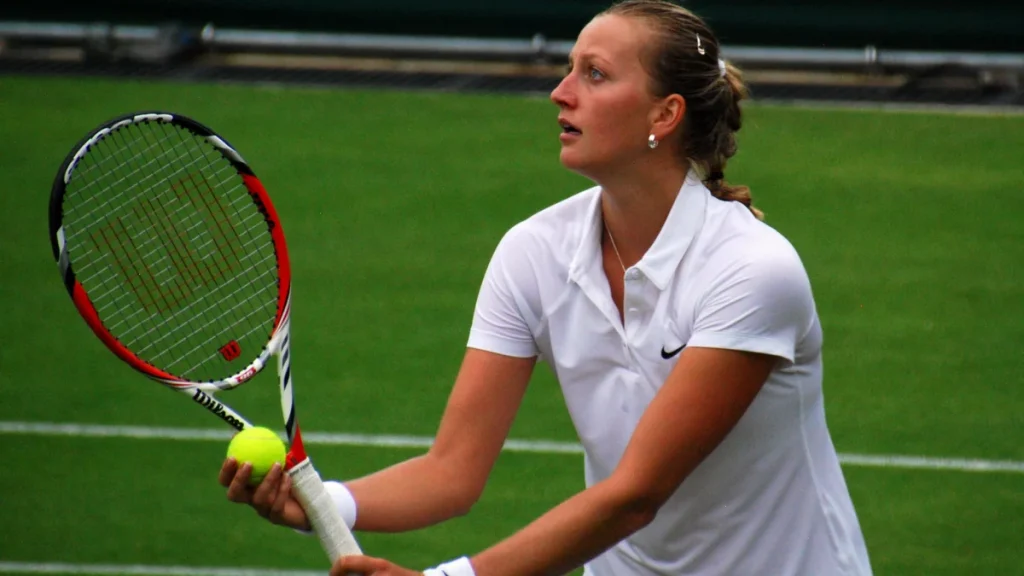
There is one exception. The serve is a fully closed skill. You decide when to start. You decide where to aim. The ball is stationary in your hand. The environment is constant. Nothing about the situation forces a particular timing or adaptation. The serve is, in motor-learning terms, the only shot in tennis where you have complete control of the inputs.
That single fact should reshape how the serve is trained. And in most coaching practice, it doesn’t.
What “Closed Skill” Means for Training Design
The motor-learning research on closed skills is unambiguous: closed skills respond best to high-volume, deliberate, repetitive practice with precise feedback. The conditions for improvement are:
- Same environment, repeated.
- Same physical action, refined toward optimal.
- Frequent and accurate feedback on outcome.
- High volume per session.
- Deliberate attention to the few variables that affect outcome.
This is the classic “practice the same shot 500 times” model. It works for closed skills. It does not work as well for open skills, where the variation is the point.
In tennis, the implication is that the serve should be practiced more like a golf swing or a free throw or a darts throw than like a forehand drill. It should be high-volume, focused, repetitive, with explicit feedback on toss location, contact point, and result.
What Most Amateur Serve Practice Looks Like
Walk into any amateur tennis program and observe how serves get practiced. Typically:
- Five or ten serves at the start of a match warm-up.
- “Server’s choice” of where to aim — usually their favorite target.
- No explicit feedback beyond “in or out.”
- No deliberate repetition of specific patterns.
- Limited overall volume — perhaps 20-50 serves per week outside of match play.
This is the wrong training for a closed skill. It is the kind of practice that builds general familiarity without producing skill development. After years of this, players have the serve they have, with no path to improvement.
What would proper closed-skill serve training look like?
A Properly Structured Serve Practice
A useful serve practice session has these features:
Feature 1: High volume. 100-200 serves per session. This is many more than most amateurs hit in practice. It is the volume at which closed-skill refinement happens.
Feature 2: Targeted placement. Each serve has a specific intended target — not just “in,” but “wide deuce corner,” “T deuce,” “body deuce.” Without specific targets, there is no signal to refine against.
Feature 3: Explicit feedback. After each serve, the player notes (or the coach calls) whether it hit the target. Hit-rate over the session becomes the metric of improvement.
Feature 4: Variation in pace and spin. Practice includes flat, slice, kick — and at varied paces. The full range of the serve repertoire gets attention.
Feature 5: Position variation. Practice both deuce and ad court. Practice from match-realistic locations.
Feature 6: Quality decline tracking. Note when accuracy drops within a session. The drop point is where conditioning and focus give out, and that is where to push the next session’s volume.
Feature 7: Video review. Periodic recording of practice serves, watched for technique issues. This is feedback the player cannot generate from feel alone.
Done two or three times per week, structured this way, serve practice produces measurable improvements within weeks. It is not magic. It is what closed-skill training actually requires.
Why Coaches Skip This
Three reasons amateur tennis programs under-train serves.
Reason 1: Time pressure. Most amateur lessons are 60-90 minutes. Spending 30-40 minutes of that on serves leaves limited time for the rest of the game. Coaches default to dividing time across more visible activities.
Reason 2: Boredom. Hitting 150 serves in a row is repetitive. Players don’t enjoy it. Coaches who optimize for student enjoyment skip the high-volume serve work. The skill development doesn’t happen.
Reason 3: Lack of clear progression. Coaches have established progressions for forehand, backhand, volley — but not for serve. Without a structured progression, hitting many serves feels arbitrary. Coaches default to other drills.
The fix for all three is to treat the serve as the structurally different shot it is. Allocate serve-only sessions. Build progressions. Track outcomes.
A Progression for Building a Serve
For a player without a developed serve, a progression that works:
Stage 1: Mechanics in slow motion (1-2 weeks). No full-pace serving. The player practices the motion at half-pace, focused on toss consistency and contact point. 20-30 serves per session. Multiple short sessions per week.
Stage 2: Toss isolation (2 weeks). Practice tosses without swinging. The toss is the single biggest determinant of serve consistency. Hundreds of tosses, with the player measuring where each lands. Develop a toss that goes to the same spot 80%+ of the time.
Stage 3: Slow-pace serves with targets (3-4 weeks). Add the swing back, but at 60-70% pace. Aim at specific targets in the service box. Track hit rate per target.
Stage 4: Building pace (3-4 weeks). Gradually increase pace while maintaining accuracy. The pace ceiling is where accuracy starts to degrade — train at the highest pace where accuracy stays above 60%.
Stage 5: Full serve repertoire (ongoing). Flat, slice, kick. Different targets. Different stress levels. Match-relevant scenarios. This stage doesn’t end.
Total development time from basic serve to competitive serve: typically 3-6 months for an adult, with consistent practice. The closed-skill structure rewards consistent practice in a way few other things in tennis do.
What This Means About Match-Day Serving
A counterintuitive implication: if the serve is a closed skill, the player’s serve under match pressure should look almost exactly like their serve in practice. Unlike open skills (where the environment forces adaptation), the serve environment is identical in practice and in matches. The serve that is grooved in practice is the serve that should appear in matches.
When a player’s match-day serve looks different from their practice serve, the explanation is psychological, not technical. The technique is the same; the execution has been disrupted by pressure. This is the choking domain, addressed by pre-serve routines and external focus (see the choking article in this series).
The serve is the shot where practice quality most directly predicts match quality. Players whose practice serve is dialed in have a serve they can rely on. Players whose practice is inconsistent have an inconsistent serve in matches.
A Note on Junior Serve Development
Juniors should not be practicing 150 serves per session. Their shoulders cannot tolerate the load. Junior serve development uses the same closed-skill principles at lower volumes — perhaps 30-50 serves per session, with the same structure, but spread across more sessions per week.
The age-appropriate progressions matter here. Under 10: red-ball serves with red-ball racquets. 10-12: orange ball, building progressively. 12-14: green ball, transitioning toward adult mechanics. 14+: full-pace serves with full kinetic chain.
Loading the shoulder for adult-volume serves before age 14 produces shoulder injuries that affect the player into adulthood. The skill development is paced by the body’s structural development.
One Thing to Do on Court Tomorrow
For your next practice session, allocate 30 minutes to serves alone. Pick one specific target (e.g., wide ad court). Hit 50 serves at 70-80% pace, all aimed at that target. Track your hit rate per ten serves. Notice where in the 50 your accuracy drops.
Most players, doing this for the first time, are surprised by two things. First, they don’t normally hit 50 serves in practice — the volume itself feels high. Second, their accuracy drops measurably between serve 30 and serve 50, revealing where their conditioning and focus give out.
That drop point is the edge of your current skill. Pushing it back by a few serves per session, week by week, is how the serve actually develops. Closed skills reward this kind of work. The other 90% of tennis doesn’t. The serve is the leverage point — train it like one.
About the author: Emre Köse is a tennis coach at Beykoz Tenis Kulübü in Istanbul, with 12+ years on court. He holds a BSc in Coaching Education from Marmara University, Faculty of Sport Sciences.
Related in this series: Where serve speed actually comes from · The toss is the serve · A teaching progression for the serve
Selected reading:
- Schmidt, R. A., & Wrisberg, C. A. (2008). Motor Learning and Performance. Human Kinetics.
- Kovacs, M., & Ellenbecker, T. (2011). An 8-stage model for evaluating the tennis serve. Sports Health.
- Magill, R. A., & Anderson, D. I. (2014). Motor Learning and Control: Concepts and Applications. McGraw-Hill.
What "Closed Skill" Means for Training Design
The motor-learning research on closed skills is unambiguous: closed skills respond best to high-volume, deliberate, repetitive practice with precise feedback. The conditions for improvement are:
What Most Amateur Serve Practice Looks Like
Walk into any amateur tennis program and observe how serves get practiced. Typically:
A Properly Structured Serve Practice
A useful serve practice session has these features:
Why Coaches Skip This
Three reasons amateur tennis programs under-train serves.
A Progression for Building a Serve
For a player without a developed serve, a progression that works: