Preview
Hüseyin Akbulut, MSc (2026). Agility vs Quickness: What Makes a Player Hard to Defend. Sporeus. Retrieved, October 24, 2026. https://sporeus.com/en/biomechanics/agility-vs-quickness-football-science/
Introduction
“He’s so quick off the mark.” “She’s incredibly agile.” These two phrases are often used interchangeably in football commentary, but they describe fundamentally different physical qualities. Quickness is the speed of the nervous system; agility is the integration of perception, decision-making, and movement execution. The science distinguishes them with increasing precision and the distinction has direct implications for how players are trained to be harder to defend and more effective in 1v1 situations.
Table of Contents
The Science
Quickness refers to the capacity to perform rapid unplanned or pre-planned movements, specifically, the speed of a single discrete motor action. In football contexts: first-step quickness, the speed of a body feint, the rate at which a foot repositions under the ball. Quickness is primarily a neurological quality, determined by motor neuron conduction velocity, neuromuscular activation speed, and the rate of force development in the lower limb.
Change of Direction (COD) speed refers to pre-planned direction changes, running a predetermined course as fast as possible. COD tests (Illinois agility test, 5-10-5 shuttle) measure this quality. COD speed is determined by: approach speed before the turn, ground contact time during the cut, force applied during the directional change, and technical efficiency (shin angle, step placement). It is highly trainable through repeated COD practice and strength training.
Reactive Agility (RA) is the complete quality relevant to football, the ability to change direction rapidly in response to an unpredictable visual stimulus. RA includes all the components of COD speed PLUS:
- Perception: Reading the stimulus (opponent’s body lean, ball trajectory, teammate’s run)
- Decision: Determining the appropriate response
- Execution: Performing the movement at full speed with minimal time lost in the perception-decision phase
Research consistently shows that RA is not predicted by COD speed, players who are fast in pre-planned agility tests are not necessarily effective in reactive contexts. The perceptual component (typically 150–300ms) dominates the time available in 1v1 situations. Reducing this perceptual-decision time through anticipatory experience is therefore more valuable than marginally faster movement execution.
Physical demands of agility: The most demanding phase is deceleration, the eccentric braking required before a direction change. Deceleration forces can exceed 3–4× body weight, concentrated in knee and hip extensors. This is why COD exercises carry injury risk and why eccentric strength is both a performance and safety prerequisite.
What Research Says
Sheppard and Young (2006) published the defining framework paper on agility in Journal of Sports Sciences, establishing the distinction between COD speed (pre-planned) and reactive agility (perception + decision + movement). They demonstrated that reactive agility discriminated between elite and sub-elite rugby players significantly better than COD tests alone, confirming that the perceptual component was the performance-discriminating factor.
Young et al. (2015) tested 145 Australian football players and confirmed that COD performance and reactive agility were statistically independent, players with fast pre-planned COD times were not reliably faster in reactive conditions. This dissociation has since been replicated across multiple team sports including football.
Analyses of the mechanical demands of cutting movements in football-relevant scenarios have found that planned cuts produced significantly higher peak braking forces (3.2 BW) than defensive reactive cuts (2.4 BW), but that reactive contexts produced more variable force application that increased injury risk. The interaction between unpredictability and mechanical loading is a key consideration in training programme design.
Did You Know? Video analysis of Lionel Messi’s dribbling shows that the most effective element of his 1v1 ability is not speed, it is perceptual manipulation. Messi systematically presents body angles that trigger specific defensive responses, then moves in the direction the defender has been cued away from. This is reactive agility in its most sophisticated form: using opponent perception against them. His maximum sprint speed (approximately 32.5 km/h) is below many players he dribbles past. His perceptual-decision advantage, not his raw speed, is the discriminating quality.
Applied to Football
Training true reactive agility rather than pre-planned COD:
- Progress from pre-planned to reactive training. Begin with pre-planned COD drills to develop physical mechanics (braking strength, step placement). Progress to reactive stimuli (coach signals, partner decisions) once mechanics are established.
- Use sport-specific reactive stimuli. Light systems and auditory cues develop reaction speed. For football specificity, use actual game stimuli, a passer’s body direction, a coach pointing to a zone, or a small-sided game forcing reactive decisions.
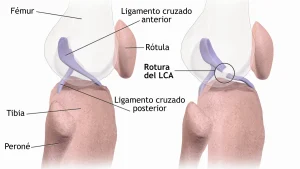
- Develop deceleration strength. Nordic curls, single-leg RDLs, and eccentric-emphasis split squats develop the braking strength that both enables fast COD (shorter ground contact) and protects against ACL and hamstring injury during high-speed cuts.
- Train anticipation as perceptual skill. Video-based scenarios, live 1v1 defending drills, and shadow drills where the attacker determines the movement all develop the anticipatory perceptual patterns that reduce perceptual-decision time.
- Measure reactive agility, not just COD. If your team only tests Illinois agility or 5-10-5 times, you are measuring pre-planned COD, which does not predict reactive performance. Develop or adopt reactive agility testing protocols that include unplanned stimulus responses.
Worth Remembering
- Agility ≠ COD speed: reactive agility includes perception and decision-making; COD measures only pre-planned movement
- Perceptual-decision time (150–300ms) dominates 1v1 agility, reducing it is more valuable than marginal movement speed gains
- COD performance and reactive agility are statistically independent, fast COD times do not predict reactive effectiveness
- Deceleration forces exceed 3× body weight in cutting, eccentric strength is both a performance and injury prerequisite
- Anticipation, pattern recognition, and perceptual manipulation skills are the core trainable components of true match agility
References
- Sheppard, J. M., & Young, W. B. (2006). Agility literature review: classifications, training and testing. Journal of Sports Sciences, 24(9), 919–932.
- Young, W. B., Dawson, B., & Henry, G. J. (2015). Agility and change-of-direction speed are independent skills: implications for training for agility in invasion sports. International Journal of Sports Science & Coaching, 10(1), 159–169.
Next in Series: Match Analysis: Performance Indicators That Predict Success
Discuss this in the forum: Deceleration: the overlooked skill in team sports · Change of direction vs agility: are they really different?

Hüseyin Akbulut is the founder of Sporeus and author of THRESHOLD (EŞİK), a 540-page Turkish-language book on endurance science.
- 540pp THRESHOLD Book
- MSc Sport Sciences
- Marmara University
Introduction
"He's so quick off the mark." "She's incredibly agile." These two phrases are often used interchangeably in football commentary, but they describe fundamentally different physical qualities. Quickness is the speed of the nervous system; agility is the integration of perception, decision-making, and movement execution. The…
The Science
Quickness refers to the capacity to perform rapid unplanned or pre-planned movements, specifically, the speed of a single discrete motor action. In football contexts: first-step quickness, the speed of a body feint, the rate at which a foot repositions under the ball. Quickness is primarily…
What Research Says
Sheppard and Young (2006) published the defining framework paper on agility in Journal of Sports Sciences, establishing the distinction between COD speed (pre-planned) and reactive agility (perception + decision + movement). They demonstrated that reactive agility discriminated between elite and sub-elite rugby players significantly better…
Applied to Football
Training true reactive agility rather than pre-planned COD: