Tennis
Tennis biomechanics, training science, tactics and mental performance — by Emre Köse.
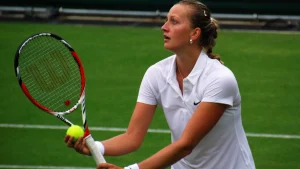
Heart Rate Dynamics During a Match: Average, Peak, and What Each Tells You
A tennis match is a heart rate trace. The pattern contains information about conditioning, emotional arousal, pacing, and recovery that does not…
Read More →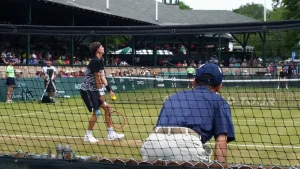
Serve+1: Why the Third Shot Is Where the Modern Game Is Decided
More than 60% of professional points end within the first three shots. A significant fraction end on the server's third shot. Serve+1…
Read More →The First Three Steps: Explosive Acceleration in Tennis-Specific Patterns
Between the split step and the recovery, three steps decide whether you reach the ball in time and in balance. They are…
Read More →Modern Forehand: Open Stance and the Rotational Engine
The 1985 forehand is sideways, closed-stance, linear. The 2025 forehand is open-stance, rotational, ground-driven. They are different shots produced by different bodies…
Read More →The Aggressive Baseliner: The Dominant Modern Archetype
Open any ATP or WTA top ten and count the players whose style is "aggressive baseliner." Eight or nine out of ten.…
Read More →Racquet Specs Explained: Head Size, Weight, Balance, Swingweight
Each printed number on a racquet corresponds to something the racquet does to the player's stroke. A racquet that doesn't match the…
Read More →Sleep for Tennis Players: The Single Highest-Leverage Recovery Tool
Almost every tennis player I have coached is under-sleeping. The gap between what players need and what they get is the single…
Read More →When to Start Tennis: What the Developmental Evidence Says
A parent calls: their child is four. Should they start tennis? The honest answer, supported by motor-development research, is more interesting than…
Read More →Tennis as Game Theory: Mixed Strategies on Serve
The serve is a strategic choice as much as a physical action. Game theory predicts surprisingly precise things about how the best…
Read More →Wrist Lag and Pronation on the Forehand
Two moves separate a 100 km/h forehand from a 140 km/h forehand. Both are consequences of upstream sequencing — and telling a…
Read More →We use cookies to improve your experience and measure traffic. Google Analytics and any future advertising cookies only run after you accept. Privacy Policy