Preview
Hüseyin Akbulut, MSc (2026). 20m Multi-Stage Fitness Test (Beep Test): Protocol and Application. Sporeus. Retrieved, November 22, 2026. https://sporeus.com/en/egzersiz-testleri-en/20m-multi-stage-fitness-test-beep-test/
Measures: Maximal aerobic capacity (estimated VO₂max), aerobic endurance
Table of Contents
Difficulty: Hard | Category: Aerobic
Protocol
The 20m Multi-Stage Fitness Test (Beep Test or MSFT), developed by Léger et al. in 1988, is one of the most widely used field tests for estimating VO₂max. Participants perform a 20-meter shuttle run at progressively increasing speeds guided by audio signals.
Preparation: The test area should be a flat, firm surface with two lines marked 20 meters apart. The audio system must be audible throughout the test area. Participants should rest for 24 hours before the test and perform a 5–10 minute warm-up on test day. Sports shoes and comfortable clothing are required.
Test Procedure: Participants stand at the start line and begin running toward the opposite line when the first beep sounds. They must reach each line before the corresponding beep and then turn around. The test starts at 8.5 km/h and increases by 0.5 km/h with each level (roughly every minute). Each level consists of multiple shuttles. If a participant reaches the line before the beep, they wait; if they fail to reach it, they receive one warning. Failure to reach the line on two consecutive beeps ends the test.
Data Recording: The last completed level and shuttle number are recorded. These two values are entered into normative tables or the formula for VO₂max estimation.
Calculation: The Léger et al. (1988) equations use the speed of the last completed level (km/h). Adults (18 and over): VO₂max (ml/kg/min) = 6.0 × speed − 24.4. Children and adolescents (8–19 years): VO₂max = 31.025 + (3.238 × speed) − (3.248 × age) + (0.1536 × speed × age). Léger et al.’s standard tables may be used instead.
Post-Test: Participants should transition to slow walking immediately after the test and perform a 5–10 minute cool-down. Heart rate, perceived exertion, and any symptoms should be noted. The result is compared with the person’s previous tests and with age-appropriate VO₂max references.
Formula
Adults (18+): VO₂max (ml/kg/min) = 6.0 × speed_kmh − 24.4; ages 8–19: VO₂max = 31.025 + (3.238 × speed_kmh) − (3.248 × age) + (0.1536 × speed_kmh × age); speed_kmh = speed of the last completed level (Léger et al., 1988)
Equipment Required
20 m flat surface, audio recording (beep test CD/MP3), cones or marking tape, stopwatch
Interpretation
There is no single widely accepted classification table for this test. The VO₂max value from the equation can be compared with published age- and sex-specific VO₂max references (e.g. the ACSM guidelines), but the most reliable interpretation is against the person’s own previous tests with the same protocol.
Practical Applications
The Beep Test is a standard fitness benchmark in intermittent sports such as football, basketball, rugby, and ice hockey. Its ability to be administered simultaneously to large groups makes it economical and practical. It is suitable for pre-season, mid-season, and end-of-season comparisons.
Limitations
High dependence on motivation affects results. Floor friction and surface quality influence performance. Tall or heavier individuals may be disadvantaged by turning demands. Medical clearance is required for individuals with cardiovascular risk.
Related Tests: Cooper 12-Minute Run Test, Yo-Yo Intermittent Recovery Test Level 1 (Yo-Yo IR1), 30-15 Intermittent Fitness Test (30-15 IFT)
Sources: Léger LA, Mercier D, Gadoury C, Lambert J. (1988). The multistage 20 metre shuttle run test for aerobic fitness. Journal of Sports Sciences, 6(2): 93-101. doi:10.1080/02640418808729800; Ramsbottom R, Brewer J, Williams C. (1988). A progressive shuttle run test to estimate maximal oxygen uptake. British Journal of Sports Medicine, 22(4): 141-144. doi:10.1136/bjsm.22.4.141; Mayorga-Vega D, Aguilar-Soto P, Viciana J. (2015). Criterion-related validity of the 20-m shuttle run test for estimating cardiorespiratory fitness: a meta-analysis. Journal of Sports Science and Medicine, 14(3): 536-547.
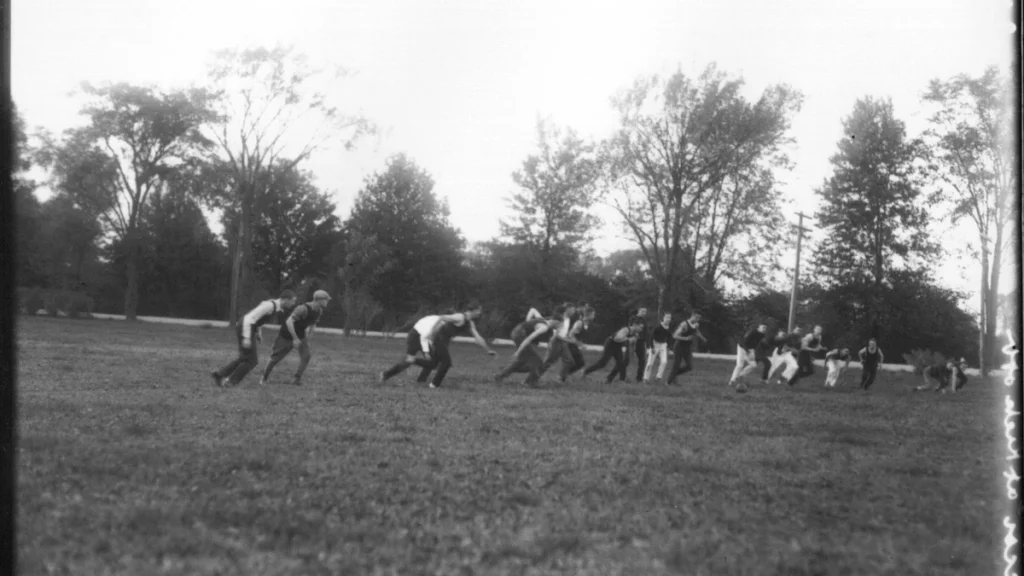
Photo: Frank R. Snyder, public domain (Wikimedia Commons)

Hüseyin Akbulut is the founder of Sporeus and author of THRESHOLD (EŞİK), a 540-page Turkish-language book on endurance science.
- 540pp THRESHOLD Book
- MSc Sport Sciences
- Marmara University
Protocol The 20m Multi-Stage Fitness Test (Beep Test or MSFT), developed by Léger et al. in 1988, is one of the most widely used field tests for estimating VO₂max. Participants perform a 20-meter shuttle run at progressively increasing speeds guided by audio signals. Preparation: The test area should be a flat, firm surface with two lines marked 20 meters apart. The audio system must be audible throughout the test area. Participants should rest for 24 hours before the test and perform a 5–10 minute warm-up on test day. Sports shoes and comfortable clothing are required. Test Procedure: Participants stand at the start line and begin running toward the opposite line when the first beep sounds. They must reach each line before the corresponding beep and then turn around. The test starts at 8.5 km/h and increases by 0.5 km/h with each level (roughly every minute). Each level consists of multiple shuttles. If a participant reaches the line before the beep, they wait; if they fail to reach it, they receive one warning. Failure to reach the line on two consecutive beeps ends the test. Data Recording: The last completed level and shuttle number are recorded. These two values are entered into normative tables or the formula for VO₂max estimation. Calculation: The Léger et al. (1988) equations use the speed of the last completed level (km/h). Adults (18 and over): VO₂max (ml/kg/min) = 6.0 × speed − 24.4. Children and adolescents (8–19 years): VO₂max = 31.025 + (3.238 × speed) − (3.248 × age) + (0.1536 × speed × age). Léger et al.'s standard tables may be used instead. Post-Test: Participants should transition to slow walking immediately after the test and perform a 5–10 minute cool-down. Heart rate, perceived exertion, and any symptoms should be noted. The result is compared with the person's previous tests and with age-appropriate VO₂max references. Formula
Adults (18+): VO₂max (ml/kg/min) = 6.0 × speed_kmh − 24.4; ages 8–19: VO₂max = 31.025 + (3.238 × speed_kmh) − (3.248 × age) + (0.1536 × speed_kmh × age); speed_kmh = speed of the last completed level (Léger et al., 1988)
Equipment Required
20 m flat surface, audio recording (beep test CD/MP3), cones or marking tape, stopwatch
Interpretation
There is no single widely accepted classification table for this test. The VO₂max value from the equation can be compared with published age- and sex-specific VO₂max references (e.g. the ACSM guidelines), but the most reliable interpretation is against the person's own previous tests with the…