Preview
Hüseyin Akbulut, MSc (2026). Cooper 12-Minute Run Test: Protocol, Norms and Application. Sporeus. Retrieved, November 24, 2026. https://sporeus.com/en/egzersiz-testleri-en/cooper-12-minute-run-test/
Measures: Aerobic capacity (estimated VO₂max)
Table of Contents
Difficulty: Moderate | Category: Aerobic
Protocol
The Cooper 12-Minute Run Test, developed by Dr. Kenneth Cooper in 1968, is one of the most widely used field tests for estimating aerobic capacity. It requires participants to cover the greatest possible distance in 12 minutes by running or walking.
Preparation: Participants should avoid strenuous exercise for at least 24 hours before the test. A warm-up of 5–10 minutes of easy walking and dynamic stretching is recommended on test day. Participants should wear comfortable athletic clothing and appropriate running shoes. Weather conditions should be recorded; testing should be postponed in extreme heat, cold, or wind.
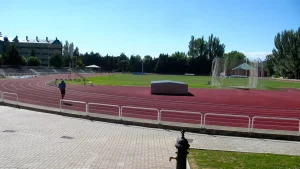
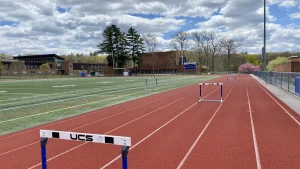
Test Procedure: The participant stands at the start line of a measured track, preferably a 400m athletics track. A flat, firm surface with clearly marked distances may also be used. The test administrator starts a stopwatch and signals the participant to begin. The participant runs at the highest sustainable pace for 12 minutes. Walking is permitted if necessary, but stopping should be avoided. Pacing strategy is critical: starting too fast leads to early fatigue. The participant should select a steady pace at which breathing remains controlled throughout.
Data Collection: At the end of 12 minutes, the administrator marks the participant’s stopping point and measures the total distance in meters from the start line. If the last lap is incomplete, the distance of any partial laps is estimated and added to completed laps.
Calculation: VO₂max (ml/kg/min) = (distance in meters − 504.9) / 44.73. For example, a participant covering 2400 m achieves an estimated VO₂max of approximately 42.4 ml/kg/min.
Post-Test: Immediately after the test ends, the participant should transition to slow walking rather than stopping abruptly. A 5–10 minute cool-down walk and static stretching are recommended. Heart rate, distance covered, and subjective exertion (Borg RPE scale 6–20) should be recorded for tracking progress over time.
Formula
VO₂max (ml/kg/min) = (distance_m - 504.9) / 44.73
Equipment Required
400 m track or flat surface, stopwatch, distance markers
Normative Values (Age: 20-29)
| Classification | Male | Female |
|---|---|---|
| Excellent | >2800m | >2700m |
| Good | 2400-2800m | 2200-2700m |
| Average | 2200-2400m | 1800-2200m |
| Below Average | 1600-2200m | 1500-1800m |
| Poor | <1600m | <1500m |
Practical Applications
The Cooper test is ideal for rapid, low-cost evaluation of large groups. It is widely used in military and police academies, football and athletics clubs as a pre-season fitness test. It serves as a reference for tracking aerobic development through repeated measurements over time.
Limitations
Motivational factors significantly affect results. Pacing errors are common in inexperienced participants. Temperature, humidity, and wind influence performance. Not suitable for individuals with orthopedic issues. Estimated VO₂max can differ from a laboratory measurement by several ml/kg/min at the individual level.
Related Tests: 20m Multi-Stage Fitness Test (Beep Test), Yo-Yo Intermittent Recovery Test Level 1 (Yo-Yo IR1), 1.5-Mile Run Test, Rockport 1-Mile Walk Test
Sources: Cooper KH. (1968). A means of assessing maximal oxygen intake: correlation between field and treadmill testing. JAMA, 203(3): 201-204. doi:10.1001/jama.1968.03140030033008; Cooper KH. (1982). The Aerobics Program for Total Well-Being. New York: M. Evans.; Grant S, Corbett K, Amjad AM, Wilson J, Aitchison T. (1995). A comparison of methods of predicting maximum oxygen uptake. British Journal of Sports Medicine, 29(3): 147-152. doi:10.1136/bjsm.29.3.147
Discuss this in the forum: Field tests for runners: 5K time trial, 30-minute test or Cooper?
Hüseyin Akbulut is the founder of Sporeus and author of THRESHOLD (EŞİK), a 540-page Turkish-language book on endurance science.
- 540pp THRESHOLD Book
- MSc Sport Sciences
- Marmara University
Protocol The Cooper 12-Minute Run Test, developed by Dr. Kenneth Cooper in 1968, is one of the most widely used field tests for estimating aerobic capacity. It requires participants to cover the greatest possible distance in 12 minutes by running or walking. Preparation: Participants should avoid strenuous exercise for at least 24 hours before the test. A warm-up of 5–10 minutes of easy walking and dynamic stretching is recommended on test day. Participants should wear comfortable athletic clothing and appropriate running shoes. Weather conditions should be recorded; testing should be postponed in extreme heat, cold, or wind. Test Procedure: The participant stands at the start line of a measured track, preferably a 400m athletics track. A flat, firm surface with clearly marked distances may also be used. The test administrator starts a stopwatch and signals the participant to begin. The participant runs at the highest sustainable pace for 12 minutes. Walking is permitted if necessary, but stopping should be avoided. Pacing strategy is critical: starting too fast leads to early fatigue. The participant should select a steady pace at which breathing remains controlled throughout. Data Collection: At the end of 12 minutes, the administrator marks the participant's stopping point and measures the total distance in meters from the start line. If the last lap is incomplete, the distance of any partial laps is estimated and added to completed laps. Calculation: VO₂max (ml/kg/min) = (distance in meters − 504.9) / 44.73. For example, a participant covering 2400 m achieves an estimated VO₂max of approximately 42.4 ml/kg/min. Post-Test: Immediately after the test ends, the participant should transition to slow walking rather than stopping abruptly. A 5–10 minute cool-down walk and static stretching are recommended. Heart rate, distance covered, and subjective exertion (Borg RPE scale 6–20) should be recorded for tracking progress over time. Formula
VO₂max (ml/kg/min) = (distance_m - 504.9) / 44.73
Equipment Required
400 m track or flat surface, stopwatch, distance markers