
Preview
Hüseyin Akbulut, MSc (2026). Merih Demiral and the Aerial Clearance Power of an Elite Centre-Back. Sporeus. Retrieved, September 25, 2026. https://sporeus.com/en/science/merih-demiral-centre-back-aerial-clearance/
The Athlete in One Paragraph
Merih Demiral (b. 1998, Karamürsel, Türkiye) is a centre-back for Al-Ahli Saudi FC and the Türkiye national team. Listed at 1.92 m and ~86 kg, he carries the long-lever and high-mass profile that is mechanically advantageous for contesting an aerial duel and, separately, for sending the ball back out of the defensive third with distance. The interesting case for sport science is not how often he wins a header but what happens to the ball after contact: the clearance distance and trajectory that determine whether a defended cross becomes an immediate threat regression or a contested second ball thirty metres deeper. The variable underneath that outcome is aerial clearance power — the reactive jump impulse, the trunk-rotation velocity, and the neck-stiffness coupling that together convert body kinetic energy into ball-velocity at the moment of contact.
Table of Contents
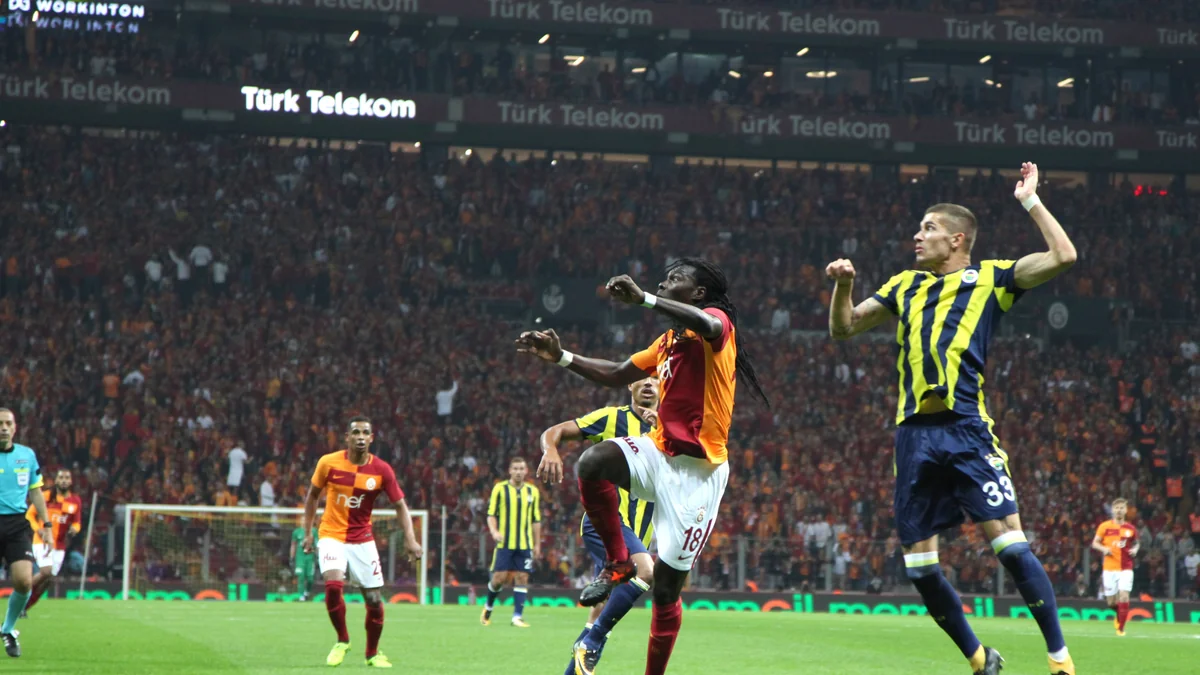
The Physiology — what aerial clearance power actually measures
A defensive header is a coupled mechanical event. The athlete generates a counter-movement jump, arrives at the contact point with an extended trunk and a controlled neck position, and transfers momentum from the lower limb through the trunk to the head, with the ball receiving the impulse over a contact time of milliseconds [1]. Aragón-Vargas and Gross’s kinesiological analysis of vertical jump performance demonstrated that jump height is determined by joint extensor moments, sequencing of segmental contributions, and the elastic component of the stretch-shortening cycle — and the same sequencing principles govern the impulse delivered to the ball at contact [1].
Wisløff, Castagna, Helgerud, Jones and Hoff’s work on elite footballers established the strength foundation underneath the jump: the athletes with the highest half-squat 1RM produced the highest counter-movement jumps and the best 30 m sprint times [2]. For a tall, heavy centre-back, the relevant strength dimension is absolute rather than relative — the athlete must move a high-mass body fast enough off the ground to win a contested ball — and the strength-to-mass ratio that determines a sprint is less load-bearing here than the absolute force production that allows a 86 kg frame to reach the contact point above a 90 kg attacker.
Markovic and Mikulic’s review of plyometric adaptations refines the trainable component. Plyometric work specifically improves the rate of force development and the rebound output of the stretch-shortening cycle, both of which determine whether a centre-back can launch a reactive jump from a half-squat preparation rather than a stationary stance [3]. Reactive jumps — jumps initiated from a step-in or a backwards adjustment — are the dominant pattern in defensive aerial contests, and they require eccentric loading on the plant leg followed by a fast concentric rebound.
Bangsbo, Mohr and Krustrup’s foundational match-running review framed the metabolic backdrop. Centre-backs accumulate fewer total high-intensity sprints than wide players but a high count of short, reactive jumps and accelerations per match, and the aerobic capacity that supports recovery between bursts is the same capacity that allows the explosive substrate to be expressed late in matches [4]. A centre-back whose 85th-minute clearance is indistinguishable from his 5th-minute clearance is, by inference, operating with both an explosive profile and an aerobic profile matched to the position.
Stølen, Chamari, Castagna and Wisløff’s physiology-of-soccer update closes the picture for the position. Anthropometry — height, mass, reach — sets a ceiling on aerial-duel outcomes, but the mechanical determinants of clearance distance (jump height, trunk-rotation velocity, contact angle) sit on top of that anthropometric ceiling [5]. The athlete who combines a high anthropometric ceiling with high mechanical efficiency wins more contests and sends the ball further away — the two outcomes that reduce defensive third re-entry rates.
The Case — Demiral as aerial-clearance archetype
For a 1.92 m / 86 kg centre-back operating in a defensive system that concedes regular aerial deliveries — set-pieces, full-back crosses, long diagonals — the clearance profile is consistent with a high-impulse, high-distance pattern: contested aerial wins in the upper band for the position [4], a low rate of partial clearances that drop into the defensive third, and a positional rotation that consistently puts the centre-back at the contact point with an extended trunk rather than a passive head [1, 3]. The mechanical signature is high absolute jump impulse combined with a coordinated trunk-and-neck transfer that maximises ball-velocity at contact.
The size dimension is constructive. A 1.92 m centre-back has an anthropometric ceiling above most attackers in his league, but reach alone does not produce clearance distance — the clearance distance depends on the velocity of the head at contact, which depends on the trunk-rotation velocity and the underlying jump height [1, 5]. Demiral’s profile — sustained aerial-clearance output across high-tempo league matches, set-piece-heavy opposition, and international fixtures — is consistent with an explosive substrate that has been preserved through career stages, training systems, and the metabolic stress of multiple-competition seasons.
The tactical context shapes the demand. In a defensive system with a deeper line, the centre-back faces more crosses delivered into the six-yard zone and more set-piece deliveries with multiple attacking targets, and the clearance must travel far enough to escape the second-ball pressure zone [4]. In a higher-line system, the centre-back faces fewer in-box headers but more long-diagonal contests in midfield, and the clearance often becomes an attacking restart rather than a defensive escape. An athlete who handles both patterns over a season is the athlete whose explosive substrate is robust under both reactive-stance and stationary-stance jump initiations [3].
The international and Turkish-football context adds a developmental layer. A centre-back who has progressed through the Süper Lig, Serie A, and into the Saudi Pro League while continuing to anchor the Türkiye defence is, almost by definition, an athlete whose aerial-clearance profile has transferred across leagues with very different cross-frequency and set-piece-target distributions. The mechanical substrate that wins a Serie A header wins a Süper Lig header and a Saudi Pro League header, because the underlying physics — jump, trunk rotation, contact velocity — does not change with the league badge [1, 5].
Match-context note: Demiral’s per-match aerial duel and clearance counts in club and national-team play sit in the upper band for centre-backs (Match data: SofaScore), with the discriminator being the consistency of clearance distance across matches and a low rate of clearances that fall into the second-ball zone.

What This Means for the Reader
For developing centre-backs — and for volleyball blockers, basketball rebounders, handball pivots — the takeaway is that the variable that matters is not the height of the jump but the velocity of the contact. Two defenders with identical jump heights can produce very different clearance distances if their trunk-rotation velocity differs; two defenders with identical contact velocity can produce very different aerial win-rates if their reactive-jump initiation differs [1, 3].
Three measurements diagnose the limiting variable: a counter-movement jump and a reactive (drop) jump to compare standing and reactive output, a half-squat 1RM relative to body mass to estimate the strength substrate, and a medicine-ball seated overhead throw to estimate trunk-rotation power [2, 3, 5]. The training prescription targets the diagnostic finding: athletes with a low reactive-to-standing jump ratio need plyometric work to train the stretch-shortening cycle; athletes with low absolute strength need a heavy compound block before plyometric work compounds; athletes with low trunk-rotation power need rotational medicine-ball and cable work [3, 5]. The single diagnostic question for the developing centre-back: when my clearance falls short, did I get to the ball too late, or did I reach it but fail to send it?
References
- Aragón-Vargas LF, Gross MM. (1997). Kinesiological factors in vertical jump performance: differences among individuals. Journal of Applied Biomechanics, 13(1): 24–44. doi:10.1123/jab.13.1.24
- Wisløff U, Castagna C, Helgerud J, Jones R, Hoff J. (2004). Strong correlation of maximal squat strength with sprint performance and vertical jump height in elite soccer players. British Journal of Sports Medicine, 38(3): 285–288. doi:10.1136/bjsm.2002.002071
- Markovic G, Mikulic P. (2010). Neuro-musculoskeletal and performance adaptations to lower-extremity plyometric training. Sports Medicine, 40(10): 859–895. doi:10.2165/11318370-000000000-00000
- Bangsbo J, Mohr M, Krustrup P. (2006). Physical and metabolic demands of training and match-play in the elite football player. Journal of Sports Sciences, 24(7): 665–674. doi:10.1080/02640410500482529
- Stølen T, Chamari K, Castagna C, Wisløff U. (2005). Physiology of soccer: an update. Sports Medicine, 35(6): 501–536. doi:10.2165/00007256-200535060-00004
Match-context data (descriptive only): SofaScore.
The Athlete in One Paragraph
Merih Demiral (b. 1998, Karamürsel, Türkiye) is a centre-back for Al-Ahli Saudi FC and the Türkiye national team. Listed at 1.92 m and ~86 kg, he carries the long-lever and high-mass profile that is mechanically advantageous for contesting an aerial duel and, separately, for sending…
The Physiology — what aerial clearance power actually measures
A defensive header is a coupled mechanical event. The athlete generates a counter-movement jump, arrives at the contact point with an extended trunk and a controlled neck position, and transfers momentum from the lower limb through the trunk to the head, with the ball receiving…
The Case — Demiral as aerial-clearance archetype
For a 1.92 m / 86 kg centre-back operating in a defensive system that concedes regular aerial deliveries — set-pieces, full-back crosses, long diagonals — the clearance profile is consistent with a high-impulse, high-distance pattern: contested aerial wins in the upper band for the position…
What This Means for the Reader
For developing centre-backs — and for volleyball blockers, basketball rebounders, handball pivots — the takeaway is that the variable that matters is not the height of the jump but the velocity of the contact. Two defenders with identical jump heights can produce very different clearance…