

Preview
Hüseyin Akbulut, MSc (2026). Rodri and the High-Intensity Distance and Pressing Economy of an Elite Holding Midfielder. Sporeus. Retrieved, October 5, 2026. https://sporeus.com/en/science/rodri-pressing-economy/
The Athlete in One Paragraph
Rodrigo Hernández Cascante (b. 1996, Madrid, Spain) — known simply as Rodri — is, as of September 2026, the defensive midfielder for FC Barcelona (formerly Manchester City) and the Spain national team. Listed at 1.91 m and ~82 kg, he is unusually tall and heavy for the position, yet he is also one of the most positionally and metabolically efficient holding midfielders of his generation. He does not cover the most ground in a Premier League match, and he is not the fastest sprinter on his team. What sets him apart is the quality of the running he does — short, decisive, repeatable pressure-actions delivered over 90+ minutes without the late-match drop-off that limits less efficient players. The interesting case for sport science is the variable that defines him: pressing economy, the ratio of high-intensity output to total metabolic cost across the match.
Table of Contents
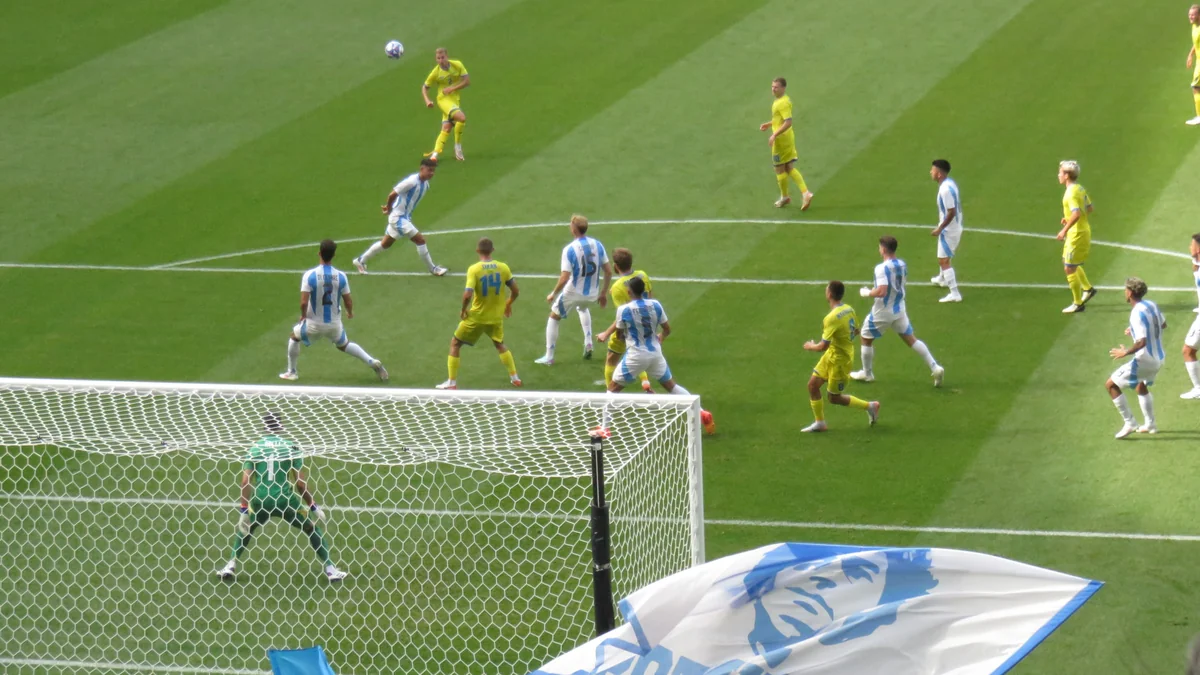
The Physiology — what high-intensity distance and pressing economy actually measure
Match running in elite football is not a single stress; it is a sequence of intermittent high-intensity efforts layered onto a continuous low-intensity background. Bangsbo, Mohr and Krustrup decomposed the demand into the canonical pattern: total distance ~10–12 km, of which ~8–12% is high-intensity (>15–19 km/h depending on threshold), with the remainder distributed across walking, jogging and standing recovery [1]. The aerobic system fuels the recovery; the anaerobic system fuels the bursts. The athlete who recovers faster between bursts produces more bursts, and the athlete who produces more bursts dictates more of the match.
Mohr, Krustrup and Bangsbo’s match-fatigue work refined the picture. Top-class players cover ~28–58% more high-intensity distance than moderate-class players, and within that, central midfielders sit at the upper end of the volume distribution [2]. Crucially, high-intensity output declines toward the end of each half — the so-called “transient fatigue” pattern — and the magnitude of that decline is itself a marker of conditioning. Players who hold their high-intensity rate from minute 60 onward are operating with a higher fractional utilisation of VO₂max as their steady-state.
Bradley and colleagues’ analysis of Premier League matches sharpened the positional layer. Central midfielders in the EPL covered the most high-intensity distance of any outfield position, with the running profile dominated by short bursts of 1–4 seconds rather than long sprints [3]. The implication for a holding midfielder is that the limiting variable is repeatability — the ability to produce a 2-second pressing burst, recover for 20 seconds, and produce another — not peak sprint speed.
Buchheit and Laursen’s high-intensity-interval-training framework provides the training-side mirror. The aerobic adaptations needed to support repeated high-intensity efforts (cardiac output, mitochondrial density, capillarisation, lactate clearance) are best developed by short-interval work at 90–95% of VO₂max with brief recoveries — the “30/30s” and “15/15s” formats — because they accumulate the time-at-VO₂max that drives central and peripheral adaptation [4]. The midfielder who trains this system trains his pressing economy directly.
Stølen, Chamari, Castagna and Wisløff’s physiology-of-soccer review pulls the threads together. Match VO₂ averages roughly 70–80% of maximum across 90 minutes, with peak demands intermittently approaching 100%, and the players who maintain higher fractional utilisation of their VO₂max — typically 80–85% rather than 70–75% at the same absolute pace — are the ones whose match performance does not collapse late [5]. Pressing economy, in this framing, is the visible output of high VO₂max, high lactate threshold relative to VO₂max, and trained recovery between bursts.
The Case — Rodri as efficient pressing engine
For a 1.91 m / 82 kg holding midfielder operating in a possession-dominant system, the running profile is consistent with a high-volume, moderate-peak-speed pattern: total distance in the upper range for central midfielders, high-intensity distance distributed across many short bursts rather than a few long sprints, and a sprint-distance share toward the lower end of the central-midfield distribution [1, 3]. The physiological signature is not peak speed but rate of recovery between repeated efforts.
The size dimension matters. Tall, heavy midfielders pay a higher absolute energy cost per unit distance simply because they are moving more mass; the pressing-economy signature in such a player therefore implies a high VO₂max in absolute terms rather than only relative to body weight [5]. A 1.91 m player who can sustain the high-intensity rate of a smaller central midfielder is, by definition, doing more aerobic work per minute than the smaller player. The compensation is positional intelligence: the holding midfielder who reads the next press one pass earlier covers less ground than the one who reads it one pass later.
The tactical context fits the physiology. In a possession-dominant system, the holding midfielder’s running profile is dominated by short, predictive recoveries — a half-pitch sprint to close a passing lane, a 5-metre pressure burst to cut a vertical option, a recovery jog back into shape [3]. The press is not random; it is anticipatory, which means that pressing economy in a holding midfielder reflects both the metabolic substrate (aerobic capacity, lactate clearance) and the cognitive substrate (pattern recognition, scan frequency) that determines when the burst is launched [2]. The two together produce more pressure for less running.
Match-context note: Rodri’s per-match touch and tackle volume in Premier League and Champions League play sits in the upper band for defensive midfielders (Match data: SofaScore), with the discriminator being the consistency of those numbers across the late stages of matches and across short turnaround weeks rather than any single peak performance.
The repeatability dimension is what makes the case distinctive. Bangsbo and colleagues note that the players who maintain high-intensity output across full matches and across the densest fixture congestion are the players whose aerobic base is robust enough to absorb the cumulative load [1, 4]. A holding midfielder operating at the top of two competitions over multiple seasons without a measurable late-match decline is, by inference, operating with a pressing-economy profile near the upper bound of the position.
Flickr: Miami U. Libraries – Digital Collections.
What This Means for the Reader
For a developing player, the takeaway is that pressing economy is not a single trait but a system — aerobic capacity, lactate clearance, recovery between bursts, and tactical anticipation — and the system is trainable in pieces. Three measurements diagnose the limiting variable: a Yo-Yo Intermittent Recovery test (or its equivalent) to estimate repeated-effort capacity, a 4-minute time-trial pace as a surrogate for VO₂max, and a session-RPE log to track the internal cost of training relative to the external load [4, 5].
The training prescription targets the diagnostic finding: athletes with a low Yo-Yo score but a respectable 4-minute pace need short-interval work (30/30s, 15/15s) to convert VO₂max into repeated-effort capacity; athletes with both low scores need a longer aerobic base block before the high-intensity work compounds; tactically inefficient athletes need video review more than running [4]. The single diagnostic question for the developing holding midfielder: when I run out of legs in the 75th minute, is it because I cannot recover between bursts, or because I am running too many bursts I did not need to run?
References
- Bangsbo J, Mohr M, Krustrup P. (2006). Physical and metabolic demands of training and match-play in the elite football player. Journal of Sports Sciences, 24(7): 665–674. doi:10.1080/02640410500482529
- Mohr M, Krustrup P, Bangsbo J. (2003). Match performance of high-standard soccer players with special reference to development of fatigue. Journal of Sports Sciences, 21(7): 519–528. doi:10.1080/0264041031000071182
- Bradley PS, Sheldon W, Wooster B, Olsen P, Boanas P, Krustrup P. (2009). High-intensity running in English FA Premier League soccer matches. Journal of Sports Sciences, 27(2): 159–168. doi:10.1080/02640410802512775
- Buchheit M, Laursen PB. (2013). High-intensity interval training, solutions to the programming puzzle. Sports Medicine, 43(5): 313–338. doi:10.1007/s40279-013-0029-x
- Stølen T, Chamari K, Castagna C, Wisløff U. (2005). Physiology of soccer: an update. Sports Medicine, 35(6): 501–536. doi:10.2165/00007256-200535060-00004
Match-context data (descriptive only): SofaScore.
The Athlete in One Paragraph
Rodrigo Hernández Cascante (b. 1996, Madrid, Spain) — known simply as Rodri — is, as of September 2026, the defensive midfielder for FC Barcelona (formerly Manchester City) and the Spain national team. Listed at 1.91 m and ~82 kg, he is unusually tall and heavy…
The Physiology — what high-intensity distance and pressing economy actually measure
Match running in elite football is not a single stress; it is a sequence of intermittent high-intensity efforts layered onto a continuous low-intensity background. Bangsbo, Mohr and Krustrup decomposed the demand into the canonical pattern: total distance ~10–12 km, of which ~8–12% is high-intensity (>15–19…
The Case — Rodri as efficient pressing engine
For a 1.91 m / 82 kg holding midfielder operating in a possession-dominant system, the running profile is consistent with a high-volume, moderate-peak-speed pattern: total distance in the upper range for central midfielders, high-intensity distance distributed across many short bursts rather than a few long…
What This Means for the Reader
For a developing player, the takeaway is that pressing economy is not a single trait but a system — aerobic capacity, lactate clearance, recovery between bursts, and tactical anticipation — and the system is trainable in pieces. Three measurements diagnose the limiting variable: a Yo-Yo…