Preview
Hüseyin Akbulut, MSc (2026). Theodoros Papaloukas and the EuroLeague Tall Point-Guard Pace-Control Profile. Sporeus. Retrieved, November 10, 2026. https://sporeus.com/en/science/theodoros-papaloukas-euroleague-tall-point-guard-pace-control/
The Athlete in One Paragraph
A point guard standing 2.00 m is unusual enough; one who turned that length into command of transition pace is rarer still. Theodoros Papaloukas (b. 1977-05-08), a Greek playmaker listed at ~95 kg, is known across Europe for exactly that, and his peak together with his later coaching legacy keeps the archetype widely discussed. For sport science, the interesting question is how his physiological and cognitive make-up let a player of this profile deliver repeatable elite output over 40 minutes, over a EuroLeague regular season of 35-plus games and through the playoffs that follow, rather than any one highlight. The variable at stake is Tall point-guard pace control: the trainable determinants of anthropometry and decision economy in basketball, and how they merge into the consistency the EuroLeague demands.
Table of Contents
The Physiology: what tall point-guard pace control actually measures
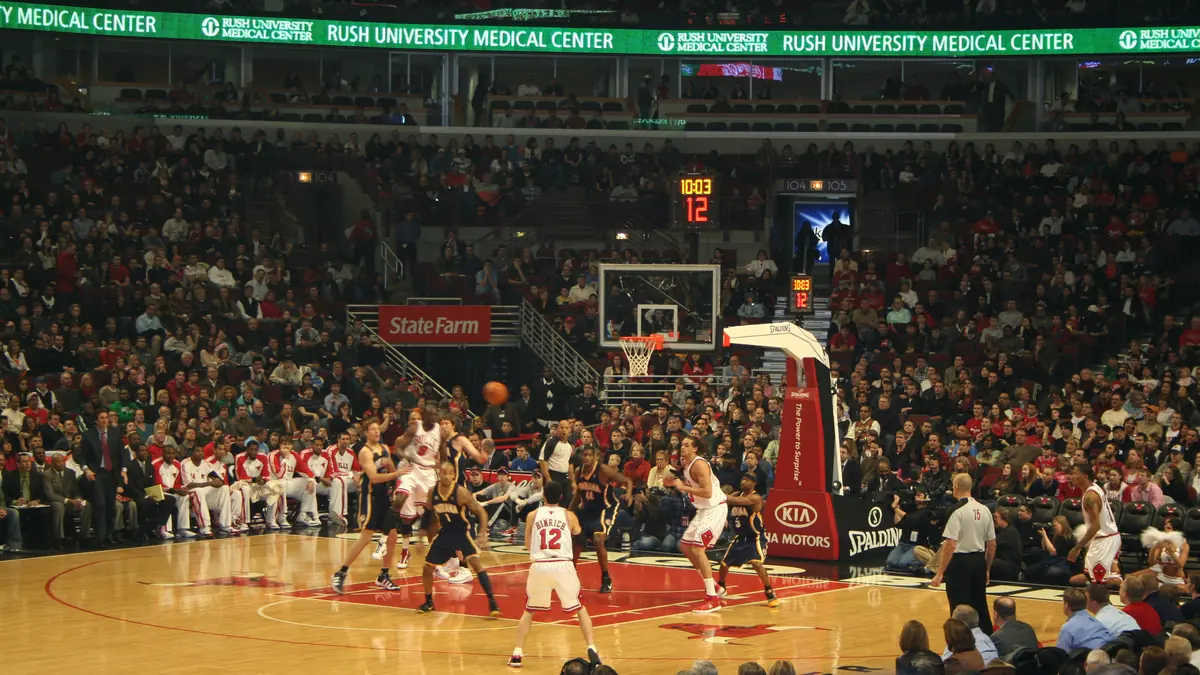
Controlling tempo in EuroLeague basketball means managing a game that is itself built on stop-start intensity. Stojanović and colleagues, reviewing the evidence on basketball match-play activity demands systematically, describe the sport as successive short, high-intensity bursts separated by brief active and passive recoveries, with mean intensities that put it clearly in the high-intensity intermittent class [1]. Ben Abdelkrim, El Fazaa and El Ati’s time-motion analysis of elite young players shows how granular that rhythm is: dozens of activity changes per minute, repeated jumps, shuffles, accelerations and decelerations, and heart rates sitting at or over the lactate threshold for large parts of a game [2]. A pace-controlling guard has to decide when to push and when to slow down while carrying that load himself.
For a tall point guard who dictates pace, the cognitive side is arguably the main event. Under fatigue perception narrows and visual search runs into its limits, which is exactly when tempo decisions in crowded transition get harder; Abernethy demonstrated that visual search strategy, what an athlete looks at, when and for how long, distinguishes elite from sub-elite performers in racket and team sports [3]. Vickers’ quiet-eye paradigm adds that a longer, more stable final fixation before a critical motor action goes with higher success in shooting and passing tasks [4]. So for a EuroLeague point guard using length to see over the floor, the line between an easy transition basket and a turnover is mostly visual and decisional rather than athletic.
Seeing over the defence helps only if the legs can still push the tempo. Cormie, McGuigan and Newton name three trainable drivers of maximal neuromuscular power, strength, the rate of force development and velocity and report that heavy resistance training combined with ballistic, speed-focused work is the most productive mix [5]. For a tall guard like Papaloukas, whose role rests on dictating pace from a length-driven view of the floor, strength, cognitive and energy-system capacities have to be trained in parallel; developed one at a time, none of them reaches the width the role requires.
The Case: Theodoros Papaloukas as a tall point-guard pace control archetype
Across a EuroLeague season, a 2.00 m, ~95 kg point guard must keep choosing the transition pace at which his length turns into easy baskets, and he must do it game after game [1, 2]. That repeatability rests on two supports: a wide energy-system reservoir, and decision-making that stays intact as fatigue builds, lacking them, a weak foundation is exposed in the final minutes. Papaloukas’s peak shows the link: a playmaker defined by skill, tempo and judgement still needed a body able to sustain those qualities across the full season load.
Length gives and takes. Papaloukas’s long-levered 2.0 m build extended the advantage of reading the floor from above and setting the tempo from that view, but a larger frame also needs more absolute strength to be accelerated explosively [5]. Among players of that build, whoever combines the highest relative strength per kilogram with the cleanest movement pattern stays most consistent deep into the playoffs, where games come in a shorter, denser block that punishes any physiological soft spot [1, 2].
Tempo is a decision before it is a sprint, which is why Papaloukas’s archetype is defined cognitively. In elite play the discriminating factor is how cleanly the eyes and prefrontal cortex segment the court and settle on a response under time pressure, movement speed comes second [3, 4]. A tall guard who holds a steady fixation, reads when a passing lane is about to appear and finishes the action as three defenders close in keeps his production intact in the decisive games of a series. The EuroLeague has plenty of athletes; late-game judgement that repeats against Europe’s best defences is what sets players apart [3, 4].
Context, not analysis: Papaloukas’s career per-game numbers in EuroLeague competition place him among the higher-producing point guards of his positional group, based on descriptive match data from EuroLeague.net and Basketball-Reference.
What This Means for the Reader
A young, tall playmaker should take this from it: EuroLeague-level output is the sum of three reservoirs, energy systems, neuromuscular power and decisional cognition and whichever is weakest caps performance [1, 2, 3, 4, 5]. Length helps him see the floor, but a player who trains only conditioning, only strength or only skill cannot keep dictating tempo against opponents who develop all three.
Tall guards who run the tempo should check three things to find the limiting reservoir. First, the engine that has to keep pushing the break: a graded exercise test, or the heart-rate-recovery profile tracked across the season. Second, the capacity to move a long frame explosively: strength relative to body mass and a countermovement jump. Third, the tempo reads themselves: a video-based decision-accuracy task. Slippage on any one is an early hint that command of the game is drifting toward a late fade. So when the pace gets away from him in the fourth quarter, the question is whether the engine is undersized, the power is leaking, or the eyes have quit reading the floor.
References
- Stojanović E, Stojiljković N, Scanlan AT, Dalbo VJ, Berkelmans DM, Milanović Z. (2018). The activity demands and physiological responses encountered during basketball match-play: a systematic review. Sports Medicine, 48(1): 111–135. doi:10.1007/s40279-017-0794-z
- Ben Abdelkrim N, El Fazaa S, El Ati J. (2007). Time-motion analysis and physiological data of elite under-19-year-old basketball players during competition. British Journal of Sports Medicine, 41(2): 69–75. doi:10.1136/bjsm.2006.032318
- Abernethy B. (1991). Visual search strategies and decision-making in sport. International Journal of Sport Psychology, 22(3-4): 189–210.
- Vickers JN. (2007). Perception, Cognition, and Decision Training: The Quiet Eye in Action. Human Kinetics. doi:10.5040/9781492595519
- Cormie P, McGuigan MR, Newton RU. (2011). Developing maximal neuromuscular power: Part 1, biological basis of maximal power production. Sports Medicine, 41(1): 17–38. doi:10.2165/11537690-000000000-00000
Match-context data (descriptive only): EuroLeague.net / Basketball-Reference.

Hüseyin Akbulut is the founder of Sporeus and author of THRESHOLD (EŞİK), a 540-page Turkish-language book on endurance science.
- 540pp THRESHOLD Book
- MSc Sport Sciences
- Marmara University
The Athlete in One Paragraph
A point guard standing 2.00 m is unusual enough; one who turned that length into command of transition pace is rarer still. Theodoros Papaloukas (b. 1977-05-08), a Greek playmaker listed at ~95 kg, is known across Europe for exactly that, and his peak together with…
The Physiology: what tall point-guard pace control actually measures
Controlling tempo in EuroLeague basketball means managing a game that is itself built on stop-start intensity. Stojanović and colleagues, reviewing the evidence on basketball match-play activity demands systematically, describe the sport as successive short, high-intensity bursts separated by brief active and passive recoveries, with mean…
The Case: Theodoros Papaloukas as a tall point-guard pace control archetype
Across a EuroLeague season, a 2.00 m, ~95 kg point guard must keep choosing the transition pace at which his length turns into easy baskets, and he must do it game after game [1, 2]. That repeatability rests on two supports: a wide energy-system reservoir,…
What This Means for the Reader
A young, tall playmaker should take this from it: EuroLeague-level output is the sum of three reservoirs, energy systems, neuromuscular power and decisional cognition and whichever is weakest caps performance [1, 2, 3, 4, 5]. Length helps him see the floor, but a player who…