Preview
Hüseyin Akbulut, MSc (2026). Vasilije Micić and the EuroLeague Pick-and-Roll Creator Physiology Profile. Sporeus. Retrieved, November 9, 2026. https://sporeus.com/en/science/vasilije-micic-euroleague-pick-and-roll-creator-physiology/
The Athlete in One Paragraph
For Vasilije Micić (b. 1994-01-13), the Serbian point guard as of September 2026 playing for Hapoel Tel Aviv in the EuroLeague, the reputation across European basketball rests on pick-and-roll patience and on the deceleration mechanics that make that patience possible. He is listed at 1.96 m and ~92 kg, and his style remains among the most debated in the competition. Sport science learns little from any single play; the interesting part is the physiological and cognitive build that lets a handler like him repeat elite output over 40 minutes, a regular season of 35-plus EuroLeague games, and a playoff run on top. Here that build is labelled Pick-and-roll creator physiology: the trainable determinants of deceleration mechanics and change-of-direction in pick-and-roll guards, and how together they deliver the consistency the EuroLeague demands.
Table of Contents
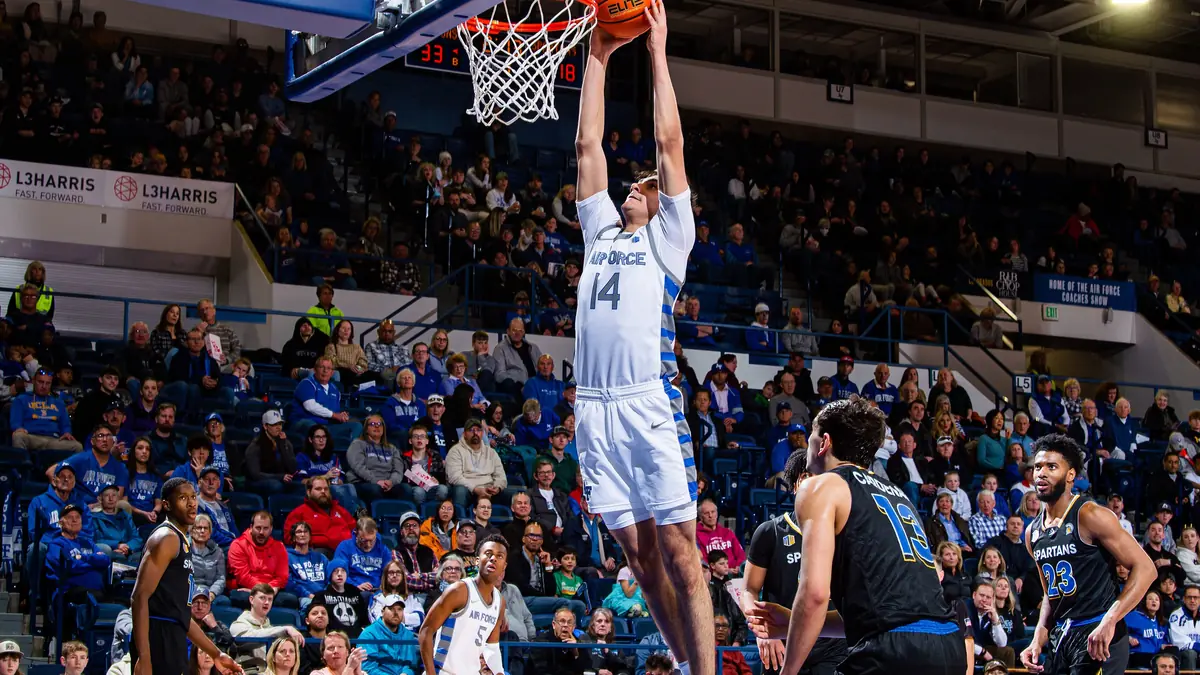
The Physiology: what pick-and-roll creator physiology actually measures
Ball-screen creation happens in a stop-start rhythm. A systematic review by Stojanović and colleagues describes basketball match-play as repeated short, high-intensity efforts with brief active and passive recoveries between them, at mean intensities that make it a high-intensity intermittent sport [1]. The time-motion analysis by Ben Abdelkrim, El Fazaa and El Ati of elite young players shows how fine-grained this is, dozens of activity changes a minute, frequent jumps and shuffles, accelerations and decelerations in constant alternation, with heart rate held at or above the lactate threshold for long parts of play [2]. For Micić, every hesitation, brake and restart off a ball screen is one more of these costly efforts.
Patience in the pick-and-roll is, at root, a visual skill. Fatigue narrows perception, and the quality of decisions in a crowded lane depends on how well the handler searches the scene; Abernethy found that the where, when and how-long of an athlete’s gaze separates elite from sub-elite performers across racket and team sports [3]. Vickers’ quiet-eye paradigm sharpens this: a longer and steadier final fixation before the key action is linked with higher success in shooting and passing [4]. For a EuroLeague point guard reading the roller and the weak-side help off a screen, the gap between a good play and a turnover is usually decided by the eyes rather than the legs.
Braking and re-accelerating off a screen is a power problem as much as a skill problem. Cormie, McGuigan and Newton single out three trainable levers of maximal neuromuscular power, strength ceiling, rate of force development and speed of movement and report that the most productive programmes pair heavy loading with ballistic, velocity-focused drills [5]. For a handler whose job is controlling ball-screen tempo and re-attacking after the screen, though, that power only counts when the strength base is developed in parallel with the cognitive and energy-system bases.
The Case: Vasilije Micić as a pick-and-roll creator physiology archetype
Micić brings 1.96 m and ~92 kg into every ball screen, and over a EuroLeague season that frame needs deceleration capacity that creates attack angles after the screen, possession after possession [1, 2]. That repeatability depends on pairing a large energy-system reservoir with decision-making that does not degrade, since the alternative is a late-game breakdown that exposes a thin physiological base. His current role sits squarely on that line: the skill, pace and judgement that define a pick-and-roll point guard must be carried by a body that lasts the whole EuroLeague calendar.
A point guard’s standard proportions help and cost at the same time. Micić’s build adds to the edge he gets from dictating ball-screen tempo and re-attacking once the screen is set, but every stop-and-go with that body mass draws on an absolute strength reservoir [5]. Across a long EuroLeague playoff run, with games packed closer together and physiological soft spots exposed, the handler holding the best relative strength and the tidiest movement pattern for his size keeps the most reliable profile [1, 2].
Vasilije Micić’s archetype is defined by what he sees while the screen is being set. At the elite level, the discriminator is not raw movement speed but how precisely the eyes and prefrontal cortex divide the picture, roller, weak-side help, the defender on the ball and pick an option before time runs out [3, 4]. A handler who holds a stable fixation, anticipates a passing lane before the coverage closes it and delivers the ball while three defenders converge keeps his production late in a playoff series. EuroLeague benches are full of athletes; the difference is decision quality repeated in late-game minutes against Europe’s best defensive schemes [3, 4].
Background only: Micić’s per-game EuroLeague output across his career places him high among point guards of his cohort, according to descriptive match data from EuroLeague.net and Basketball-Reference.
What This Means for the Reader
The lesson a developing ball-screen guard can take here is that EuroLeague performance pulls from three reservoirs, energy systems, neuromuscular power and decisional cognition and the weakest one becomes the performance ceiling [1, 2, 3, 4, 5]. Braking, re-accelerating and reading the coverage are one package; training conditioning, strength or skill in isolation leaves a player outgrown by opponents who develop all three.
For a pick-and-roll creator, three measurements locate the limiting reservoir: a graded exercise test or an in-season heart-rate-recovery profile for the energy systems, a relative-to-body-mass strength benchmark with a countermovement jump for the neuromuscular capacity that brakes and re-accelerates the body, and a video-based decision-accuracy task for reading coverages. A downward drift in any of the three is an early warning that the late-game profile is sliding toward decline. The diagnostic question for a young ball-screen guard: when my fourth-quarter possessions get sloppier, is my engine too small, is my power leaking on the stops and starts, or are my eyes no longer reading the floor?
References
- Stojanović E, Stojiljković N, Scanlan AT, Dalbo VJ, Berkelmans DM, Milanović Z. (2018). The activity demands and physiological responses encountered during basketball match-play: a systematic review. Sports Medicine, 48(1): 111–135. doi:10.1007/s40279-017-0794-z
- Ben Abdelkrim N, El Fazaa S, El Ati J. (2007). Time-motion analysis and physiological data of elite under-19-year-old basketball players during competition. British Journal of Sports Medicine, 41(2): 69–75. doi:10.1136/bjsm.2006.032318
- Abernethy B. (1991). Visual search strategies and decision-making in sport. International Journal of Sport Psychology, 22(3-4): 189–210.
- Vickers JN. (2007). Perception, Cognition, and Decision Training: The Quiet Eye in Action. Human Kinetics. doi:10.5040/9781492595519
- Cormie P, McGuigan MR, Newton RU. (2011). Developing maximal neuromuscular power: Part 1, biological basis of maximal power production. Sports Medicine, 41(1): 17–38. doi:10.2165/11537690-000000000-00000
Match-context data (descriptive only): EuroLeague.net / Basketball-Reference.

Hüseyin Akbulut is the founder of Sporeus and author of THRESHOLD (EŞİK), a 540-page Turkish-language book on endurance science.
- 540pp THRESHOLD Book
- MSc Sport Sciences
- Marmara University
The Athlete in One Paragraph
For Vasilije Micić (b. 1994-01-13), the Serbian point guard as of September 2026 playing for Hapoel Tel Aviv in the EuroLeague, the reputation across European basketball rests on pick-and-roll patience and on the deceleration mechanics that make that patience possible. He is listed at 1.96…
The Physiology: what pick-and-roll creator physiology actually measures
Ball-screen creation happens in a stop-start rhythm. A systematic review by Stojanović and colleagues describes basketball match-play as repeated short, high-intensity efforts with brief active and passive recoveries between them, at mean intensities that make it a high-intensity intermittent sport [1]. The time-motion analysis by…
The Case: Vasilije Micić as a pick-and-roll creator physiology archetype
Micić brings 1.96 m and ~92 kg into every ball screen, and over a EuroLeague season that frame needs deceleration capacity that creates attack angles after the screen, possession after possession [1, 2]. That repeatability depends on pairing a large energy-system reservoir with decision-making that…
What This Means for the Reader
The lesson a developing ball-screen guard can take here is that EuroLeague performance pulls from three reservoirs, energy systems, neuromuscular power and decisional cognition and the weakest one becomes the performance ceiling [1, 2, 3, 4, 5]. Braking, re-accelerating and reading the coverage are one…