Preview
Hüseyin Akbulut, MSc (2026). Will Clyburn and the EuroLeague Experienced-Scorer Shot-Selection Profile. Sporeus. Retrieved, November 10, 2026. https://sporeus.com/en/science/will-clyburn-euroleague-experienced-scorer-shot-selection/
The Athlete in One Paragraph
Will Clyburn (b. 1990-05-17), an American forward who played the 2025-26 EuroLeague season with FC Barcelona, is known across European basketball for scoring efficiently through patient shot selection and the choice of attack angle. Listed at 2.01 m and ~100 kg, he stands for one of the league’s most argued-over performance archetypes. What makes him a sport-science case is not a particular highlight but the physiological and cognitive architecture allowing a scorer of his profile to repeat elite output through a 40-minute game, through a regular season of 35-plus EuroLeague games, and into the playoffs. This profile names that architecture Experienced scorer shot selection, the trainable determinants of shot-selection cognition and efficiency in elite scorers, and how they combine to deliver the consistency the EuroLeague demands.
Table of Contents
The Physiology: what experienced scorer shot selection actually measures
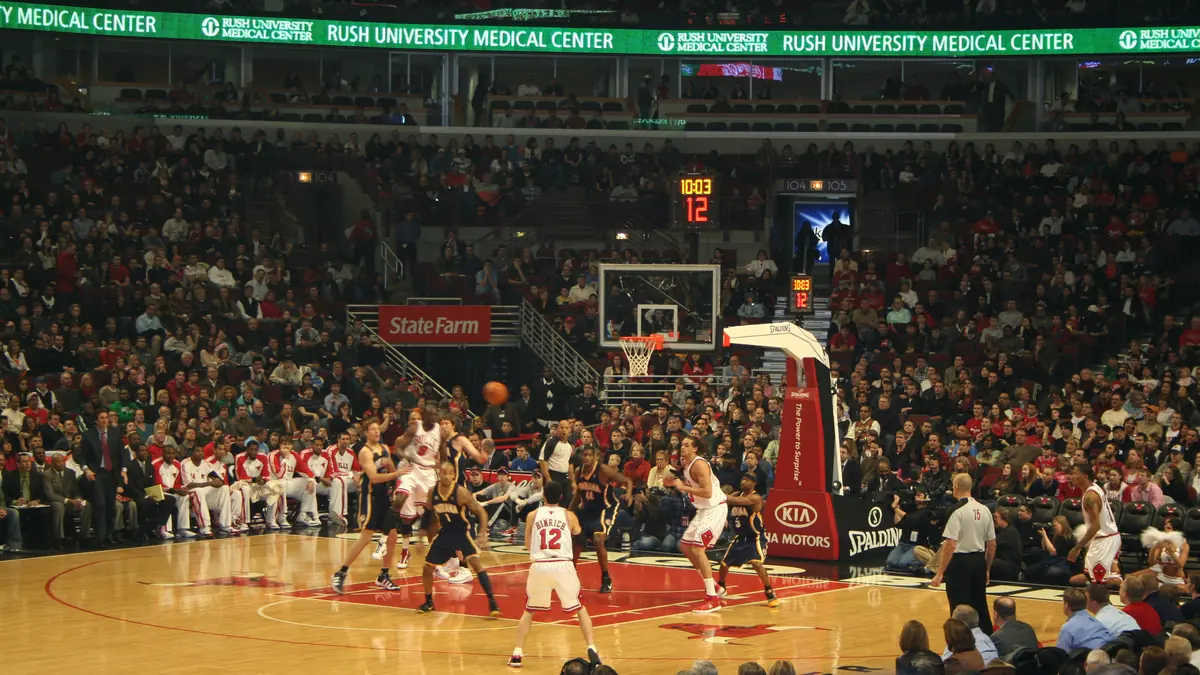
An experienced scorer’s shot selection is made inside a sport that keeps pushing players toward fatigue. Stojanović and colleagues’ systematic review of basketball match-play demands lays out the game as short, high-intensity bursts linked by brief active and passive recoveries, and its mean intensities place it clearly within high-intensity intermittent sport [1]. The time-motion analysis of elite young players by Ben Abdelkrim, El Fazaa and El Ati makes the load concrete for a forward hunting good looks: dozens of changes of activity per minute, jumps, shuffles, accelerations and decelerations, and heart rate at or above the lactate threshold for sizeable parts of the game [2]. Every choice between a contested jumper and a better angle is made on top of that strain.
Shot selection is ultimately a visual skill. In dense traffic, fatigue narrows perception and visual search runs up against its limits, constraining decisions; Abernethy found that elite and sub-elite performers in racket and team sports differ in their search strategies, where they look, when and for how long [3]. Vickers’ quiet-eye paradigm extends this, showing that the duration and stability of the final fixation before a critical motor action tracks success in shooting and passing [4]. For a EuroLeague forward picking his looks, the gap between a good shot and a turnover is frequently visual and decisional rather than athletic.
Choosing the right shot is cognitive, but getting to the chosen angle takes power. Cormie, McGuigan and Newton show that maximal neuromuscular power depends on trainable qualities, peak strength, how fast force is developed, movement speed and develops best from heavy strength work combined with ballistic, velocity-biased work [5]. For a forward whose role is picking the right shot and attack angle each possession, the reservoir holds only when strength, cognition and energy systems are built in parallel rather than separately.
The Case: Will Clyburn as an experienced scorer shot selection archetype
Clyburn needs shot-selection cognition that keeps efficiency above raw volume, and at 2.01 m and ~100 kg he needs it through an entire EuroLeague season. Sustaining it requires a wide energy-system reservoir together with decision-making that fatigue leaves intact; without both, a late-game collapse exposes a weak physiological foundation [1, 2]. His current role is exactly that meeting point, a scorer defined by skill, pace and judgement whose body has to keep supporting that skill across the whole EuroLeague calendar.
Frame size gives an experienced scorer both options and costs. Clyburn’s 2.01 m levers extend the advantage behind picking the right shot and attack angle each possession, while also raising the absolute strength reservoir needed to move his body explosively across the floor [5]. During the longer EuroLeague playoff run, where a shorter and denser schedule punishes physiological soft spots, the scorer with the best relative strength and the cleanest motor pattern for his size keeps the steadiest profile [1, 2].
Will Clyburn’s archetype takes its identity from the decision that comes before each shot. The elite discriminator is not how fast a body moves but how cleanly the eyes and prefrontal cortex read the defence and pick the next action under time pressure [3, 4]. A scorer who holds a stable fixation, anticipates a passing window, and executes his choice while three defenders converge is the one whose production holds up in the final games of a playoff series. EuroLeague rosters are stacked with athletes; the differentiator is judgement that repeats late in games against Europe’s best defences [3, 4].
Purely as a descriptive aside: measured per game in EuroLeague play across his career, Clyburn’s contributions rank near the top among forwards in his cohort, per EuroLeague.net and Basketball-Reference.
What This Means for the Reader
For a young scorer, the takeaway is that shot selection is not only a skill issue: efficient scoring draws on three reservoirs, energy systems, neuromuscular power and decisional cognition and a shortfall in any one becomes the variable that limits output [1, 2, 3, 4, 5]. A scorer who trains only fitness, only strength, or only shooting will stall against opponents developing all three.
For a developing scorer, three measurements identify the limiting reservoir: a graded exercise test or in-season heart-rate-recovery profile for energy systems, a body-mass-relative strength benchmark and countermovement jump for neuromuscular power, and a video-based decision-accuracy test for cognition. A drift in any of them warns that late-game shot quality is sliding toward decline. The scorer’s question: when my shots get worse in the fourth quarter, is it because my engine is small, my legs have lost their power, or I have stopped picking the right attack angle?
References
- Stojanović E, Stojiljković N, Scanlan AT, Dalbo VJ, Berkelmans DM, Milanović Z. (2018). The activity demands and physiological responses encountered during basketball match-play: a systematic review. Sports Medicine, 48(1): 111–135. doi:10.1007/s40279-017-0794-z
- Ben Abdelkrim N, El Fazaa S, El Ati J. (2007). Time-motion analysis and physiological data of elite under-19-year-old basketball players during competition. British Journal of Sports Medicine, 41(2): 69–75. doi:10.1136/bjsm.2006.032318
- Abernethy B. (1991). Visual search strategies and decision-making in sport. International Journal of Sport Psychology, 22(3-4): 189–210.
- Vickers JN. (2007). Perception, Cognition, and Decision Training: The Quiet Eye in Action. Human Kinetics. doi:10.5040/9781492595519
- Cormie P, McGuigan MR, Newton RU. (2011). Developing maximal neuromuscular power: Part 1, biological basis of maximal power production. Sports Medicine, 41(1): 17–38. doi:10.2165/11537690-000000000-00000
Match-context data (descriptive only): EuroLeague.net / Basketball-Reference.

Hüseyin Akbulut is the founder of Sporeus and author of THRESHOLD (EŞİK), a 540-page Turkish-language book on endurance science.
- 540pp THRESHOLD Book
- MSc Sport Sciences
- Marmara University
The Athlete in One Paragraph
Will Clyburn (b. 1990-05-17), an American forward who played the 2025-26 EuroLeague season with FC Barcelona, is known across European basketball for scoring efficiently through patient shot selection and the choice of attack angle. Listed at 2.01 m and ~100 kg, he stands for one…
The Physiology: what experienced scorer shot selection actually measures
An experienced scorer's shot selection is made inside a sport that keeps pushing players toward fatigue. Stojanović and colleagues' systematic review of basketball match-play demands lays out the game as short, high-intensity bursts linked by brief active and passive recoveries, and its mean intensities place…
The Case: Will Clyburn as an experienced scorer shot selection archetype
Clyburn needs shot-selection cognition that keeps efficiency above raw volume, and at 2.01 m and ~100 kg he needs it through an entire EuroLeague season. Sustaining it requires a wide energy-system reservoir together with decision-making that fatigue leaves intact; without both, a late-game collapse exposes…
What This Means for the Reader
For a young scorer, the takeaway is that shot selection is not only a skill issue: efficient scoring draws on three reservoirs, energy systems, neuromuscular power and decisional cognition and a shortfall in any one becomes the variable that limits output [1, 2, 3, 4,…