Preview
Hüseyin Akbulut, MSc (2026). Trajan Langdon and the EuroLeague Catch-and-Shoot Three-Point Mechanics Profile. Sporeus. Retrieved, November 9, 2026. https://sporeus.com/en/science/trajan-langdon-euroleague-catch-and-shoot-three-point-mechanics/
The Athlete in One Paragraph
Trajan Langdon (b. 1976-05-13), an American shooting guard listed at 1.91 m and ~88 kg, is known across European basketball for arriving feet-set and releasing a clean catch-and-shoot jumper. Both his peak and the front-office legacy that followed keep this archetype a regular subject of discussion. Sport science cares less about any individual make than about the physiological and cognitive scaffolding that allowed a player like him to repeat elite output, within a 40-minute game, across a EuroLeague regular season running past 35 games, and on through the playoffs. The scaffolding is called Catch-and-shoot three-point mechanics: how trainable determinants of shooting mechanics and feet-set alignment in elite shooters produce the consistency the EuroLeague demands.
Table of Contents
The Physiology: what catch-and-shoot three-point mechanics actually measures
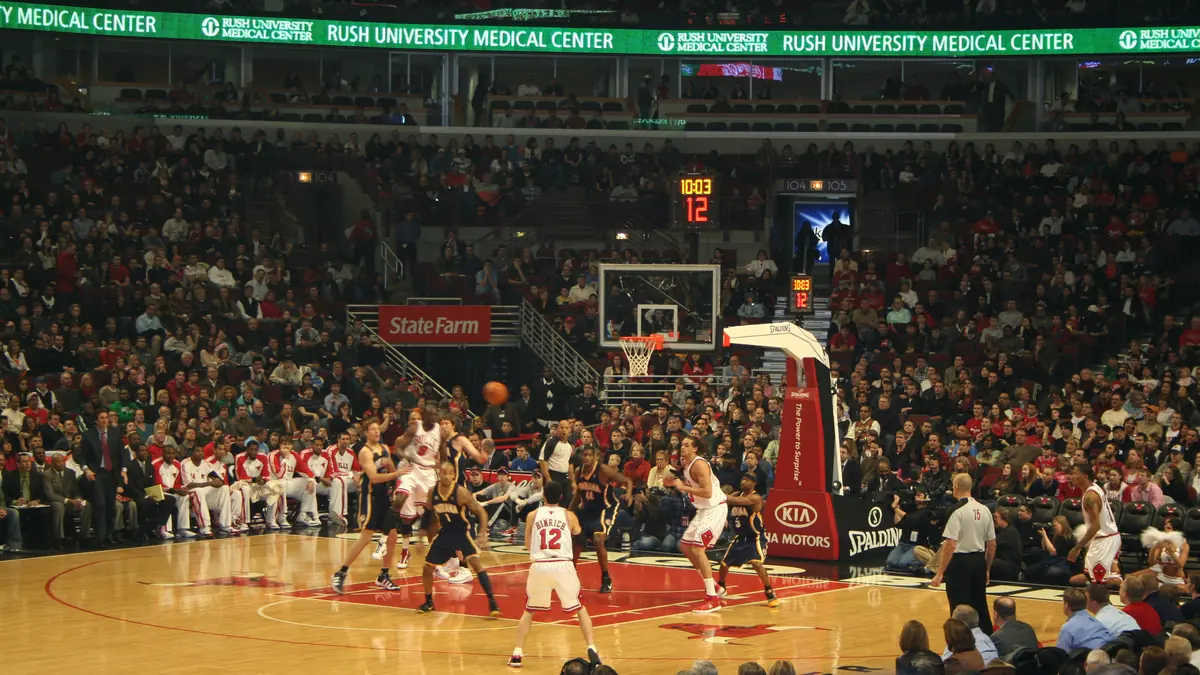
A catch-and-shoot specialist rarely shoots fresh; the shot comes at the end of the running the game demands. Stojanović and colleagues’ systematic review of match-play demands characterises basketball as repeated short, high-intensity efforts broken up by brief active and passive recoveries, with mean intensities that firmly place it among high-intensity intermittent sports [1]. Ben Abdelkrim, El Fazaa and El Ati’s time-motion analysis of elite young players adds the fine grain: dozens of changes of activity per minute, frequent jumps, shuffles, accelerations and decelerations, and heart rates sitting at or above the lactate threshold for large portions of play [2]. Arriving feet-set for the catch means decelerating cleanly out of exactly those efforts.
Every catch-and-shoot attempt begins with a look, which puts cognition level with conditioning. As legs tire, attention funnels and the eyes can sample only so much of a busy floor; Abernethy’s studies across racket and team sports found elite players distinguished by how they scan, what they fixate, when, and for how long [3]. Vickers adds, through the quiet-eye paradigm, that a longer, steadier final fixation ahead of a critical motor action predicts better shooting and passing [4]. For a spot-up shooting guard like Langdon, the difference between a make and a giveaway usually comes from seeing and deciding, not from athletic tools.
Arriving feet-set depends on the legs as much as the hands. In Cormie, McGuigan and Newton’s account, a player’s maximal neuromuscular power rests on qualities that training can change, top strength, quick force production and movement velocity and the most effective stimulus combines heavy loads with ballistic, velocity-biased exercises [5]. Langdon’s role hinged on off-ball footwork that landed him feet-set for the catch, and for that the reservoir becomes wide enough only when strength, cognitive and energy-system bases are developed side by side.
The Case: Trajan Langdon as a catch-and-shoot three-point mechanics archetype
A 1.91 m, ~88 kg shooting guard needs a shot mechanic that holds up against contested closeouts, and he needs it repeatedly across a EuroLeague season [1, 2]. That depends on a wide energy-system reservoir combined with intact decision-making, so no late-game collapse exposes a weak physiological foundation. Langdon’s peak years sit at this intersection: a player defined by skill, pace and judgement whose body had to support that skill across the full season volume of the calendar.
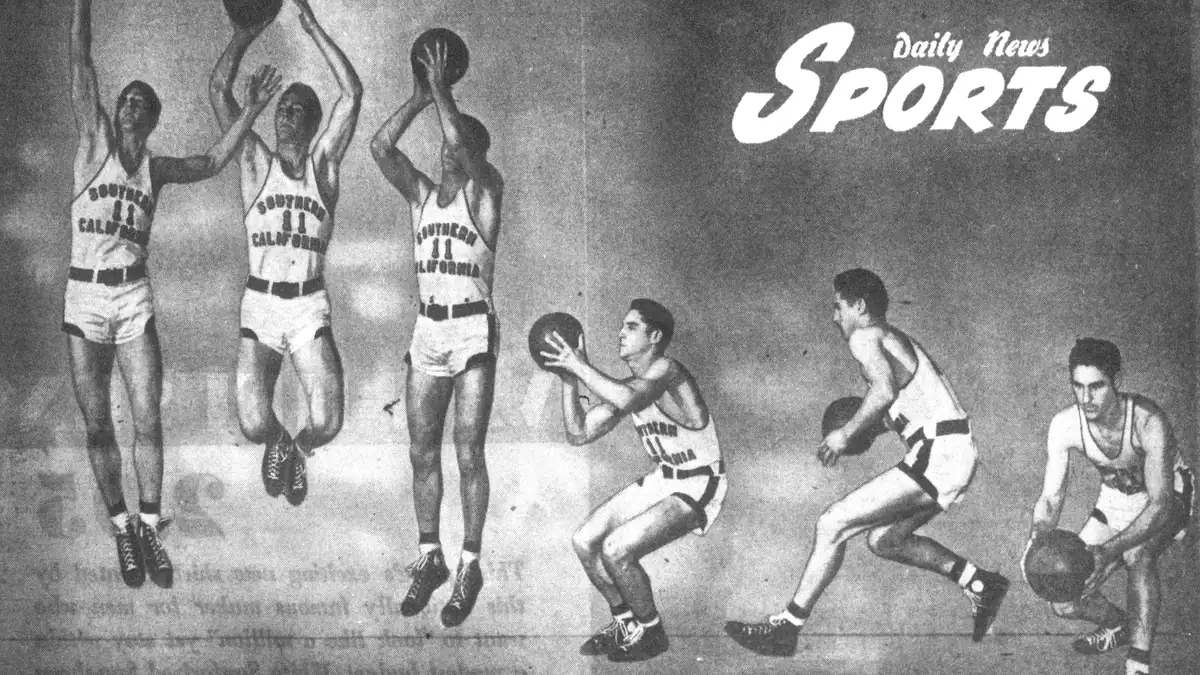
For Langdon, size is a double-edged factor. A standard shooting-guard frame is well suited to the off-ball footwork that brings him feet-set into the catch, yet accelerating that frame explosively still sets a meaningful absolute strength requirement [5]. Among shooters of this build, the one pairing high strength per kilogram with a clean motor pattern holds his level best across an extended playoff run, since a compressed postseason schedule exposes whatever the physiology lacks [1, 2].
For a catch-and-shoot specialist like Langdon, the identity of the archetype lies in perception and choice. The elite discriminator is how cleanly the eyes and prefrontal cortex partition the environment and pick an action under time pressure, not how fast the body moves [3, 4]. A shooter who holds a stable fixation, anticipates the window and executes while three defenders converge keeps his box score in a series’ deciding games. EuroLeague rosters are deep on athletic talent; repeatable late-game judgement against Europe’s best defences is the differentiator [3, 4].
Only as a description of context: Langdon’s per-game EuroLeague contributions, measured over his career, sit near the top among shooting guards of his cohort (numbers from EuroLeague.net / Basketball-Reference).
What This Means for the Reader
For a developing shooter, the takeaway is that a reliable EuroLeague catch-and-shoot game draws on three reservoirs, energy systems, neuromuscular power and decisional cognition and whichever one runs short caps the output [1, 2, 3, 4, 5]. Shooting reps alone are not enough: a player who trains only the metabolic, only the strength or only the technical side loses headroom against opponents building all three.
For a catch-and-shoot guard, testing can start with the cognitive reservoir, since shot selection and the final look at the rim sit at the centre of this role: a video-based decision-accuracy benchmark. The energy-system reservoir is covered by a graded exercise test or an in-season heart-rate-recovery profile, and the neuromuscular reservoir by a relative-to-body-mass strength benchmark and a countermovement jump. Drift in any of them warns that late-game shooting is shifting from presence to decline. The developing shooter’s diagnostic question: when my fourth-quarter shots start missing, is my engine too small, is my power leaking through the legs, or have my eyes stopped reading the closeout?
References
- Stojanović E, Stojiljković N, Scanlan AT, Dalbo VJ, Berkelmans DM, Milanović Z. (2018). The activity demands and physiological responses encountered during basketball match-play: a systematic review. Sports Medicine, 48(1): 111–135. doi:10.1007/s40279-017-0794-z
- Ben Abdelkrim N, El Fazaa S, El Ati J. (2007). Time-motion analysis and physiological data of elite under-19-year-old basketball players during competition. British Journal of Sports Medicine, 41(2): 69–75. doi:10.1136/bjsm.2006.032318
- Abernethy B. (1991). Visual search strategies and decision-making in sport. International Journal of Sport Psychology, 22(3-4): 189–210.
- Vickers JN. (2007). Perception, Cognition, and Decision Training: The Quiet Eye in Action. Human Kinetics. doi:10.5040/9781492595519
- Cormie P, McGuigan MR, Newton RU. (2011). Developing maximal neuromuscular power: Part 1, biological basis of maximal power production. Sports Medicine, 41(1): 17–38. doi:10.2165/11537690-000000000-00000
Match-context data (descriptive only): EuroLeague.net / Basketball-Reference.

Hüseyin Akbulut is the founder of Sporeus and author of THRESHOLD (EŞİK), a 540-page Turkish-language book on endurance science.
- 540pp THRESHOLD Book
- MSc Sport Sciences
- Marmara University
The Athlete in One Paragraph
Trajan Langdon (b. 1976-05-13), an American shooting guard listed at 1.91 m and ~88 kg, is known across European basketball for arriving feet-set and releasing a clean catch-and-shoot jumper. Both his peak and the front-office legacy that followed keep this archetype a regular subject of…
The Physiology: what catch-and-shoot three-point mechanics actually measures
A catch-and-shoot specialist rarely shoots fresh; the shot comes at the end of the running the game demands. Stojanović and colleagues' systematic review of match-play demands characterises basketball as repeated short, high-intensity efforts broken up by brief active and passive recoveries, with mean intensities that…
The Case: Trajan Langdon as a catch-and-shoot three-point mechanics archetype
A 1.91 m, ~88 kg shooting guard needs a shot mechanic that holds up against contested closeouts, and he needs it repeatedly across a EuroLeague season [1, 2]. That depends on a wide energy-system reservoir combined with intact decision-making, so no late-game collapse exposes a…
What This Means for the Reader
For a developing shooter, the takeaway is that a reliable EuroLeague catch-and-shoot game draws on three reservoirs, energy systems, neuromuscular power and decisional cognition and whichever one runs short caps the output [1, 2, 3, 4, 5]. Shooting reps alone are not enough: a player…