Preview
Hüseyin Akbulut, MSc (2026). Ramūnas Šiškauskas and the EuroLeague Two-Way Wing Aerobic-Base Profile. Sporeus. Retrieved, October 6, 2026. https://sporeus.com/en/science/ramunas-siskauskas-euroleague-two-way-wing-aerobic-base/
The Athlete in One Paragraph
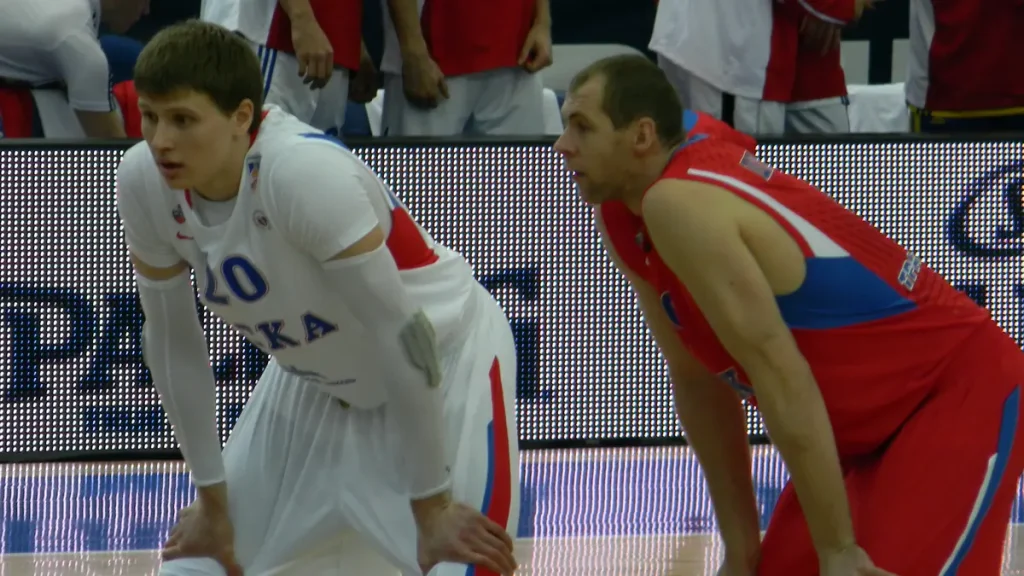
Ramūnas Šiškauskas (b. 1978-09-10), a Lithuanian shooting guard / small forward listed at 2.00 m and ~95 kg, is known in European basketball for tolerating two-way wing workloads on the strength of a deep aerobic base. His peak and subsequent coaching legacy keep his profile one of the league’s recurring reference points. The sport-science interest is not a highlight but the physiological and cognitive architecture that lets such a player repeat elite output — over a 40-minute game, a regular season of 35 or more EuroLeague games and the playoffs that follow. That is what Two-way wing aerobic base refers to: the trainable determinants of aerobic base and repeat-effort capacity in basketball wings, and how they combine to produce the consistency the EuroLeague demands.
Table of Contents
The Physiology — what two-way wing aerobic base actually measures
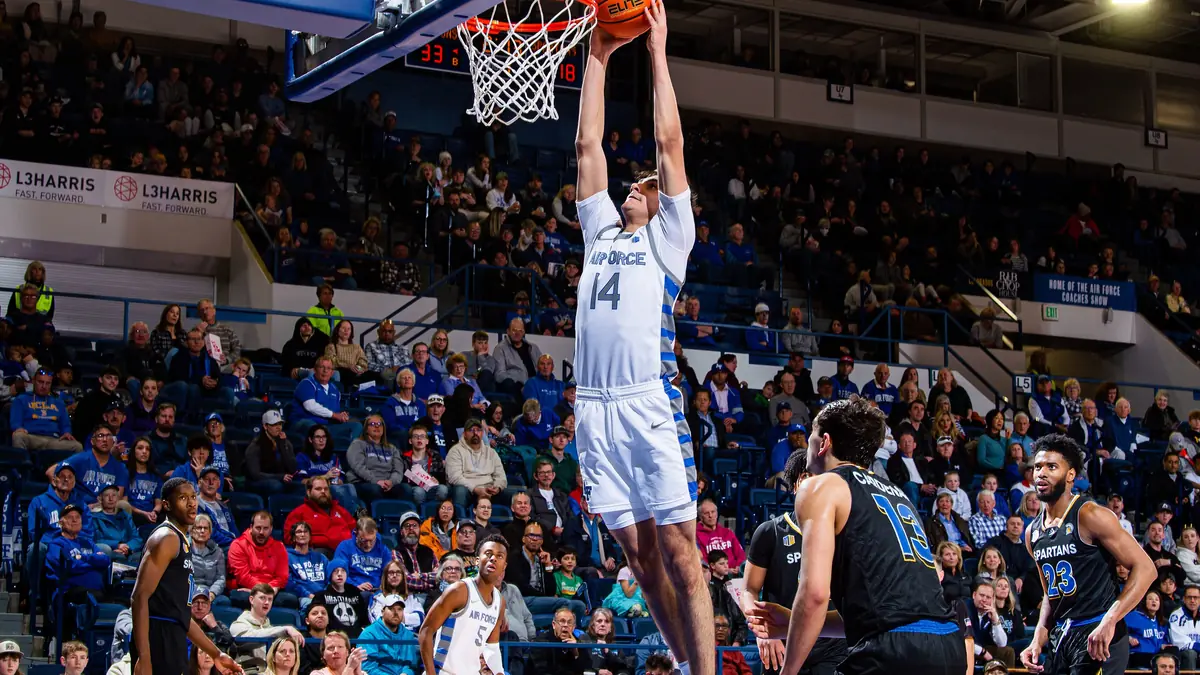
The case for a deep aerobic base begins with how the game is actually played. Stojanović and colleagues’ systematic review of match-play activity demands shows basketball to be a stream of short, high-intensity bursts linked by brief active or passive recoveries, with mean intensities high enough to classify it as a high-intensity intermittent sport [1]. Ben Abdelkrim, El Fazaa and El Ati’s time-motion analysis of elite young players fills in the texture — dozens of movement changes per minute, frequent jumps, shuffles, accelerations and decelerations — and records heart rates holding at or above the lactate threshold for large stretches of play [2]. For a wing expected to defend as hard as he scores, recovery between those bursts is where an aerobic base shows its value.
For a wing expected to defend and score, the mind is taxed as much as the metabolism. Choices made in crowded traffic are bounded by the tunnel vision fatigue brings and by what visual search can handle; according to Abernethy, the pattern of looking — its location, timing and duration — is what divides elite from sub-elite athletes in racket and team sports [3]. Vickers’ quiet-eye studies push the point further, relating a longer, stabler closing fixation before a critical motor action to more successful shots and passes [4]. For a shooting guard / small forward like Šiškauskas, turnovers versus good plays is frequently a matter of perception and choice more than physical gifts.
Aerobic capacity lets a two-way wing recover, but it does not make him powerful. The review by Cormie, McGuigan and Newton traces maximal neuromuscular power to three qualities training can move — peak strength, rate of force development, movement speed — and favours heavy lifting combined with ballistic, velocity-biased drills [5]. Šiškauskas’s role meant soaking up two-way load through long European seasons, and for that profile the reservoir only grows wide enough when strength, cognition and the energy systems are trained in step instead of in sequence.
The Case — Ramūnas Šiškauskas as a two-way wing aerobic base archetype
What a two-way wing of 2.00 m and ~95 kg needs is a wide aerobic base that survives the EuroLeague double-week, reproduced week after week through the season [1, 2]. It holds only when a broad energy-system reservoir is joined to decision-making that stays intact, preventing the late-game collapse that reveals a weak physiological foundation. Šiškauskas’s peak illustrates the overlap: a player defined by skill, pace and judgement also depended on a body able to carry that skill across the full calendar.
Šiškauskas’s 2.0 m, long-levered build brings both benefit and cost. It widens the on-court advantage of absorbing two-way load across long European seasons, while raising the absolute strength needed to move that frame explosively [5]. Among wings of this size, the one who pairs the greatest strength relative to body mass with the cleanest motor pattern is most consistent through a long playoff run, as the shorter, denser schedule punishes any soft spot in the underlying physiology [1, 2].
Šiškauskas’s archetype also carries a decisional signature. Elite players are separated by how cleanly their visual system and prefrontal cortex split up the environment and commit to a next step under time pressure — not by how quickly they move [3, 4]. A two-way wing who holds his gaze, reads a passing window early and follows through as three defenders converge is the one whose box score holds up in decisive series games. Athletic talent runs deep on EuroLeague rosters; repeatable late-game judgement against Europe’s best defences is the differentiator [3, 4].
Descriptive only: Šiškauskas’s career per-game figures in EuroLeague play place him among the upper group of wings — shooting guards and small forwards — in his cohort (Match data: EuroLeague.net / Basketball-Reference).
What This Means for the Reader
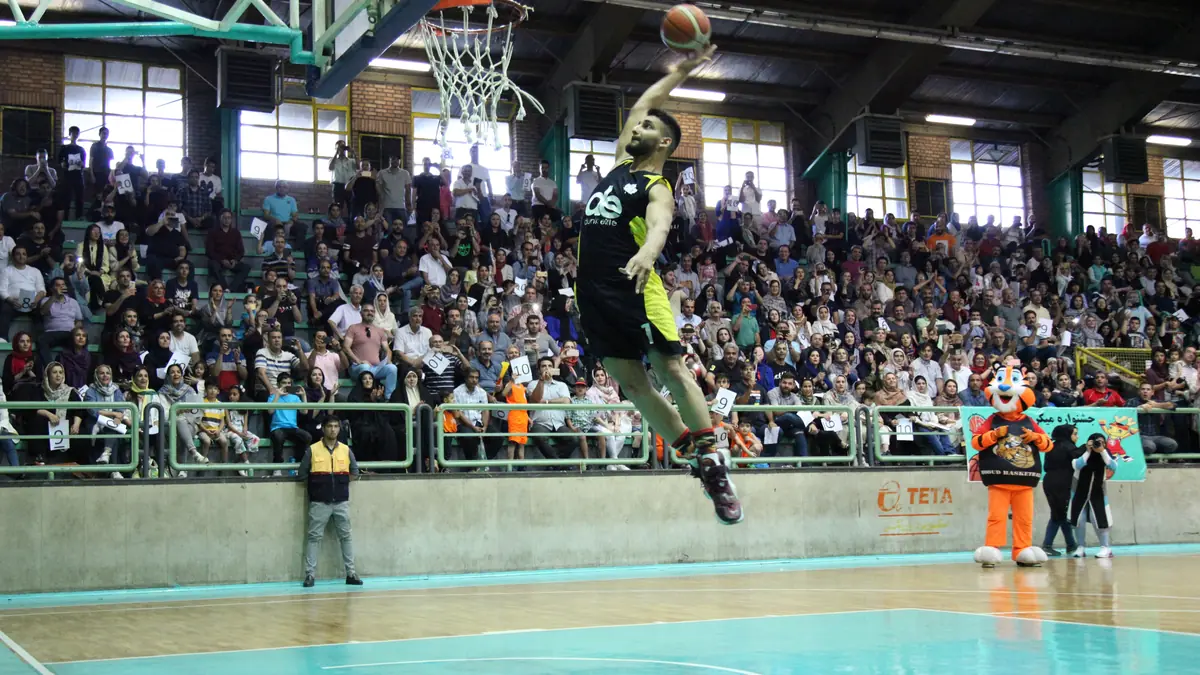
For a developing two-way wing, the message is that EuroLeague performance draws on three reservoirs — energy systems, neuromuscular power and decisional cognition — and the thinnest of them decides how far the player can go [1, 2, 3, 4, 5]. An aerobic base matters, but a wing who builds only conditioning, only strength or only technique still hits a ceiling against opponents who develop all three together.
For a two-way wing, the energy-system reservoir is the natural first check: a graded exercise test, or an in-season heart-rate-recovery profile that shows how quickly the player comes down between efforts. The neuromuscular reservoir is tracked with a strength benchmark relative to body mass and a countermovement jump, and the cognitive reservoir with a video-based decision-accuracy test. When any of these drifts, it is an early warning that the player is heading toward late-game decline instead of late-game presence at both ends. The developing wing’s diagnostic question: when my defence and scoring both fade in the fourth quarter, is the engine too small, is power leaking, or have my eyes stopped reading the floor?
References
- Stojanović E, Stojiljković N, Scanlan AT, Dalbo VJ, Berkelmans DM, Milanović Z. (2018). The activity demands and physiological responses encountered during basketball match-play: a systematic review. Sports Medicine, 48(1): 111–135. doi:10.1007/s40279-017-0794-z
- Ben Abdelkrim N, El Fazaa S, El Ati J. (2007). Time-motion analysis and physiological data of elite under-19-year-old basketball players during competition. British Journal of Sports Medicine, 41(2): 69–75. doi:10.1136/bjsm.2006.032318
- Abernethy B. (1991). Visual search strategies and decision-making in sport. International Journal of Sport Psychology, 22(3-4): 189–210.
- Vickers JN. (2007). Perception, Cognition, and Decision Training: The Quiet Eye in Action. Human Kinetics. doi:10.5040/9781492595519
- Cormie P, McGuigan MR, Newton RU. (2011). Developing maximal neuromuscular power: Part 1 — biological basis of maximal power production. Sports Medicine, 41(1): 17–38. doi:10.2165/11537690-000000000-00000
Match-context data (descriptive only): EuroLeague.net / Basketball-Reference.
The Athlete in One Paragraph
Ramūnas Šiškauskas (b. 1978-09-10), a Lithuanian shooting guard / small forward listed at 2.00 m and ~95 kg, is known in European basketball for tolerating two-way wing workloads on the strength of a deep aerobic base. His peak and subsequent coaching legacy keep his profile…
The Physiology — what two-way wing aerobic base actually measures
The case for a deep aerobic base begins with how the game is actually played. Stojanović and colleagues' systematic review of match-play activity demands shows basketball to be a stream of short, high-intensity bursts linked by brief active or passive recoveries, with mean intensities high…
The Case — Ramūnas Šiškauskas as a two-way wing aerobic base archetype
What a two-way wing of 2.00 m and ~95 kg needs is a wide aerobic base that survives the EuroLeague double-week, reproduced week after week through the season [1, 2]. It holds only when a broad energy-system reservoir is joined to decision-making that stays intact,…
What This Means for the Reader
For a developing two-way wing, the message is that EuroLeague performance draws on three reservoirs — energy systems, neuromuscular power and decisional cognition — and the thinnest of them decides how far the player can go [1, 2, 3, 4, 5]. An aerobic base matters,…