Preview
Hüseyin Akbulut, MSc (2026). Vassilis Spanoulis and the EuroLeague Clutch-Scorer Arousal-Control Profile. Sporeus. Retrieved, November 7, 2026. https://sporeus.com/en/science/vassilis-spanoulis-euroleague-clutch-scorer-arousal-control/
The Athlete in One Paragraph
Late-game scoring that held up under playoff arousal is what Vassilis Spanoulis (b. 1982-08-07) is known for across European basketball. The Greek combo guard, listed at 1.94 m and ~95 kg, has a playing peak and a coaching legacy that keep his archetype among the league’s most discussed. For sport science, one big shot matters less than the physiological and cognitive structure that let him produce repeatable elite output over a 40-minute game, through a EuroLeague regular season of more than 35 games, and on into the playoffs. The variable in question is Clutch scorer arousal control: the trainable determinants of arousal regulation and pressure performance in elite athletes, and how they combine into the kind of consistency the EuroLeague requires.
Table of Contents
The Physiology: what clutch scorer arousal control actually measures
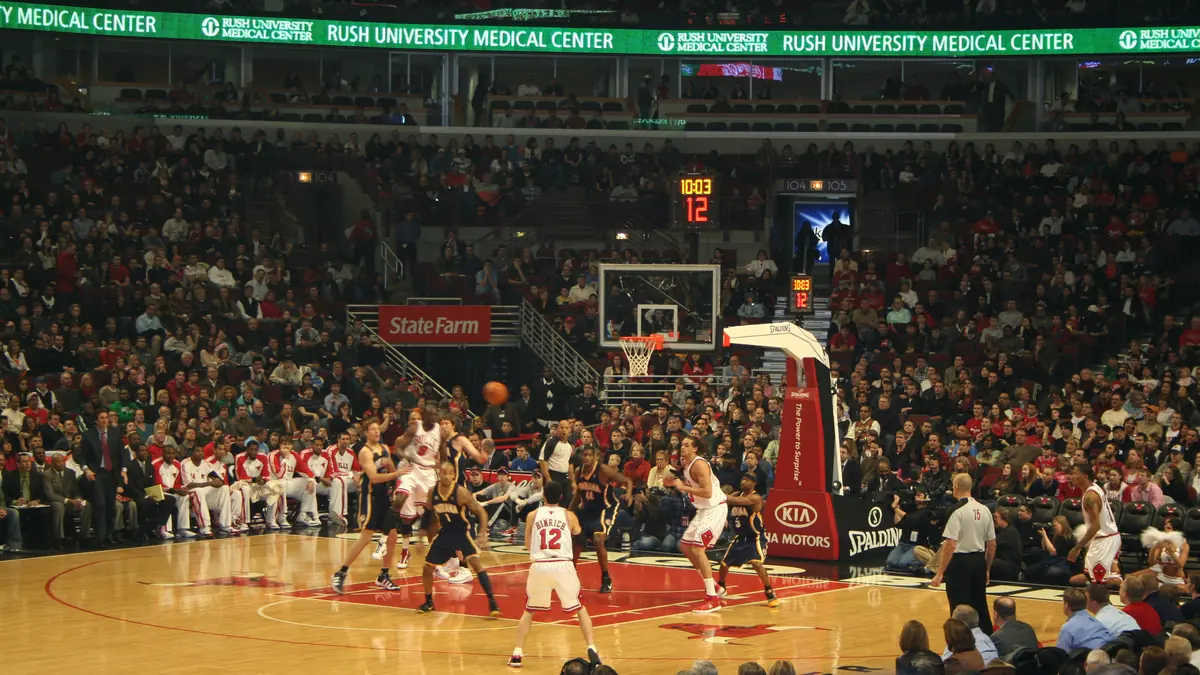
A clutch scorer’s last-minute possessions arrive after forty minutes of a very particular kind of stress. Reviewing basketball match-play activity demands systematically, Stojanović and colleagues found a sport made of short, high-intensity bouts strung together with brief periods of active or passive recovery, and mean intensities high enough to rank it among high-intensity intermittent activities [1]. The elite-youth time-motion work of Ben Abdelkrim, El Fazaa and El Ati puts detail on that texture, dozens of activity switches every minute, repeated jumping, shuffling, speeding up and braking, with heart rate spending long periods at or beyond the lactate threshold [2]. Whatever composure a scorer shows at the end is regulated on top of that accumulated load.
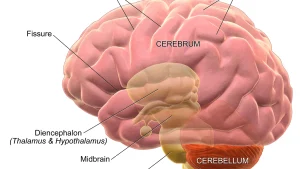
For a clutch scorer, the cognitive layer is where elevated arousal either does its damage or gets contained. Perception narrows under fatigue and visual search has limits, and late-game pressure only adds to that load; Abernethy showed that visual search strategy, where the athlete looks, when, and for how long, separates elite from sub-elite performers across racket and team sports [3]. Vickers’ quiet-eye paradigm extends this: a longer and steadier final fixation before a critical motor action is associated with higher success in shooting and passing tasks [4], which puts the final look before a late-game shot at the centre of this profile. For a EuroLeague combo guard with the ball in the last possessions, the difference between a good play and a turnover is often visual and decisional rather than athletic.
Composure in the final minute sits on top of a physical base. Cormie, McGuigan and Newton show that maximal neuromuscular power is driven by factors that respond to training, maximal strength, rate of force development and movement velocity and that pairing heavy strength training with ballistic, velocity-biased work gives the most productive adaptation [5]. For a scorer of Spanoulis’s type, whose role depends on regulating arousal so that late decisions stay clean, the reservoir becomes wide enough only when strength, cognitive and energy-system bases grow in parallel rather than in isolation.
The Case: Vassilis Spanoulis as a clutch scorer arousal control archetype
A 1.94 m, ~95 kg combo guard who takes the last shots must be able to score under elevated arousal without his form breaking down, and must manage it repeatedly across a EuroLeague season [1, 2]. The requirement is a broad energy-system reservoir combined with decision-making that fatigue has not eroded; missing either, the late-game collapse follows and reveals the weak foundation. Spanoulis’s peak sits at this junction: a player defined by skill, pace and judgement whose body still had to sustain that skill through the whole seasonal load.
Spanoulis’s frame is a two-sided factor. A typical combo-guard build supports the arousal regulation that keeps late-game decisions clean, yet moving that body explosively across the court demands a sizeable absolute strength reservoir [5]. For players of his size, the one with the best strength relative to body mass and the cleanest motor pattern is the most consistent across an extended playoff run, where a denser, compressed schedule punishes any weakness in the underlying physiology [1, 2].
Under pressure, Spanoulis’s archetype is identified by judgement. What distinguishes elite decision-makers is not movement speed but how clearly eyes and prefrontal cortex organise the environment and choose what comes next as time runs down [3, 4]. A scorer who keeps a stable fixation, spots an opening in advance and carries out the choice with three defenders converging is the one whose production survives the deciding games of a series. EuroLeague rosters hold ample athleticism; the separator is decision quality that repeats in the closing minutes against the strongest European defences [3, 4].
Descriptive context: in EuroLeague competitions, Spanoulis’s per-game contributions over his career sample sit within the upper band of combo guards in his positional cohort (source: EuroLeague.net / Basketball-Reference match data, used descriptively).
What This Means for the Reader
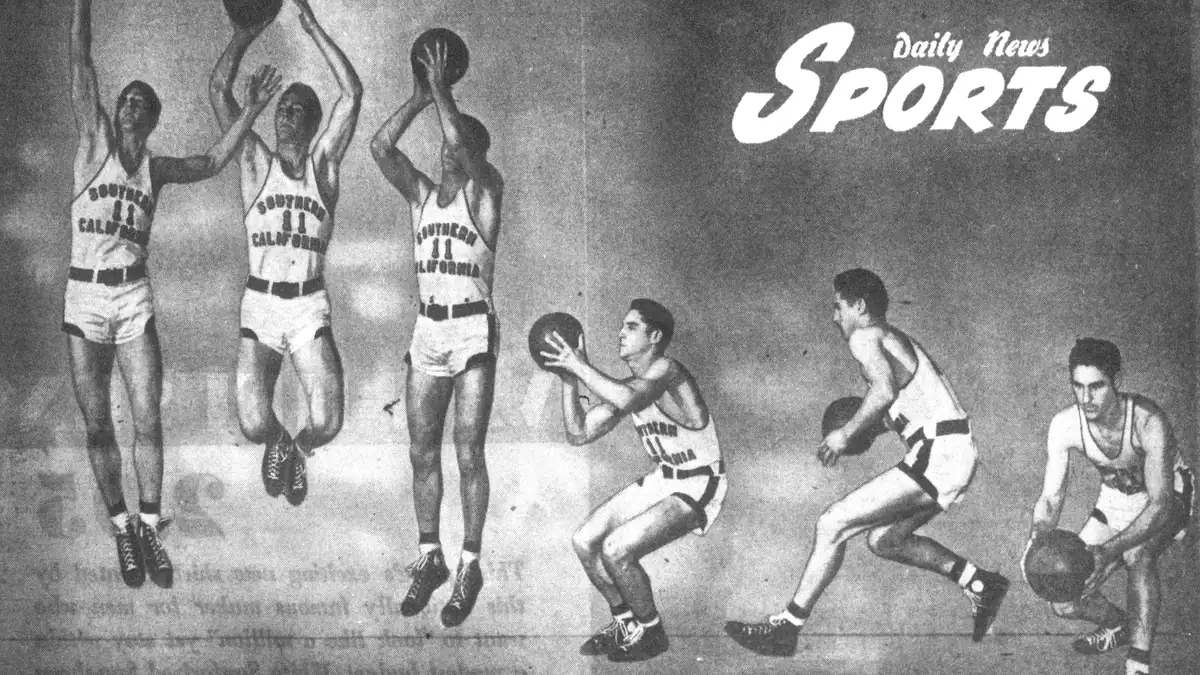
The lesson for a young scorer who wants the ball late: EuroLeague performance depends on three reservoirs, energy systems, neuromuscular power and decisional cognition and a shortfall in any one caps what happens in the final minutes [1, 2, 3, 4, 5]. Composure cannot be built on an empty tank or a leaking power base, and a player who trains only one side runs out of room against opponents who build all three.
Which reservoir is holding back a young clutch scorer? Three checks answer it. Cognition, the reservoir this profile leans on hardest under pressure, is benchmarked through decision-task accuracy on video; the engine through a graded exercise test or a heart-rate-recovery profile gathered in season; neuromuscular power through strength scaled to body mass alongside a countermovement jump. Any of these trending down flags that late-game presence is starting to erode. After a poor finish the useful self-audit is simple: did my scoring fade because the engine is small, because power is leaking, or because pressure made my eyes stop reading the floor?
References
- Stojanović E, Stojiljković N, Scanlan AT, Dalbo VJ, Berkelmans DM, Milanović Z. (2018). The activity demands and physiological responses encountered during basketball match-play: a systematic review. Sports Medicine, 48(1): 111–135. doi:10.1007/s40279-017-0794-z
- Ben Abdelkrim N, El Fazaa S, El Ati J. (2007). Time-motion analysis and physiological data of elite under-19-year-old basketball players during competition. British Journal of Sports Medicine, 41(2): 69–75. doi:10.1136/bjsm.2006.032318
- Abernethy B. (1991). Visual search strategies and decision-making in sport. International Journal of Sport Psychology, 22(3-4): 189–210.
- Vickers JN. (2007). Perception, Cognition, and Decision Training: The Quiet Eye in Action. Human Kinetics. doi:10.5040/9781492595519
- Cormie P, McGuigan MR, Newton RU. (2011). Developing maximal neuromuscular power: Part 1, biological basis of maximal power production. Sports Medicine, 41(1): 17–38. doi:10.2165/11537690-000000000-00000
Match-context data (descriptive only): EuroLeague.net / Basketball-Reference.

Hüseyin Akbulut is the founder of Sporeus and author of THRESHOLD (EŞİK), a 540-page Turkish-language book on endurance science.
- 540pp THRESHOLD Book
- MSc Sport Sciences
- Marmara University
The Athlete in One Paragraph
Late-game scoring that held up under playoff arousal is what Vassilis Spanoulis (b. 1982-08-07) is known for across European basketball. The Greek combo guard, listed at 1.94 m and ~95 kg, has a playing peak and a coaching legacy that keep his archetype among the…
The Physiology: what clutch scorer arousal control actually measures
A clutch scorer's last-minute possessions arrive after forty minutes of a very particular kind of stress. Reviewing basketball match-play activity demands systematically, Stojanović and colleagues found a sport made of short, high-intensity bouts strung together with brief periods of active or passive recovery, and mean…
The Case: Vassilis Spanoulis as a clutch scorer arousal control archetype
A 1.94 m, ~95 kg combo guard who takes the last shots must be able to score under elevated arousal without his form breaking down, and must manage it repeatedly across a EuroLeague season [1, 2]. The requirement is a broad energy-system reservoir combined with…
What This Means for the Reader
The lesson for a young scorer who wants the ball late: EuroLeague performance depends on three reservoirs, energy systems, neuromuscular power and decisional cognition and a shortfall in any one caps what happens in the final minutes [1, 2, 3, 4, 5]. Composure cannot be…