Preview
Hüseyin Akbulut, MSc (2026). Andrei Kirilenko and the EuroLeague Versatile-Wing Energy-System Mix. Sporeus. Retrieved, October 6, 2026. https://sporeus.com/en/science/andrei-kirilenko-euroleague-versatile-wing-energy-system/
The Athlete in One Paragraph
Andrei Kirilenko (b. 1981-02-18) filled a stat-stuffing, multi-position wing role that drew on every energy system simultaneously, and that is what European basketball remembers him for. The Russian forward was listed at 2.06 m and ~102 kg; his peak years and the legacy after them still anchor debates about this archetype. Rather than a single highlight, sport science wants to understand what physiological and cognitive structure lets such a player keep reproducing elite output — inside one 40-minute game, over a regular season exceeding 35 EuroLeague fixtures, then through the playoffs. That structure is labelled Versatile wing energy-system mix: the way trainable determinants of the energy-system mix in multi-position basketball wings merge into the steadiness EuroLeague play requires.
Table of Contents

The Physiology — what versatile wing energy-system mix actually measures
A multi-position wing is exposed to nearly every demand the game contains, so the starting point is the structure of play itself. Stojanović and colleagues’ systematic review of basketball match-play demands describes the game as a chain of short, high-intensity efforts separated by brief active and passive recoveries, with average intensities that locate basketball squarely among high-intensity intermittent sports [1]. Ben Abdelkrim, El Fazaa and El Ati’s time-motion work on elite young players supplies the detail: dozens of activity changes every minute, repeated jumps, lateral shuffles, accelerations and decelerations, and heart-rate traces that stay at or above the lactate threshold for much of the game [2]. A wing who covers several positions across both halves samples almost every part of that spectrum.
A player switching between roles also switches between visual problems, so the cognitive load rivals the metabolic one. Decision-making in dense court traffic suffers as fatigue shrinks the perceptual field and as scanning capacity runs out; Abernethy reported that experts in racket and team sports use gaze differently from near-experts — choosing other targets, other moments, other dwell times [3]. Vickers’ quiet-eye evidence complements this: the final fixation preceding a critical motor action, when longer and steadier, accompanies better passing and shooting [4]. For a multi-position forward like Kirilenko, a good possession and a turnover are usually separated by vision and decision, not athleticism.
A role that touches every position also touches every trainable quality. Power, as Cormie, McGuigan and Newton frame it, grows from how much force an athlete can produce, how fast he can produce it and how quickly he can move, and responds best when heavy resistance sessions sit next to ballistic, speed-biased ones [5]. Kirilenko’s job — covering several positions and tasks in both halves — only works if strength, perception-decision skills and the energy systems are raised at the same time; build them in separate silos and the versatile role runs short of support.
The Case — Andrei Kirilenko as a versatile wing energy-system mix archetype
Across a EuroLeague season, a 2.06 m, ~102 kg forward must repeatedly supply an energy-system mix that supports contributions at both ends of the floor [1, 2]. That needs a wide energy-system reservoir alongside decision-making which stays intact, so the late-game collapse that exposes a weak physiological foundation never arrives. Kirilenko’s peak years show this intersection clearly: a player whose profile is defined by skill, pace and judgement also needed a body able to support that versatility through the full seasonal volume.
At 2.06 m, Kirilenko’s long levers were double-edged. They extended the advantage of covering several positions and tasks across both halves, but they also raise the absolute strength needed to move a body that size explosively [5]. For players of this build, the combination of the highest strength per kilogram of body mass and the cleanest motor pattern produces the steadiest profile across a long playoff run, where the shorter, denser schedule exposes any soft spot in the physiology [1, 2].
Versatility is ultimately a decision problem, and that is where Kirilenko’s archetype takes its specific shape. The elite discriminator is how well vision and the prefrontal cortex partition a changing scene and pick an action under time pressure, not raw movement speed [3, 4]. A forward who keeps his eyes steady, anticipates the moment a lane opens and acts while three defenders converge maintains his output in the games that decide a series. EuroLeague rosters are rich in athletes; what differentiates is repeatable late-game judgement against Europe’s best defences [3, 4].
A note for context only: Kirilenko’s per-game EuroLeague contributions, taken across his career, fall in the top band of forwards within his positional cohort (descriptive match data from EuroLeague.net / Basketball-Reference).
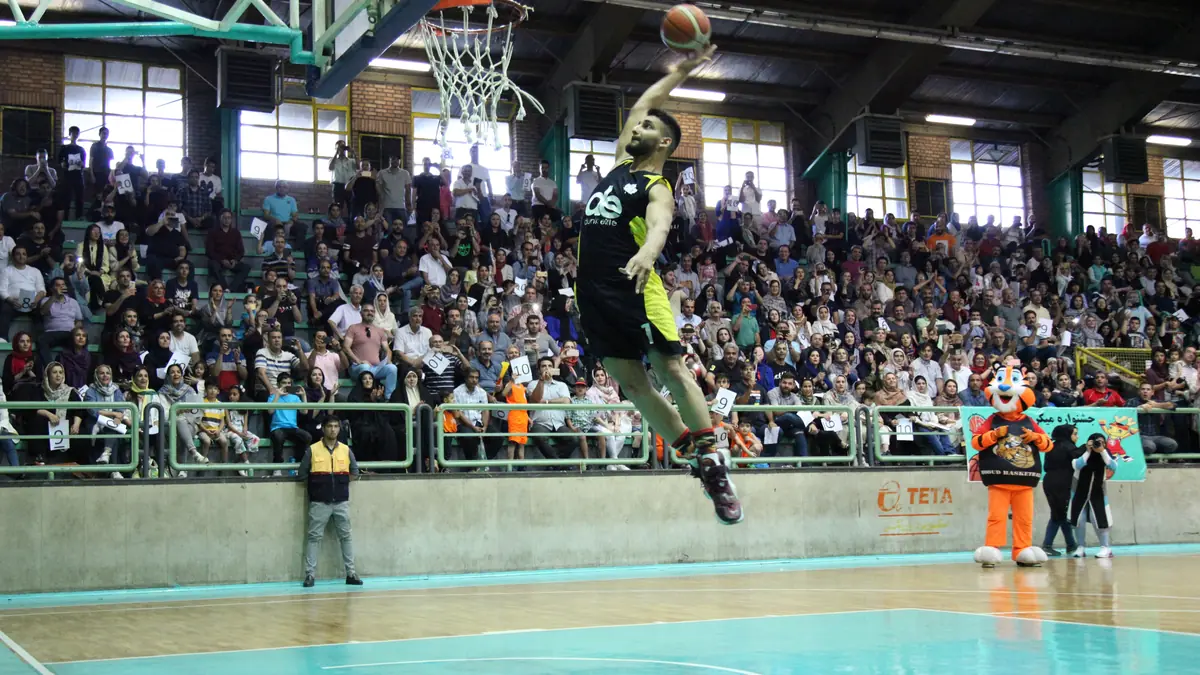
What This Means for the Reader
For a young wing who wants to play the versatile role, the lesson is that EuroLeague output rests on three reservoirs at once — energy systems, neuromuscular power and decisional cognition — and whichever is weakest sets the ceiling [1, 2, 3, 4, 5]. Because the versatile role asks for everything, a player who builds only aerobic fitness, only strength or only skill is exposed faster than one who develops all three in step.
For a versatile wing, measurement should begin with the energy-system mix, since that is the reservoir the role taxes most broadly: a graded exercise test or an in-season heart-rate-recovery profile. Alongside it sit a strength benchmark scaled to body mass plus a countermovement-jump test for neuromuscular power, and a video-based decision-accuracy task for cognition. A downward drift in any of these is the first sign that the player is sliding from late-game impact toward late-game fade. The question a developing wing should ask when fourth-quarter contributions shrink: is the engine too small for the range of tasks, is power leaking, or have the eyes stopped reading the floor?
References
- Stojanović E, Stojiljković N, Scanlan AT, Dalbo VJ, Berkelmans DM, Milanović Z. (2018). The activity demands and physiological responses encountered during basketball match-play: a systematic review. Sports Medicine, 48(1): 111–135. doi:10.1007/s40279-017-0794-z
- Ben Abdelkrim N, El Fazaa S, El Ati J. (2007). Time-motion analysis and physiological data of elite under-19-year-old basketball players during competition. British Journal of Sports Medicine, 41(2): 69–75. doi:10.1136/bjsm.2006.032318
- Abernethy B. (1991). Visual search strategies and decision-making in sport. International Journal of Sport Psychology, 22(3-4): 189–210.
- Vickers JN. (2007). Perception, Cognition, and Decision Training: The Quiet Eye in Action. Human Kinetics. doi:10.5040/9781492595519
- Cormie P, McGuigan MR, Newton RU. (2011). Developing maximal neuromuscular power: Part 1 — biological basis of maximal power production. Sports Medicine, 41(1): 17–38. doi:10.2165/11537690-000000000-00000
Match-context data (descriptive only): EuroLeague.net / Basketball-Reference.
The Athlete in One Paragraph
Andrei Kirilenko (b. 1981-02-18) filled a stat-stuffing, multi-position wing role that drew on every energy system simultaneously, and that is what European basketball remembers him for. The Russian forward was listed at 2.06 m and ~102 kg; his peak years and the legacy after them…
The Physiology — what versatile wing energy-system mix actually measures
A multi-position wing is exposed to nearly every demand the game contains, so the starting point is the structure of play itself. Stojanović and colleagues' systematic review of basketball match-play demands describes the game as a chain of short, high-intensity efforts separated by brief active…
The Case — Andrei Kirilenko as a versatile wing energy-system mix archetype
Across a EuroLeague season, a 2.06 m, ~102 kg forward must repeatedly supply an energy-system mix that supports contributions at both ends of the floor [1, 2]. That needs a wide energy-system reservoir alongside decision-making which stays intact, so the late-game collapse that exposes a…
What This Means for the Reader
For a young wing who wants to play the versatile role, the lesson is that EuroLeague output rests on three reservoirs at once — energy systems, neuromuscular power and decisional cognition — and whichever is weakest sets the ceiling [1, 2, 3, 4, 5]. Because…