Preview
Hüseyin Akbulut, MSc (2026). Yo-Yo Endurance Test: Protocol and Application. Sporeus. Retrieved, November 22, 2026. https://sporeus.com/en/egzersiz-testleri-en/yo-yo-endurance-test/
Measures: Aerobic endurance capacity, estimated VO₂max
Table of Contents
Difficulty: Moderate | Category: Aerobic
Protocol
The Yo-Yo Endurance Test is the most basic aerobic test in the Yo-Yo series. Unlike the intermittent recovery tests, there is no active recovery period between shuttles. Participants continue completing 20-meter shuttles at progressively increasing speeds.
Preparation: Two cones are placed 20 meters apart. The audio recording is adjusted so all participants can hear it equally. Participants warm up for 5–10 minutes with dynamic running, directional drills, and stretching.
Test Procedure: There are two versions: Level 1 starts at 8 km/h and Level 2 at 11.5 km/h (Bangsbo, 1994). At each beep, participants must have reached the opposite line and turned around. Similar to the standard Beep Test, speed increases with each level, but the Yo-Yo Endurance audio protocol provides a gentler progression, allowing the test to run longer and accommodate a wider range of participants.
Termination Criteria: The test ends when the participant fails to reach the line before the beep on two consecutive occasions. If a participant regains pace after one warning, they may continue.
Data Recording: The last completed level and shuttle number are recorded. Total distance is calculated and used for VO₂max estimation. Bangsbo’s tables can be used to estimate VO₂max, but these estimates have been shown to run systematically low in professional soccer players, so the result is best compared with your own previous tests.
Post-Test: A cool-down walk and stretching are performed. Heart rate and RPE values are recorded. Comparative interpretation with the Beep Test is possible as speed levels largely overlap.
Formula
Result = last completed level and shuttle + total distance (m); VO₂max can only be estimated roughly, from tables
Equipment Required
20 m flat area, Yo-Yo Endurance audio recording, cones (2)
Interpretation
There is no single widely accepted normative table for this test. Results are best interpreted against the person’s previous measurements with the same protocol and equipment (and, where relevant, left-right comparison).
Practical Applications
The Yo-Yo Endurance Test is suitable for general population assessment, school sports programs, and recreational athletes. It produces results comparable to the Beep Test and is practical for long-term tracking.
Limitations
Ceiling effects may occur in elite athletes. It measures continuous aerobic capacity rather than intermittent capacity, so it reflects team-sport intermittent performance less directly than IR1/IR2.
Related Tests: 20m Multi-Stage Fitness Test (Beep Test), Yo-Yo Intermittent Recovery Test Level 1 (Yo-Yo IR1), Cooper 12-Minute Run Test
Sources: Bangsbo J. (1994). Fitness Training in Football: A Scientific Approach. Bagsvaerd, Denmark: HO+Storm.; Bangsbo J, Iaia FM, Krustrup P. (2008). The Yo-Yo intermittent recovery test: a useful tool for evaluation of physical performance in intermittent sports. Sports Medicine, 38(1): 37-51. doi:10.2165/00007256-200838010-00004; Leger LA, Mercier D, Gadoury C, Lambert J. (1988). The multistage 20 metre shuttle run test for aerobic fitness. Journal of Sports Sciences, 6(2): 93-101. doi:10.1080/02640418808729800
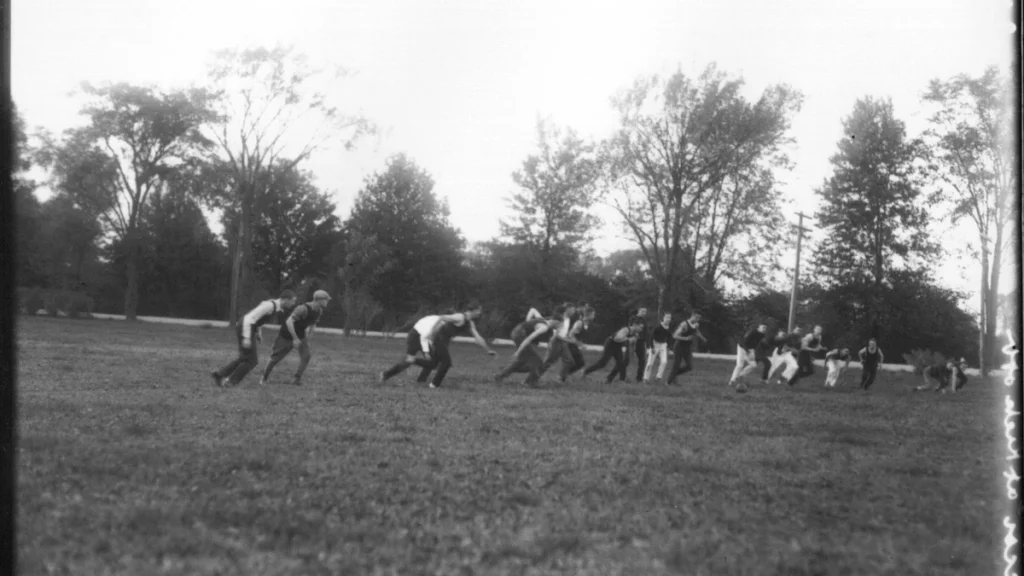
Photo: Frank R. Snyder, public domain (Wikimedia Commons)

Hüseyin Akbulut is the founder of Sporeus and author of THRESHOLD (EŞİK), a 540-page Turkish-language book on endurance science.
- 540pp THRESHOLD Book
- MSc Sport Sciences
- Marmara University
Protocol The Yo-Yo Endurance Test is the most basic aerobic test in the Yo-Yo series. Unlike the intermittent recovery tests, there is no active recovery period between shuttles. Participants continue completing 20-meter shuttles at progressively increasing speeds. Preparation: Two cones are placed 20 meters apart. The audio recording is adjusted so all participants can hear it equally. Participants warm up for 5–10 minutes with dynamic running, directional drills, and stretching. Test Procedure: There are two versions: Level 1 starts at 8 km/h and Level 2 at 11.5 km/h (Bangsbo, 1994). At each beep, participants must have reached the opposite line and turned around. Similar to the standard Beep Test, speed increases with each level, but the Yo-Yo Endurance audio protocol provides a gentler progression, allowing the test to run longer and accommodate a wider range of participants. Termination Criteria: The test ends when the participant fails to reach the line before the beep on two consecutive occasions. If a participant regains pace after one warning, they may continue. Data Recording: The last completed level and shuttle number are recorded. Total distance is calculated and used for VO₂max estimation. Bangsbo's tables can be used to estimate VO₂max, but these estimates have been shown to run systematically low in professional soccer players, so the result is best compared with your own previous tests. Post-Test: A cool-down walk and stretching are performed. Heart rate and RPE values are recorded. Comparative interpretation with the Beep Test is possible as speed levels largely overlap. Formula
Result = last completed level and shuttle + total distance (m); VO₂max can only be estimated roughly, from tables
Equipment Required
20 m flat area, Yo-Yo Endurance audio recording, cones (2)
Interpretation
There is no single widely accepted normative table for this test. Results are best interpreted against the person's previous measurements with the same protocol and equipment (and, where relevant, left-right comparison).