Preview
Hüseyin Akbulut, MSc (2026). Returning From Injury: The Science of Safe Rehabilitation. Sporeus. Retrieved, November 1, 2026. https://sporeus.com/en/injury/return-to-play-rehabilitation-football-science/
Introduction
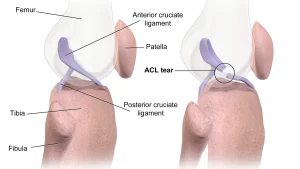
The injury is confirmed, the timeline is set, the player begins rehabilitation. For most people outside professional football, “rehabilitation” means rest until pain is gone. In elite sports medicine, it means something far more specific: a staged, evidence-based progression through tissue healing phases, strength restoration, movement quality, sport-specific loading, and psychological readiness, all measured objectively before the player is cleared to return. Getting this process wrong is expensive. Reinjury rates after premature return can reach 20–30% for hamstring tears and up to 15% for ACL reconstructions within the first year.
Table of Contents
The Science
Tissue healing follows three overlapping biological phases that dictate rehabilitation timing:
Phase 1: Inflammatory phase (0–7 days post-injury): Acute injury triggers vasodilation, fluid accumulation, and immune cell infiltration. This phase is essential for initiating repair, excessive anti-inflammatory medication (NSAIDs) taken too early may blunt this necessary response. Pain, swelling, and loss of function are normal and protective. Goals: protect the injury, control pain, maintain range of motion in unaffected areas.
Phase 2: Proliferative phase (days 5 to weeks 6–8): Fibroblasts deposit collagen scar tissue to bridge the damaged area. New tissue is immature, high in Type III collagen (weak, disorganised). Progressive mechanical loading during this phase is essential: it stimulates collagen alignment and crosslinking that increases tensile strength. Complete immobilisation produces inferior, weaker scar tissue. Goals: restore range of motion, begin progressive loading of the healing tissue, maintain cardiovascular fitness.
Phase 3: Remodelling phase (weeks 6 through 12+ months): Type III collagen is progressively replaced with stronger Type I collagen. Remodelling continues for up to 12 months post-injury for major ligament repairs (ACL) and 3–6 months for muscle strains. Goals: restore full strength, explosive quality, sport-specific movement patterns, and psychological confidence.
Criteria-based return to play, not time-based: is the modern standard. A player returns when they demonstrate specific performance benchmarks (e.g., limb symmetry index ≥90% on strength and hop tests) rather than simply completing a fixed number of weeks. This shift is the most important conceptual change in return-to-play science of the past decade.
What Research Says
Systematic review evidence on criteria-based versus time-based return to play after hamstring injury has found that players cleared based solely on pain resolution and time elapsed had significantly higher reinjury rates compared to those cleared using strength symmetry and running speed criteria. The time-only approach was associated with 34% reinjury rates; criteria-based approaches achieved rates below 15%.
Kyritsis et al. (2016) analysed ACL return-to-play outcomes in professional footballers over 15 years at Aspetar Sports Medicine Hospital, finding that players who met strength symmetry criteria (LSI ≥90%) before return had significantly lower reinjury rates than those who returned based on time alone. The average actual return time in their cohort was 9.2 months, notably longer than the publicly stated “6–8 month” timelines common in media reporting.
Ardern et al. (2014) published psychological readiness data in British Journal of Sports Medicine, confirming that fear of re-injury was a major independent predictor of performance outcomes after ACL reconstruction. Players who returned to football with high levels of kinesiophobia (fear of movement) were significantly less likely to reach pre-injury performance levels, regardless of physical rehabilitation outcomes.
Did You Know? Research from professional European clubs shows that players returning from ACL reconstruction within 9 months have an average reinjury rate of 23–27%. Players who return after 12+ months have reinjury rates below 10%. Each additional month of rehabilitation from months 9–12 reduces reinjury risk by approximately 4%. This data is why the most evidence-conscious clubs now use a 12-month minimum for ACL returns, regardless of physical readiness signals at 8–9 months.
Applied to Football
Principles that separate evidence-based from time-based rehabilitation:
- Quantify, don’t just observe. Isokinetic dynamometry, single-leg hop tests, and GPS return-to-running protocols provide objective benchmarks. Clearance based on “looks good in training” is not a clinical standard.
- Load the tissue progressively. Complete rest produces weaker tissue. Progressive mechanical loading from the proliferative phase onward, starting with low-load, high-rep exercises and building through full sport-specific demands, produces stronger, better-organised repair tissue.
- Include psychological readiness in return criteria. Confidence assessments (ACL-RSI scale for ACL injuries) should be completed alongside physical criteria. A physically ready but psychologically fearful player is a reinjury risk.
- Maintain cardiovascular fitness throughout. Pool running, bike training, and upper body conditioning preserve aerobic capacity during lower-limb injuries. A player who returns physically recovered but aerobically deconditioned is at high risk from fatigue-related reinjury.
- Expect return timelines to be longer than announced. Media timelines for player return are almost universally optimistic. Evidence-based rehabilitation accounts for remodelling time, functional testing, and sport-specific exposure that rarely fit the public “6 weeks” narrative.
In Short
- Tissue healing occurs in three phases; loading must align with each phase to optimise repair quality
- Complete rest produces inferior scar tissue, progressive loading from the proliferative phase builds stronger tissue
- Criteria-based return (strength symmetry, hop tests) reduces reinjury risk significantly vs. time-based
- ACL reinjury risk is ~25% at 9 months and <10% at 12+ months, time matters beyond physical readiness
- Psychological readiness is an independent return-to-play criterion; kinesiophobia predicts poor outcomes
References
- Kyritsis, P., Bahr, R., Landreau, P., Miladi, R., & Witvrouw, E. (2016). Likelihood of ACL graft rupture: not meeting six clinical discharge criteria before return to sport is associated with a four times greater risk of rupture. British Journal of Sports Medicine, 50(15), 946–951.
- Ardern, C. L., Taylor, N. F., Feller, J. A., & Webster, K. E. (2014). A systematic review of the psychological factors associated with returning to sport following injury. British Journal of Sports Medicine, 47(17), 1120–1126.
Next in Series: The Goalkeeper: A Completely Different Physiology

Hüseyin Akbulut is the founder of Sporeus and author of THRESHOLD (EŞİK), a 540-page Turkish-language book on endurance science.
- 540pp THRESHOLD Book
- MSc Sport Sciences
- Marmara University
Introduction
The injury is confirmed, the timeline is set, the player begins rehabilitation. For most people outside professional football, "rehabilitation" means rest until pain is gone. In elite sports medicine, it means something far more specific: a staged, evidence-based progression through tissue healing phases, strength restoration,…
The Science
Tissue healing follows three overlapping biological phases that dictate rehabilitation timing:
What Research Says
Systematic review evidence on criteria-based versus time-based return to play after hamstring injury has found that players cleared based solely on pain resolution and time elapsed had significantly higher reinjury rates compared to those cleared using strength symmetry and running speed criteria. The time-only approach…
Applied to Football
Principles that separate evidence-based from time-based rehabilitation: