Preview
Hüseyin Akbulut, MSc (2026). Tendon Adaptation: How Training Transforms Your Body’s Springs. Sporeus. Retrieved, November 8, 2026. https://sporeus.com/en/physiology/tendon-adaptation-training-football-science/
Introduction
Tendons are often treated as passive connectors, biological cables that simply transmit muscle force to bone. This is wrong. Tendons are dynamic, metabolically active tissues that adapt to loading, store and release elastic energy, and whose properties fundamentally shape explosive performance and injury risk. In football, the Achilles and patellar tendons are energy storage springs that contribute free propulsive force during sprinting and jumping. Understanding how they adapt and how they fail, gives coaches and players a powerful tool for both performance development and injury prevention.
Table of Contents
The Science
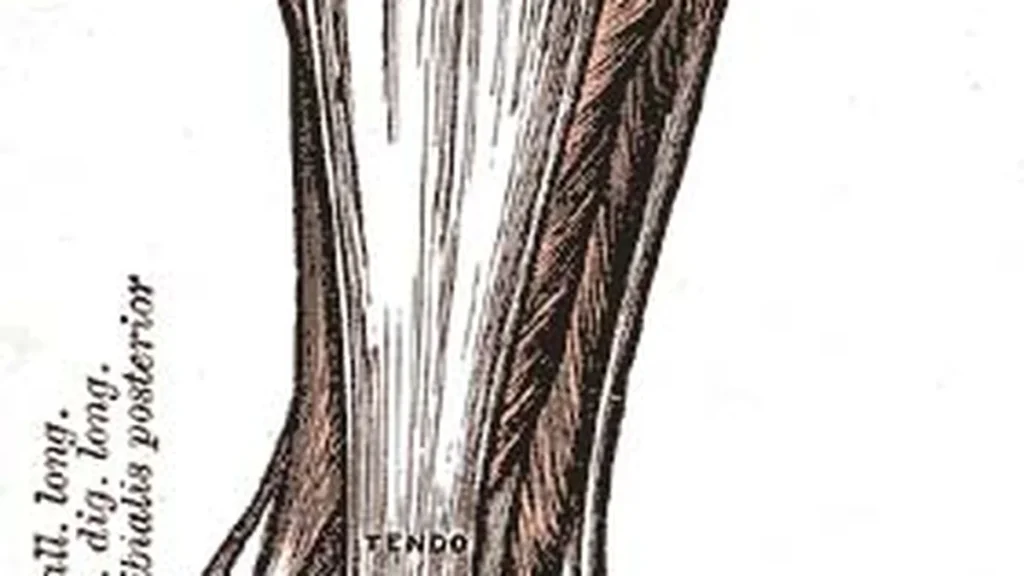
Tendon structure: Tendons are composed primarily of Type I collagen fibres arranged in a hierarchical structure. These fibres slide relative to each other under load, then recoil, the mechanical basis of elastic energy storage. The stiffer the tendon, the more energy is stored and returned per cycle, and the shorter the amortisation phase between eccentric loading and concentric propulsion.
Adaptations to mechanical loading:
- Collagen synthesis: Mechanical loading: particularly tensile loading at moderate to high force, stimulates tenocytes (tendon cells) to synthesise new collagen via the mTOR and TGF-β pathways. This increases tendon cross-sectional area and tensile strength over weeks to months.
- Increased stiffness: Training-induced collagen remodelling increases tendon stiffness, the slope of the force-deformation curve. Stiffer tendons are more efficient energy springs: they store more elastic energy per mm of elongation and return it faster.
- Increased cross-sectional area (hypertrophy): Heavy resistance training increases patellar and Achilles tendon CSA, measurable by ultrasound within 8–12 weeks of progressive loading.
Tendinopathy, the pathological failure of tendon adaptation: occurs when loading exceeds the tendon’s capacity to remodel. Repetitive overload without adequate recovery drives degenerative changes: collagen disorganisation, tenocyte death, neovascularisation, and replacement of Type I with weaker Type III collagen. The result is a structurally compromised tendon with altered mechanical properties and pain with loading.
Key loading principle: The tendon responds best to heavy, slow resistance (HSR) loading protocols, exercises performed with 3–4 seconds eccentric, 3–4 seconds concentric, at loads corresponding to 70–85% 1RM. This loading profile produces maximal mechanical stimulus for collagen synthesis with minimal inflammatory response. Fast, ballistic loading produces smaller collagen synthesis signals than slow, heavy loading.
What Research Says
Magnusson et al. (2010) published a seminal review in Nature Reviews Rheumatology detailing tendon collagen turnover kinetics, establishing that human tendon collagen turnover rate is slow compared to muscle, with half-life estimates for mature collagen fibres of 50–200 years. This means tendon adaptation requires sustained, progressive loading over months, not weeks, and regression (from detraining) also occurs slowly.
Kongsgaard et al. (2009) compared heavy slow resistance (HSR) training with eccentric training and corticosteroid injection for patellar tendinopathy rehabilitation in Scandinavian Journal of Medicine & Science in Sports. HSR training produced the best outcomes at 6-month follow-up, significantly better than corticosteroid injection and marginally superior to eccentric-only protocols, while also showing the greatest improvements in tendon mechanical properties via ultrasound.
Fouré et al. (2010) demonstrated that 14 weeks of plyometric training specifically increased Achilles tendon stiffness by 24% as measured by ultrasonography combined with dynamometry, confirming that plyometric training produces meaningful tendon structural adaptation, not just neural or muscle changes.
Did You Know? The Achilles tendon stores and returns approximately 35% of the energy used during each running stride. For a footballer running at 4 m/s, this equates to roughly 100 joules of free elastic energy per stride returned by the Achilles alone. Over 10 km of match running, this represents hundreds of kilojoules of energy that the metabolic system does not have to produce. A stiffer, more efficient Achilles tendon is essentially a free energy source, which is why tendon training is a legitimate performance intervention, not just injury prevention.
Applied to Football
Applying tendon physiology to football training practice:
- Programme HSR loading twice per week for tendon development. Calf raises, leg press, and split squats performed at 70–85% 1RM with slow tempo (3-3-0-1) provide the optimal stimulus for Achilles and patellar tendon adaptation.
- Progressively overload over months, not weeks. Tendon adaptation is slow. A 12-week HSR programme at the same load will not drive continued tendon remodelling. Systematic load progression is required, increase weight as the player adapts.
- Manage tendinopathy with loading, not rest. Complete rest does not rehabilitate degenerative tendons, it allows further disorganisation. Graded HSR loading at a level below pain threshold drives remodelling and structural repair. This is the evidence-based departure from traditional “rest the tendon” advice.
- Reduce loading spikes to prevent tendinopathy. Tendons fail when mechanical load increases faster than collagen synthesis can respond. Monitoring weekly training load and limiting acute spikes (ACWR >1.5) protects tendons during high-load pre-season phases.
- Use ultrasound for tendon monitoring. Regular ultrasound assessment of high-risk tendons (Achilles, patellar) in elite players identifies early degenerative changes before pain onset, enabling preventive intervention before the tendon reaches symptomatic failure.
Worth Remembering
- Tendons are active elastic energy springs; stiffness adaptations from training add propulsive efficiency at no metabolic cost
- Heavy, slow resistance loading is the optimal mechanical stimulus for tendon collagen synthesis
- Tendon collagen turnover is slow: adaptation and regression both require months, not weeks
- Tendinopathy is managed with graded loading, not rest; collagen remodelling requires mechanical stimulation
- Achilles tendon returns ~35% of running energy per stride, a stiffer tendon is a genuine performance advantage
References
- Magnusson, S. P., Langberg, H., & Kjaer, M. (2010). The pathogenesis of tendinopathy: balancing the response to loading. Nature Reviews Rheumatology, 6(5), 262–268.
- Kongsgaard, M., Kovanen, V., Aagaard, P., Doessing, S., Hansen, P., Laursen, A. H., … & Magnusson, S. P. (2009). Corticosteroid injections, eccentric decline squat training and heavy slow resistance training in patellar tendinopathy. Scandinavian Journal of Medicine & Science in Sports, 19(6), 790–802.
- Fouré, A., Nordez, A., & Cornu, C. (2010). Plyometric training effects on Achilles tendon stiffness and dissipation properties. Journal of Applied Physiology, 109(3), 849–854.
Next in Series: GPS Technology in Football: How Data Changed the Game
Discuss this in the forum: Tendon loading: how often should tendons be trained?

Hüseyin Akbulut is the founder of Sporeus and author of THRESHOLD (EŞİK), a 540-page Turkish-language book on endurance science.
- 540pp THRESHOLD Book
- MSc Sport Sciences
- Marmara University
Introduction
Tendons are often treated as passive connectors, biological cables that simply transmit muscle force to bone. This is wrong. Tendons are dynamic, metabolically active tissues that adapt to loading, store and release elastic energy, and whose properties fundamentally shape explosive performance and injury risk. In…
The Science
Tendon structure: Tendons are composed primarily of Type I collagen fibres arranged in a hierarchical structure. These fibres slide relative to each other under load, then recoil, the mechanical basis of elastic energy storage. The stiffer the tendon, the more energy is stored and returned…
What Research Says
Magnusson et al. (2010) published a seminal review in Nature Reviews Rheumatology detailing tendon collagen turnover kinetics, establishing that human tendon collagen turnover rate is slow compared to muscle, with half-life estimates for mature collagen fibres of 50–200 years. This means tendon adaptation requires sustained,…
Applied to Football
Applying tendon physiology to football training practice: