Preview
Hüseyin Akbulut, MSc (2026). Aitana Bonmatí and the Technical-Action Density of an Elite Possession Midfielder. Sporeus. Retrieved, September 28, 2026. https://sporeus.com/en/science/aitana-bonmati-technical-action-density/
The Athlete in One Paragraph
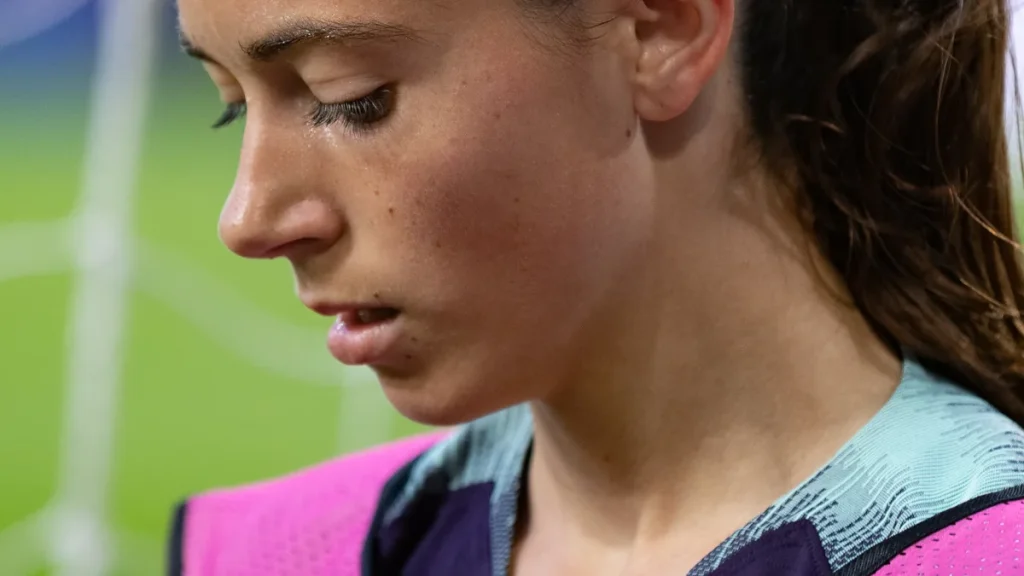
Aitana Bonmatí Conca (b. 1998, Sant Pere de Ribes, Spain) is a central midfielder for FC Barcelona Femení and the Spain national team, and the back-to-back Ballon d’Or Féminin winner in 2023 and 2024. Listed at 1.66 m and ~56 kg, she is small and light by elite-football standards, with a body habitus closer to a technical interior than to a box-to-box engine. Her match is not won by covering the most ground; it is won by what happens inside the touches she takes, between the touches her teammates take, and across the dense possession sequences that define the Barcelona positional system. The interesting case for sport science is the variable that defines her: technical-action density, the rate at which technical actions — touches, passes, take-ons — are produced per minute of effective possession, which determines whether a small midfielder dominates a tactical system that does not reward sprint speed.
Table of Contents
The Physiology — what technical-action density actually measures
Match running in elite football decomposes into a continuous low-intensity background interrupted by short, decisive high-intensity bursts. Stølen, Chamari, Castagna and Wisløff’s review of soccer physiology integrated the running profile with the substrate model: average match VO₂ sits at 70–80% of maximum, peak demands intermittently approach 100%, and the players who maintain higher fractional utilisation of VO₂max are the ones whose late-match output does not collapse [1]. In women’s football specifically, total match distance is broadly comparable to men’s relative to body size, average top sprint speed is somewhat lower in absolute terms, but the proportional density of technical actions per minute of possession sits at the same level — and in possession-dominant systems, often higher.
Bangsbo, Mohr and Krustrup’s match-demands work decomposed the canonical pattern: total distance ~10–12 km in elite men’s football, ~9–11 km in elite women’s football, with ~8–12% of that distance produced as high-intensity output [2]. The technical-action layer sits on top of this metabolic substrate. Each pass, each first touch, each scan of the field is a discrete cognitive-motor event with its own cost, and the player who delivers more events per minute under the same metabolic load is delivering higher technical-action density.
Mohr, Krustrup and Bangsbo’s match-fatigue analysis sharpened the temporal picture. Top-class players cover meaningfully more high-intensity distance than moderate-class players, and within that distribution, central midfielders sit at the upper end of the volume range; technical output, however, declines toward the end of each half as the metabolic and cognitive substrate erodes [3]. The midfielder who holds her technical-action rate from minute 60 onward is operating with a higher fractional utilisation of VO₂max as her steady-state — and with a cognitive reserve that the less aerobically-fit player has already spent.
Bradley, Sheldon, Wooster and colleagues’ Premier League analysis provided the positional layer. Central midfielders cover the most high-intensity distance of any outfield position, dominated by short bursts of 1–4 seconds rather than long sprints [4]. In a possession-dominant women’s-football system the burst pattern is not built around sprinting past defenders but around arriving on the half-turn to receive, evading the immediate press in 5–8 metres, and re-positioning before the next pass — the running is short, dense, and sub-maximal in absolute terms.
Young and Farrow’s review of agility makes the cognitive substrate explicit. Reactive agility, scan frequency and decision time are trainable and partly heritable, and the elite technical midfielder uses the metabolic system to power the cognitive system rather than the other way around [5]. The economical player frees aerobic and cognitive headroom for the perception-action cycle that decides where the next touch goes.
The Case — Aitana Bonmatí as technical-action-density specialist
For a 1.66 m / 56 kg central midfielder operating in the Barcelona possession system, the underlying running profile is consistent with a high-volume, moderate-peak-speed pattern: total distance in the upper range for women’s central midfielders, high-intensity distance distributed across many short bursts rather than long sprints, and a sprint-distance share toward the lower end of the central-midfield distribution [2, 4]. The physiological signature is not peak speed but rate of technical actions per minute of effective possession.
The size dimension matters in the opposite direction from the men’s heavyweight midfielder. A small, light frame produces a low absolute energy cost per metre simply because there is less mass to displace; combined with technically efficient ball-handling that minimises extraneous motion, the result is a high cognitive-motor reserve per match minute [1]. Bonmatí’s body habitus is built for repeated short receives on the half-turn, not for outsprinting back-line athletes, and the tactical system rewards the former far more than the latter.
The technical-development pathway is consistent with the output. Players who develop in possession-heavy environments — Barcelona’s academy lineage, the Spanish national-team passing system — accumulate enormous volumes of small-sided-game work in which technical action and running action are coupled at every step [3, 4]. Every receive is angled to keep the body moving toward the next play; every scan is rehearsed before contact with the ball. The result is a technical-action density that is partly metabolic (aerobic capacity sustains it) and partly cognitive (scan frequency and decision speed determine its quality).
The women’s-football frame matters for interpretation. Total match distance in elite women’s football is somewhat lower than in elite men’s football in absolute terms, average top sprint speed is lower, and acceleration counts per match are broadly comparable — but the proportional density of technical actions per minute of possession is at the men’s-elite level, and in possession systems it can exceed it [2, 3]. Reading Bonmatí through the men’s running-profile lens understates her output; reading her through the technical-action lens reveals where her advantage actually lives.
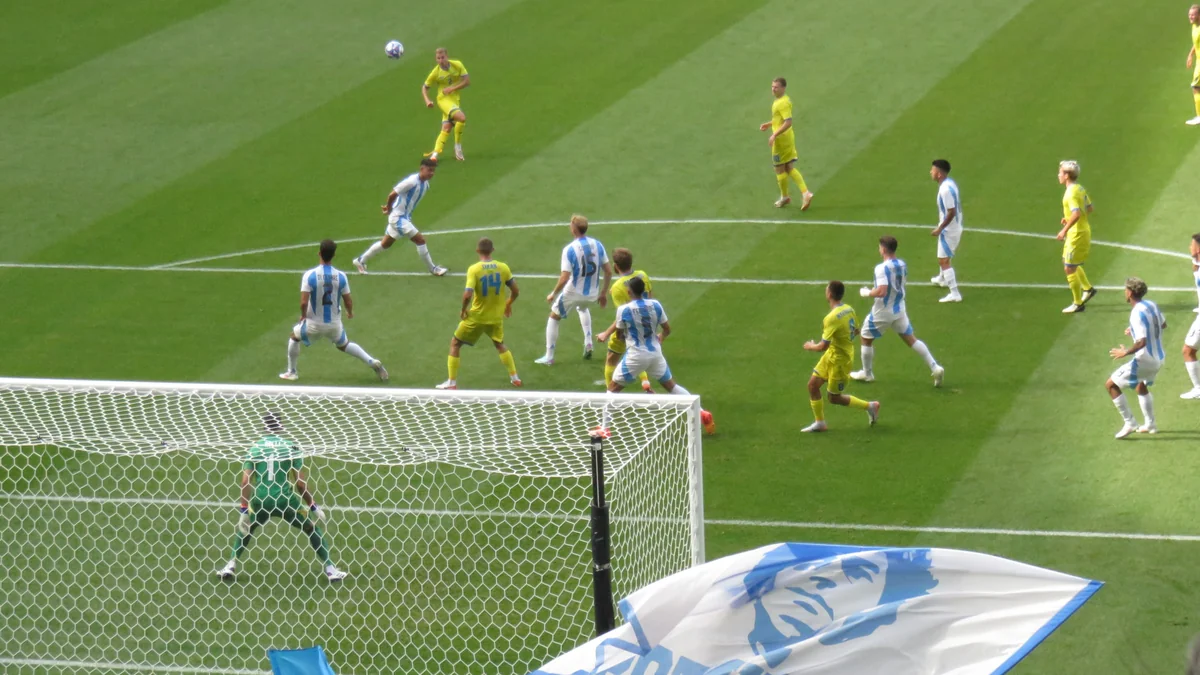
Match-context note: Bonmatí’s per-match touch volume, completed-pass rate and successful-take-on count in Liga F and Champions League play sit in the upper band for central midfielders (Match data: SofaScore), with the discriminator being the consistency of those numbers across the densest fixture stretches rather than any single peak performance.
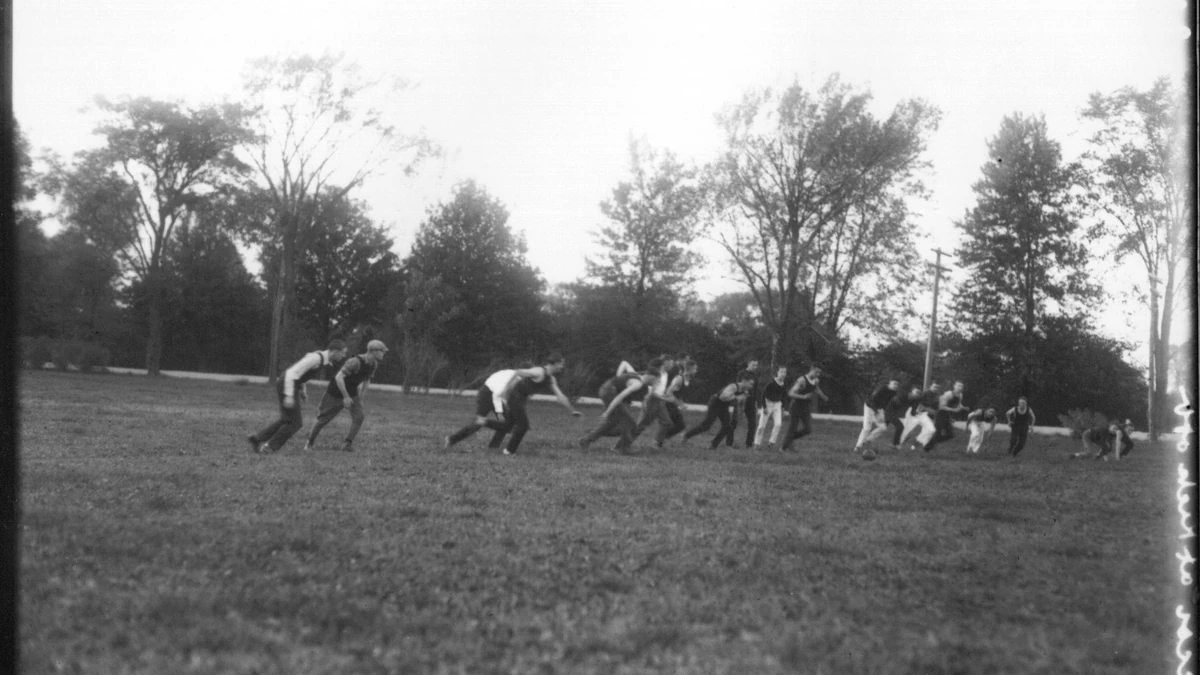
Flickr: Miami U. Libraries – Digital Collections.
What This Means for the Reader
For a developing midfielder, the takeaway is that technical-action density is a separable trainable variable from VO₂max, and the training protocols differ [1, 2, 5]. Aerobic base work supports the metabolic substrate; small-sided games at 4v4 to 7v7 with short bouts and short rest develop the coupling between ball action and running action; specific scan-frequency drills — head-on-a-swivel before reception, scan-count audits in video review — develop the cognitive substrate that determines what the touch does once it lands.
Three measurements diagnose the limiting variable for an amateur midfielder: a small-sided-game touch-count per minute, a pass-completion percentage under pressure, and a video-based scan-count before reception across a session [4, 5]. The diagnostic question for the developing possession midfielder: when my technical density drops in the 75th minute, is it because my legs are gone, or because my head stopped scanning two passes earlier than my opponent?
References
- Stølen T, Chamari K, Castagna C, Wisløff U. (2005). Physiology of soccer: an update. Sports Medicine, 35(6): 501–536. doi:10.2165/00007256-200535060-00004
- Bangsbo J, Mohr M, Krustrup P. (2006). Physical and metabolic demands of training and match-play in the elite football player. Journal of Sports Sciences, 24(7): 665–674. doi:10.1080/02640410500482529
- Mohr M, Krustrup P, Bangsbo J. (2003). Match performance of high-standard soccer players with special reference to development of fatigue. Journal of Sports Sciences, 21(7): 519–528. doi:10.1080/0264041031000071182
- Bradley PS, Sheldon W, Wooster B, Olsen P, Boanas P, Krustrup P. (2009). High-intensity running in English FA Premier League soccer matches. Journal of Sports Sciences, 27(2): 159–168. doi:10.1080/02640410802512775
- Young W, Farrow D. (2006). A review of agility: practical applications for strength and conditioning. Strength and Conditioning Journal, 28(5): 24–29. doi:10.1519/00126548-200610000-00004
Match-context data (descriptive only): SofaScore.
The Athlete in One Paragraph
Aitana Bonmatí Conca (b. 1998, Sant Pere de Ribes, Spain) is a central midfielder for FC Barcelona Femení and the Spain national team, and the back-to-back Ballon d'Or Féminin winner in 2023 and 2024. Listed at 1.66 m and ~56 kg, she is small and…
The Physiology — what technical-action density actually measures
Match running in elite football decomposes into a continuous low-intensity background interrupted by short, decisive high-intensity bursts. Stølen, Chamari, Castagna and Wisløff's review of soccer physiology integrated the running profile with the substrate model: average match VO₂ sits at 70–80% of maximum, peak demands intermittently…
The Case — Aitana Bonmatí as technical-action-density specialist
For a 1.66 m / 56 kg central midfielder operating in the Barcelona possession system, the underlying running profile is consistent with a high-volume, moderate-peak-speed pattern: total distance in the upper range for women's central midfielders, high-intensity distance distributed across many short bursts rather than…
What This Means for the Reader
For a developing midfielder, the takeaway is that technical-action density is a separable trainable variable from VO₂max, and the training protocols differ [1, 2, 5]. Aerobic base work supports the metabolic substrate; small-sided games at 4v4 to 7v7 with short bouts and short rest develop…