
Preview
Hüseyin Akbulut, MSc (2026). N’Golo Kanté and the Repeated Pressing Density of an Elite Defensive Midfielder. Sporeus. Retrieved, October 22, 2026. https://sporeus.com/en/science/ngolo-kante-repeated-pressing-density/
The Athlete in One Paragraph
N’Golo Kanté (b. 1991, Paris, France) is, as of September 2026, the Fenerbahçe and France defensive midfielder whose reputation across his Leicester, Chelsea and France years was built on a single repeatable observation: he appears in more places than the geometry of the pitch should permit. Listed at 1.68 m and ~71 kg, he is one of the smallest top-tier midfielders of the modern era, and the small frame is not incidental to the contribution, it is the architectural feature that makes the contribution possible. The interesting case for sport science is not raw distance covered nor peak sprint speed, but repeated pressing density, the action-frequency variable that captures how many ball-recovery and pressure events are stacked into each high-intensity minute, and how stably that stacking is maintained across a 90-minute match and across a fixture-dense season.
Table of Contents
The Physiology: what repeated pressing density actually measures
Match running in elite football is a sequence of intermittent high-intensity efforts layered onto a continuous low-intensity background. Bangsbo, Mohr and Krustrup decomposed the demand into the canonical pattern: total distance ~10–12 km, of which ~8–12% is high-intensity, with the remainder distributed across walking, jogging and standing recovery [1]. The aerobic system fuels the recovery between bursts; the anaerobic system fuels the bursts themselves. The athlete who recovers faster between bursts produces more bursts, and the athlete who produces more bursts at a higher density per minute is the athlete whose ball-recovery output sits at the top of the position.
Mohr, Krustrup and Bangsbo’s match-fatigue analysis sharpened the picture. Top-class players cover ~28–58% more high-intensity distance than moderate-class players, and the within-position high-intensity output declines toward the end of each half, the so-called transient-fatigue pattern and the magnitude of that decline is itself a marker of conditioning [2]. The defensive midfielder whose action-density does not collapse late is operating with a higher fractional utilisation of VO₂max as their steady-state, and a faster lactate-clearance kinetic between bursts.
Bradley and colleagues’ Premier League high-intensity-running analysis sharpened the positional layer. Central midfielders covered the most total high-intensity distance of any outfield position, with the running profile dominated by short bursts of 1–4 seconds rather than long sprints [3]. The implication for a ball-winning defensive midfielder is that the limiting variable is repeatability, the capacity to produce a 2-second pressing burst, recover for 15–20 seconds, and produce another, not peak sprint speed.
Carling, Le Gall and Dupont’s analysis of repeated high-intensity running closed the loop on the recovery-between-matches problem. In the densest fixture windows, recovery between high-intensity matches is incomplete and the residue of one match decays slowly enough to compound into the next [4]. The defensive midfielder whose pressing density holds across consecutive short-turnaround weeks is, by definition, the player whose aerobic base is broad enough to absorb the cumulative load.
Stølen, Chamari, Castagna and Wisløff’s physiology-of-soccer review supplies the small-frame metabolic-economy thread. Match VO₂ averages roughly 70–80% of maximum across 90 minutes, and the players who maintain higher fractional utilisation, typically 80–85% rather than 70–75% at the same absolute pace, are the ones whose match performance does not collapse late [5]. A small-framed athlete pays a lower absolute energy cost per unit distance than a heavier teammate at the same pace, so the same VO₂max in absolute terms supports a higher relative work-rate; the small midfielder, in pressing-density terms, gets more actions per litre of oxygen.
The Case: Kanté as repeated-pressing-density specialist
For a 1.68 m / 71 kg defensive midfielder operating in the ball-winning role, the running profile is consistent with a high-volume, high-density action pattern: total distance in the upper range for central midfielders, high-intensity distance distributed across many short bursts rather than a few long sprints, and a per-minute action count, interceptions, tackles, recoveries, that sits at the top of the position [1, 3]. The physiological signature is not peak speed but recovery rate between repeated efforts, and the per-minute density of those efforts.
The small-frame mechanics matter. A 71 kg midfielder running at the same pace as an 84 kg midfielder pays a lower absolute oxygen cost per metre, so the same lactate-clearance kinetic supports a higher per-minute action count [5]. The economy advantage compounds across the match: every burst recovered for slightly faster than the heavier midfielder’s burst leaves a slightly larger margin for the next, and the cumulative effect across 90 minutes is a higher action-density at the same internal cost. The architectural feature is the frame, and the frame is the engine.
The cognitive substrate is the under-discussed component. Repeated pressing is not random; it is anticipatory. The ball-winning midfielder who reads the next pass one cue earlier covers less ground than the one who reads it one cue later, and the per-minute action density therefore reflects both the metabolic substrate (aerobic capacity, lactate clearance, recovery between bursts) and the cognitive substrate (pattern recognition, scan frequency) that determines when the burst is launched [2, 3]. The two together produce more recoveries for the same running cost.
The fixture-density layer is where the case becomes distinctive. A defensive midfielder who maintains a per-minute pressing density across consecutive short-turnaround weeks is operating with a recovery margin most positions never train into [4]. The cumulative cost is not visible in any single match’s GPS summary; it is visible across the rolling fixture window, in the gradual rise of session-RPE relative to identical external load and the absence of that rise in a player who plays at this density is the positional outlier signal.
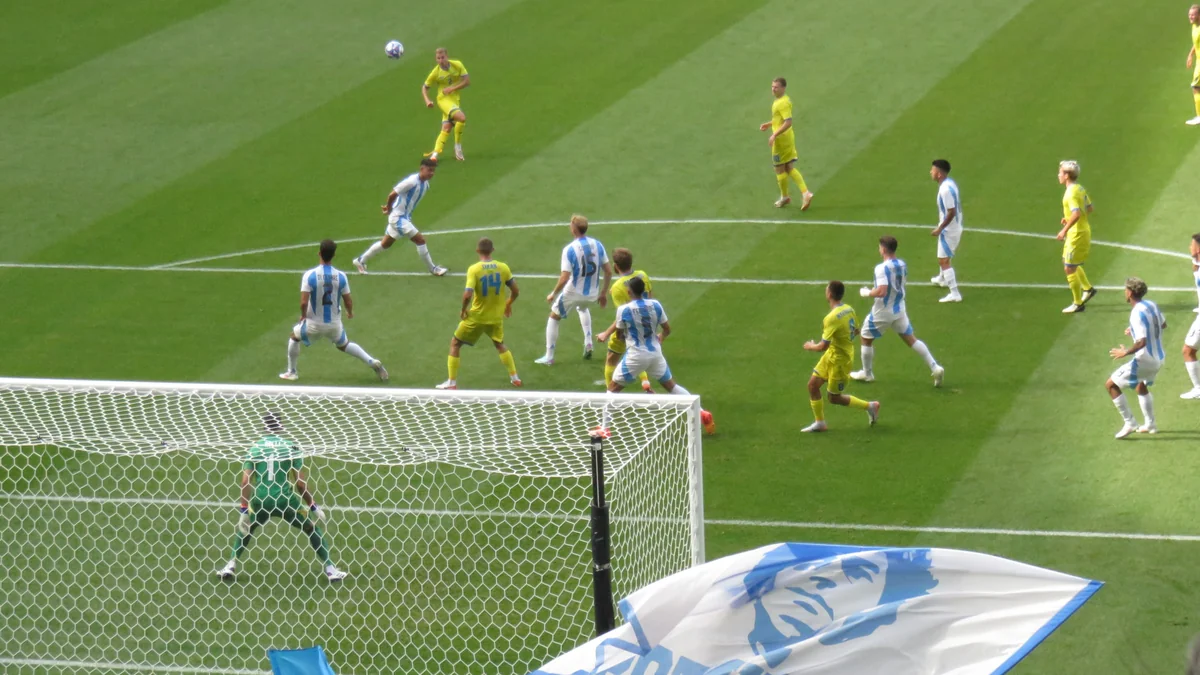
Match-context note: Kanté’s per-match ball-recovery and tackle volume across Premier League and Champions League play sat in the upper band for defensive midfielders for the better part of a decade (Match data: SofaScore), with the discriminator being the per-minute density of those actions and their stability across the late stages of matches and across short turnaround weeks rather than any single peak performance.
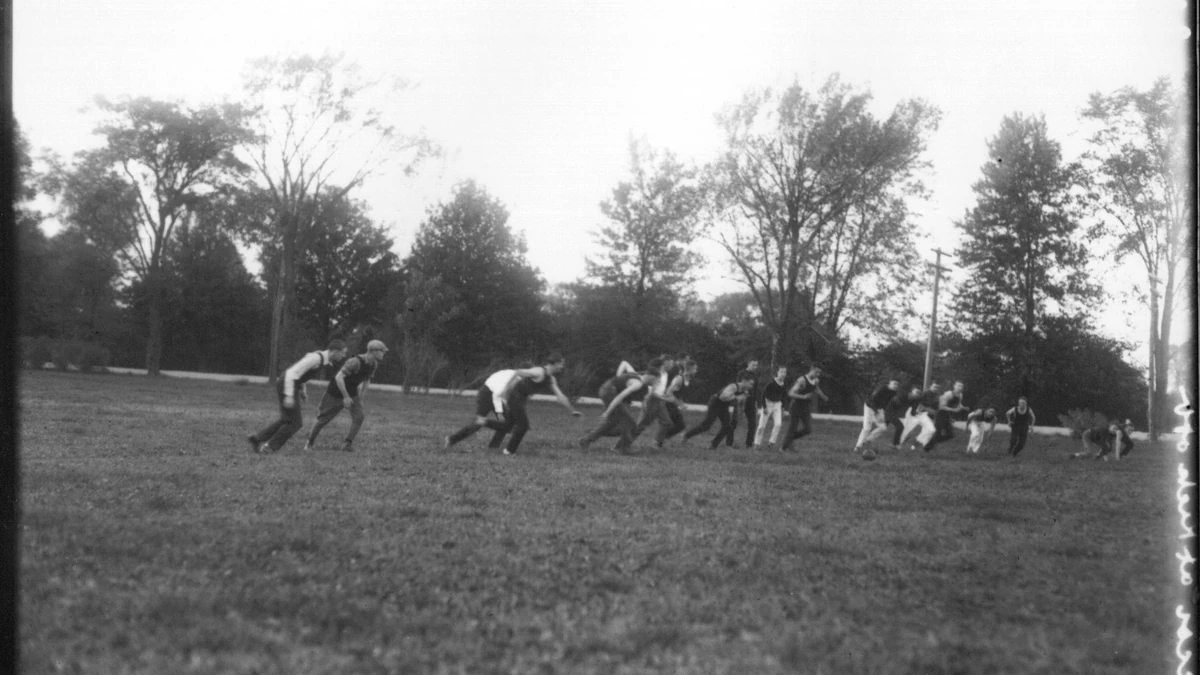
Flickr: Miami U. Libraries – Digital Collections.
What This Means for the Reader
For a developing defensive midfielder, the takeaway is that pressing density is not a single trait but a system, aerobic capacity, lactate clearance, recovery between bursts, frame economy, and tactical anticipation and the system is trainable in pieces. Three measurements diagnose the limiting variable: a Yo-Yo Intermittent Recovery test (or its equivalent) to estimate repeated-effort capacity, a 4-minute time-trial pace as a surrogate for VO₂max, and a per-minute action count log across full-match samples to track the operational density of the player’s contribution [1, 5].
The training prescription targets the diagnostic finding: athletes with a low Yo-Yo score but a respectable 4-minute pace need short-interval work to convert VO₂max into repeated-effort capacity; athletes with both low scores need a longer aerobic base block before the high-intensity work compounds; athletes whose action count drops in the second half of matches need fixture-density-aware load management as much as more conditioning [2, 4]. The single diagnostic question for the developing ball-winning midfielder: when my ball-recoveries dry up after minute 60, is it because I cannot recover between bursts, or because I never had the aerobic base to sustain that density to begin with?
References
- Bangsbo J, Mohr M, Krustrup P. (2006). Physical and metabolic demands of training and match-play in the elite football player. Journal of Sports Sciences, 24(7): 665–674. doi:10.1080/02640410500482529
- Mohr M, Krustrup P, Bangsbo J. (2003). Match performance of high-standard soccer players with special reference to development of fatigue. Journal of Sports Sciences, 21(7): 519–528. doi:10.1080/0264041031000071182
- Bradley PS, Sheldon W, Wooster B, Olsen P, Boanas P, Krustrup P. (2009). High-intensity running in English FA Premier League soccer matches. Journal of Sports Sciences, 27(2): 159–168. doi:10.1080/02640410802512775
- Carling C, Le Gall F, Dupont G. (2012). Analysis of repeated high-intensity running performance in professional soccer. Journal of Sports Sciences, 30(4): 325–336. doi:10.1080/02640414.2011.652655
- Stølen T, Chamari K, Castagna C, Wisløff U. (2005). Physiology of soccer: an update. Sports Medicine, 35(6): 501–536. doi:10.2165/00007256-200535060-00004
Match-context data (descriptive only): SofaScore.

Hüseyin Akbulut is the founder of Sporeus and author of THRESHOLD (EŞİK), a 540-page Turkish-language book on endurance science.
- 540pp THRESHOLD Book
- MSc Sport Sciences
- Marmara University
The Athlete in One Paragraph
N'Golo Kanté (b. 1991, Paris, France) is, as of September 2026, the Fenerbahçe and France defensive midfielder whose reputation across his Leicester, Chelsea and France years was built on a single repeatable observation: he appears in more places than the geometry of the pitch should…
The Physiology: what repeated pressing density actually measures
Match running in elite football is a sequence of intermittent high-intensity efforts layered onto a continuous low-intensity background. Bangsbo, Mohr and Krustrup decomposed the demand into the canonical pattern: total distance ~10–12 km, of which ~8–12% is high-intensity, with the remainder distributed across walking, jogging…
The Case: Kanté as repeated-pressing-density specialist
For a 1.68 m / 71 kg defensive midfielder operating in the ball-winning role, the running profile is consistent with a high-volume, high-density action pattern: total distance in the upper range for central midfielders, high-intensity distance distributed across many short bursts rather than a few…
What This Means for the Reader
For a developing defensive midfielder, the takeaway is that pressing density is not a single trait but a system, aerobic capacity, lactate clearance, recovery between bursts, frame economy, and tactical anticipation and the system is trainable in pieces. Three measurements diagnose the limiting variable: a…