Preview
Hüseyin Akbulut, MSc (2026). Phil Foden and the Dribble Cadence and Touch Density of an Elite Attacking Midfielder. Sporeus. Retrieved, October 7, 2026. https://sporeus.com/en/science/phil-foden-dribble-cadence-and-touch-density/
The Athlete in One Paragraph
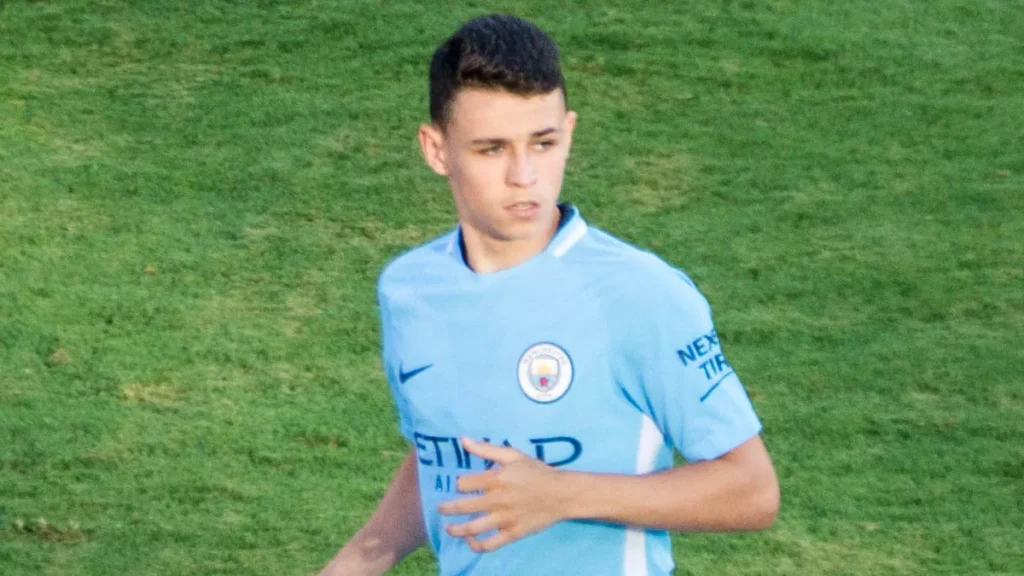
Philip Walter Foden (b. 2000-05-28, Stockport, England) is, as of September 2026, an attacking midfielder for Manchester City and the England national team — listed at 1.71 m and ~70 kg, short by Premier League midfield standards and built lean. Foden produces elite take-on numbers in narrow spaces against full-sized opposition, despite a frame that gives away ten centimetres and ten kilograms to the typical defender he is asked to beat. The interesting case for sport science is not whether he can dribble; the body of work answers that question. The interesting case is how a short-frame attacker generates that output without the line-breaking pace or shoulder-strength of his physically larger peers. The variable underneath the trajectory is dribble cadence and touch density — the foot-contact frequency and ball-touch-per-unit-distance signature that allows a smaller attacker to generate take-on success through micro-spaces rather than over-the-top runs.
Table of Contents
The Physiology — what dribble cadence and touch density actually mean
Football is intermittent in its energetic profile but rhythmic in its ball-engagement profile, and the dribble is where the rhythm is most concentrated. Bangsbo, Mohr and Krustrup’s foundational match-running decomposition shows that the high-intensity content of the match is dominated by short bursts of 1–4 seconds with frequent direction changes, and that the ball-engagement portion of those bursts is where the most decisive actions are typically launched [1]. The dribble lives inside that micro-window, and the attacker’s per-second touch count and stride frequency define how the window is used.
Saunders, Pyne, Telford and Hawley’s running-economy framework supplies the underlying principle: the metabolic and mechanical economy of running at a given submaximal velocity is determined by the integration of stride length, stride frequency, vertical oscillation and ground-contact time [2]. Translated to the dribble, the same integration variables — taken at higher cadence and with a ball under the foot — determine whether the attacker can keep the ball in micro-control across multiple touches per second without losing forward progression. Touch density and dribble cadence are the football-specific mapping of the running-economy framework.
Stølen, Chamari, Castagna and Wisløff’s physiology-of-soccer review framed the integrated demand the dribbler is operating inside — the aerobic substrate, the repeated-sprint capacity and the perceptual-cognitive coupling between cue recognition and movement execution all sit alongside the local-control mechanics of the dribble [3]. Touch density is not a stand-alone trait; it is one expression of the same multi-system integration that sustains the match. The short-frame attacker who survives is the one whose touch density stays high inside the multi-system load.
Mohr, Krustrup and Bangsbo’s match-fatigue work added the temporal dimension that matters most to the small-frame dribbler: the high-intensity output of the first 15-minute period is consistently higher than that of the 75–90-minute period, and the dribbling-success drop across that fatigue gradient is one of the most legible degradation signatures in elite football [4]. The attacker whose touch density holds across the late-match phase is the one whose role-specific output remains intact when the rest of the team’s drops.
Bradley and colleagues’ Premier League high-intensity-running analysis positioned attacking midfielders at the upper end of the high-intensity-distance distribution and described the running profile as cue-driven short bursts rather than pre-planned line-breaking sprints [5]. The cue-driven pattern is the operational link to dribble cadence: the attacker whose touch density is set up to engage the defender at the cue moment is launching the take-on with the shortest possible delay between perception and engagement. Dribble cadence, in this framing, is not a stylistic flourish — it is the perceptual-motor operating point of the role.
The Case — Foden as touch-density archetype
For a 1.71 m / 70 kg attacking midfielder operating in narrow inside-channel and half-space zones against larger opposition, the take-on profile cannot be sustained by the line-breaking-pace mechanism that wingers with physical scale typically use. The candidate mechanism is touch density: more touches per second of dribble, more dribble cadence per stride, and a smaller per-touch ball-displacement that keeps the ball inside micro-control even in tight spaces [1, 5]. The role demand is short-frame-specific, and the physical anthropometry is consistent with a player whose role has selected him for the touch-density operating point rather than the line-breaking one.
Saunders’ running-economy framework matters here. The mechanical economy of high-cadence running with a ball under foot is not the same as the economy of high-cadence running without one — the additional control task adds neuromuscular and perceptual cost [2]. The short-frame attacker who has trained the touch-density profile across thousands of small-sided-game and tight-space-rondo reps has integrated that cost into the underlying mechanic, which is why the touch density is sustainable across 90 minutes rather than collapsing after the first sequence. The integration is the trainable variable; the rep-volume is the lever.
The Stølen integrated framework supplies the multi-system context. The touch-density operating point is sustainable only if the aerobic substrate sustains it, the perceptual-cognitive layer reads cues fast enough to set it up, and the lower-limb-strength substrate tolerates the eccentric loading of the deceleration-into-cut portion of the dribble [3]. The short-frame attacker who survives at elite level has all three layers tuned to the touch-density operating point; the short-frame attacker who does not survive typically has one or more of those layers under-developed for the role.
Mohr’s match-fatigue framework explains the late-match signature. The dribble that completes against fresh legs in minute eight and the dribble that completes against tired legs in minute eighty-eight are not the same dribble — the cadence drift, the touch-spacing drift and the cue-reading drift all change across the gradient [4]. The attacker whose touch density holds the late-match cadence is exporting the role advantage into the period when the rest of the team is degrading; the attacker whose cadence drops sharply is exporting nothing into that period. Bradley’s positional decomposition supplies the per-match volume substrate within which the late-match signature becomes legible [5].
The under-discussed dimension is the developmental signature. The short-frame attacker who reaches elite level has, by definition, navigated a long youth pathway in which physical-scale peers were prioritised earlier; the touch-density operating point is the survival mechanism that kept him in selection pipelines through the maturation window. The system-level lesson is that touch-density specialists are produced by the cumulative reps of small-spaces and constraint-led drills, not by the structured-sprint conditioning that selects for physical scale.
Match-context note: Foden’s per-match completed take-ons, progressive carries and late-match goal contribution at Manchester City and for England sit at the upper band for attacking midfielders (Match data: SofaScore), with the discriminator being the consistency of the touch-density signature across late-match phases rather than peak per-match output.
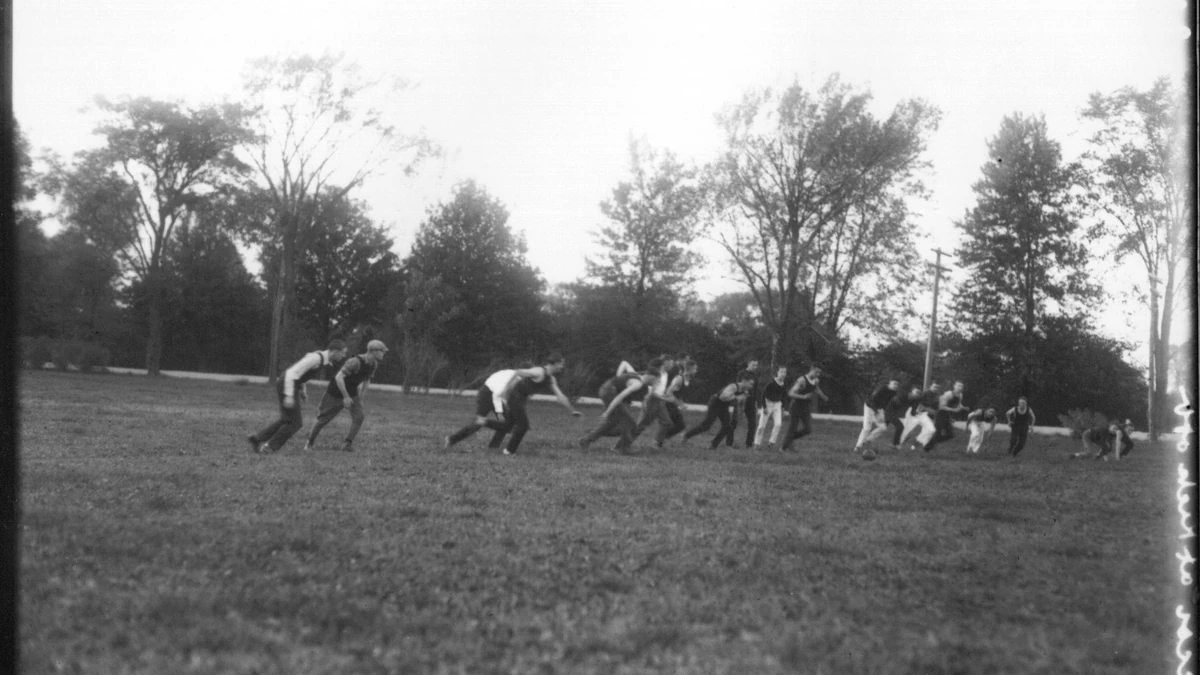
Flickr: Miami U. Libraries – Digital Collections.
What This Means for the Reader
For developing footballers and the coaches working with them, the takeaway is that dribble cadence and touch density are real, trainable variables distinct from line-breaking pace, and the short-frame attacker’s path to elite contribution typically runs through them. The transferable diagnostic uses three measurements: a controlled-cadence dribble test (touches per second over a fixed distance with a defender approaching), a constraint-led small-sided drill that forces engagement in narrow channels, and a session-by-session log of late-match dribble-completion to track whether the touch-density layer holds up under fatigue [4, 5].
The training prescription targets the diagnostic finding. Athletes whose pure-pace metrics are mid-range but whose touch-density output is high benefit from continued investment in tight-space rondos, constraint-led one-versus-one drills, and reception-under-pressure rehearsal; athletes whose touch-density drops sharply under fatigue benefit from aerobic-substrate work to lift the carrier, not just from more cadence drills [3, 4]. The most common error in amateur development is treating raw pace as the sole take-on discriminator and dismissing the small-frame touch-density specialist as “not athletic”; the elite literature treats the touch-density specialist as a fully realised role variant.
The diagnostic question for the developing dribbler: does my touch-per-second count stay high in the last 15 minutes of a match, and does my per-touch ball-displacement stay small enough to keep the defender beaten, or does the dribble drift into the defender’s reach as fatigue accumulates? The honest answer changes the meaning of the take-on programme.
References
- Bangsbo J, Mohr M, Krustrup P. (2006). Physical and metabolic demands of training and match-play in the elite football player. Journal of Sports Sciences, 24(7): 665–674. doi:10.1080/02640410500482529
- Saunders PU, Pyne DB, Telford RD, Hawley JA. (2004). Factors affecting running economy in trained distance runners. Sports Medicine, 34(7): 465–485. doi:10.2165/00007256-200434070-00005
- Stølen T, Chamari K, Castagna C, Wisløff U. (2005). Physiology of soccer: an update. Sports Medicine, 35(6): 501–536. doi:10.2165/00007256-200535060-00004
- Mohr M, Krustrup P, Bangsbo J. (2003). Match performance of high-standard soccer players with special reference to development of fatigue. Journal of Sports Sciences, 21(7): 519–528. doi:10.1080/0264041031000071182
- Bradley PS, Sheldon W, Wooster B, Olsen P, Boanas P, Krustrup P. (2009). High-intensity running in English FA Premier League soccer matches. Journal of Sports Sciences, 27(2): 159–168. doi:10.1080/02640410802512775
Match-context data (descriptive only): SofaScore.
Hüseyin Akbulut is the founder of Sporeus and author of THRESHOLD (EŞİK), a 540-page Turkish-language book on endurance science.
- 540pp THRESHOLD Book
- MSc Sport Sciences
- Marmara University
The Athlete in One Paragraph
Philip Walter Foden (b. 2000-05-28, Stockport, England) is, as of September 2026, an attacking midfielder for Manchester City and the England national team — listed at 1.71 m and ~70 kg, short by Premier League midfield standards and built lean. Foden produces elite take-on numbers…
The Physiology — what dribble cadence and touch density actually mean
Football is intermittent in its energetic profile but rhythmic in its ball-engagement profile, and the dribble is where the rhythm is most concentrated. Bangsbo, Mohr and Krustrup's foundational match-running decomposition shows that the high-intensity content of the match is dominated by short bursts of 1–4…
The Case — Foden as touch-density archetype
For a 1.71 m / 70 kg attacking midfielder operating in narrow inside-channel and half-space zones against larger opposition, the take-on profile cannot be sustained by the line-breaking-pace mechanism that wingers with physical scale typically use. The candidate mechanism is touch density: more touches per…
What This Means for the Reader
For developing footballers and the coaches working with them, the takeaway is that dribble cadence and touch density are real, trainable variables distinct from line-breaking pace, and the short-frame attacker's path to elite contribution typically runs through them. The transferable diagnostic uses three measurements: a…