Preview
Hüseyin Akbulut, MSc (2026). Balance: How Neural Signals Keep You Upright. Sporeus. Retrieved, November 19, 2026. https://sporeus.com/en/science/balance-neural-coordination/
Having introduced how motor control works, we can now look at how balance and synchronisation are maintained throughout a movement.
Balance is made possible by subconscious cooperation between sensory and motor information.
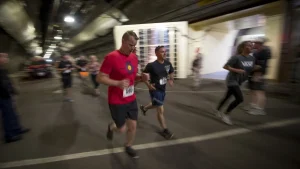
As the simplest example, consider the shifts in how your body weight is distributed while you run. The brain detects these changes through proprioceptors, the balance organ of the inner ear (the vestibular system) and visual input, because these structures and cells constantly send neural information to the brain. Using this information, the brain makes decisions to keep you balanced.
Meanwhile, sensory information keeps flowing to the brain through the nerves in your legs, and the movements of the lower limbs are adjusted to the ground.
We know that one of the most important anatomical features of the human body is the ability to run long distances. What this requires, optimal energy use, stabilisation of the trunk and head, and regulation of body temperature, can be seen as an inheritance of our evolution.
One of the most important structural features that makes this possible is our relatively long Achilles tendon.
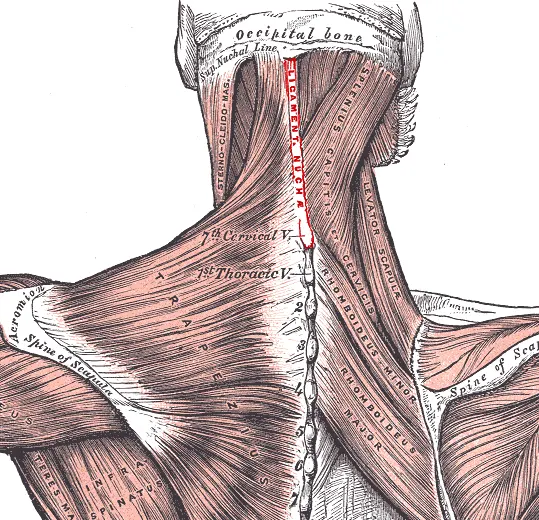
Another is the nuchal ligament, to which posterior muscles such as the trapezius and splenius capitis attach. It runs from the external occipital protuberance at the base of the back of the skull to the spinous process of the C7 vertebra and continues downwards as the supraspinous ligament. It is a thick, strong ligament that limits hyperflexion of the neck.
During running, the nuchal ligament helps keep the head steady so you can look straight ahead.
Sensors known as proprioceptors send sensory information such as joint movements, muscle stretch and loads on tendons to the brain, which uses it to work out the body’s position in space.
This allows rapid responses even to sudden changes.
Balance
The vestibular system in the inner ear has two parts. The ring-shaped, fluid-filled semicircular canals detect rotations of the head in three dimensions using hair cells, while the crystal-containing otolith organs (the utricle and saccule) detect linear acceleration and the tilt of the head relative to gravity.
The signals from these sensors allow the position of the head in space to be determined during movement.
To understand this better, imagine stepping down off a kerb while running. This sudden vertical movement is detected by sensors in the vestibular system (especially the otolith organs) and sent to the brain, which uses this flow of information to adjust its responses.
We can think of the brain as a system that gathers all sensory information and makes the best decision relatively quickly. Balance can only be maintained through extensive neural coordination.
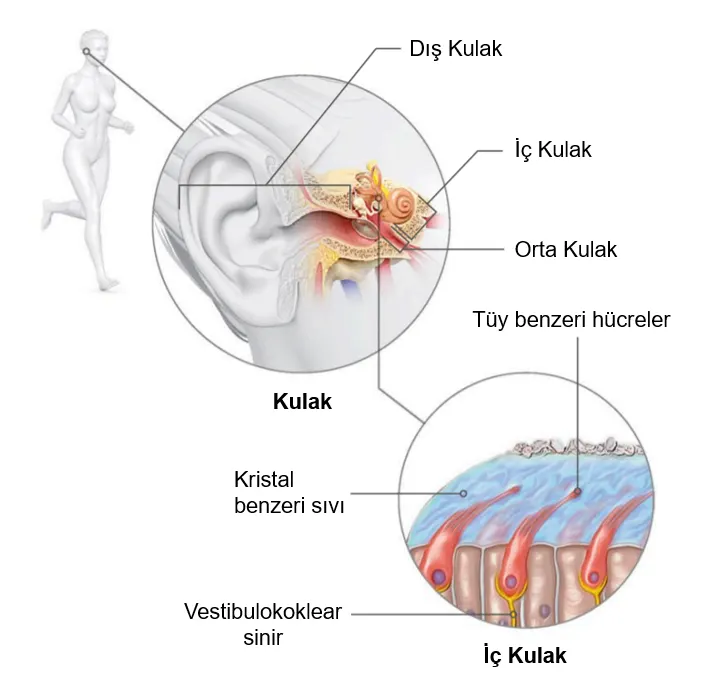
The structures labelled as crystal-like in the figure (otoconia) sit on top of a gelatinous otolithic membrane, which surrounds the projections of the hair cells beneath it.
As the head moves, the movement of this gelatinous membrane and of the fluid in the canals over the hair cells allows the brain to work out the direction of the movement.
Our eyes, although very different in structure, actually work like the other sensors and send sensory input, visual information, to the brain.
This lets you notice the features of the surface you are running on and make changes when needed, for example changing direction when you see a dog, or avoiding people and objects in a crowded area.
The coordination of this visual information largely happens at a subconscious level.
You may also be interested in: Exercise and the Brain: Pain Perception and Responses
References
- Bramble, D.M., & Lieberman, D.E. (2004). Endurance running and the evolution of Homo. Nature, 432(7015), 345-352. https://doi.org/10.1038/nature03052
- Peterka, R.J. (2002). Sensorimotor integration in human postural control. Journal of Neurophysiology, 88(3), 1097-1118.

Hüseyin Akbulut is the founder of Sporeus and author of THRESHOLD (EŞİK), a 540-page Turkish-language book on endurance science.
- 540pp THRESHOLD Book
- MSc Sport Sciences
- Marmara University