Preview
Hüseyin Akbulut, MSc (2026). Stress Fractures: Causes, Treatment and Return to Training. Sporeus. Retrieved, November 19, 2026. https://sporeus.com/en/sport/stress-fractures-causes-treatment-return/
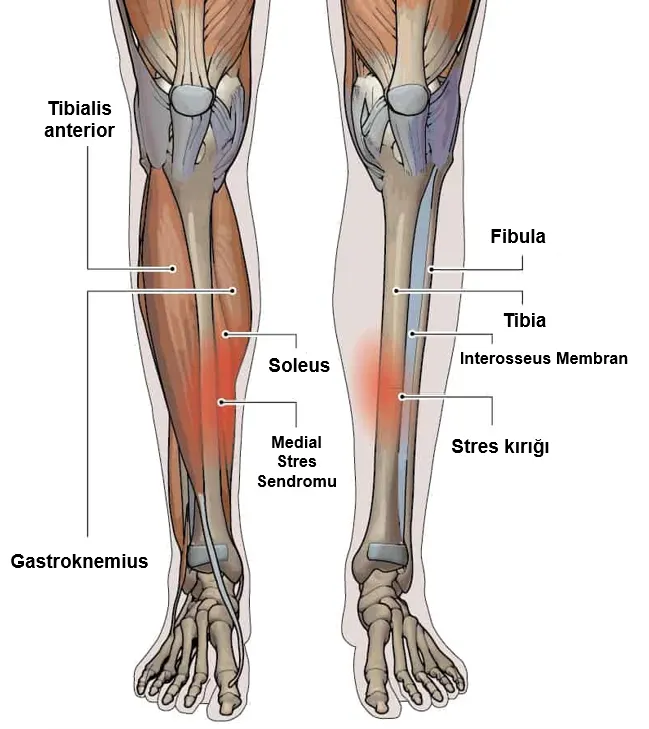
Stress fractures are cracks in bone caused by long-term wear on bone tissue from overload (in Turkish) or insufficient rest. In runners they occur most often in the tibia, the metatarsal bones of the foot, the navicular bone and the sacrum/pelvis.
Table of Contents
Common Causes
Repetitive, prolonged loading is the underlying cause of stress fractures, but they are usually triggered by sudden increases in the intensity or frequency of training or loading.
Running on the toes, if the necessary technique work has not been done, also places excess load and stress on the metatarsals and is therefore linked with stress fractures. For more detail, see Injury: Biomechanical, Anatomical and Training Factors (in Turkish).
Poor nutrition and disturbed hormone release can reduce bone health in general and lead to stress fractures.
Long-term energy deficits, where energy intake does not match the energy cost of training, can lead to relative energy deficiency in sport (RED-S), which reduces bone mineral density and can thereby trigger stress fractures.
Risk Factors
The following can contribute to stress fractures:
- Sex (in women, irregular periods or loss of periods (amenorrhoea) increase the risk)
- Low bone mineral density
- Eating disorders or inadequate nutrition
- Long-distance running
- Rest intervals that are too short for the training intensity
- Sudden changes in the training programme
- Unsuitable footwear
Treatment
Stop running, avoid loading the area and see your doctor early.
The most valuable treatment for stress fractures is rest, because bone needs time to repair itself.
Depending on the grade and sensitivity of the fracture, weight training can be used to prevent loss of bone volume and strength and to support faster recovery.
Returning to Training
For a healthier return to training after a stress fracture, as with most injuries, you need to increase training frequency and intensity gradually. This is vital.
To let your body adapt to load again, it is advisable to test yourself with very light movements at first.
In addition, before testing yourself with running, exposing your bones to smaller stresses with skipping can be a good way to see how you are doing.
References
- Mountjoy, M., Sundgot-Borgen, J., Burke, L., Carter, S., Constantini, N., Lebrun, C., Meyer, N., Sherman, R., Steffen, K., Budgett, R., & Ljungqvist, A. (2014). The IOC consensus statement: beyond the Female Athlete Triad, Relative Energy Deficiency in Sport (RED-S). British Journal of Sports Medicine, 48(7), 491-497. https://doi.org/10.1136/bjsports-2014-093502
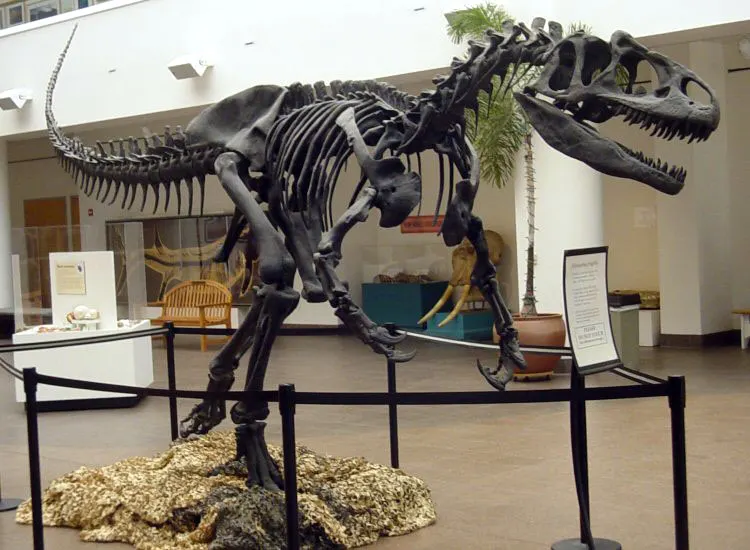
- Rothschild, B.M., Tanke, D.H., & Ford, T.L. (2001). Theropod stress fractures and tendon avulsions as a clue to activity. In: Tanke, D.H., & Carpenter, K. (Eds.), Mesozoic Vertebrate Life. Indiana University Press.

Hüseyin Akbulut is the founder of Sporeus and author of THRESHOLD (EŞİK), a 540-page Turkish-language book on endurance science.
- 540pp THRESHOLD Book
- MSc Sport Sciences
- Marmara University
Common Causes
Repetitive, prolonged loading is the underlying cause of stress fractures, but they are usually triggered by sudden increases in the intensity or frequency of training or loading.
Risk Factors
The following can contribute to stress fractures:
Treatment
Stop running, avoid loading the area and see your doctor early.
Returning to Training
For a healthier return to training after a stress fracture, as with most injuries, you need to increase training frequency and intensity gradually. This is vital.