Preview
Hüseyin Akbulut, MSc (2026). Kawhi Leonard and the Tendinopathy Recovery and Load Cycling of an Elite Forward. Sporeus. Retrieved, September 25, 2026. https://sporeus.com/en/science/kawhi-leonard-tendinopathy-recovery-and-load-cycling/
The Athlete in One Paragraph
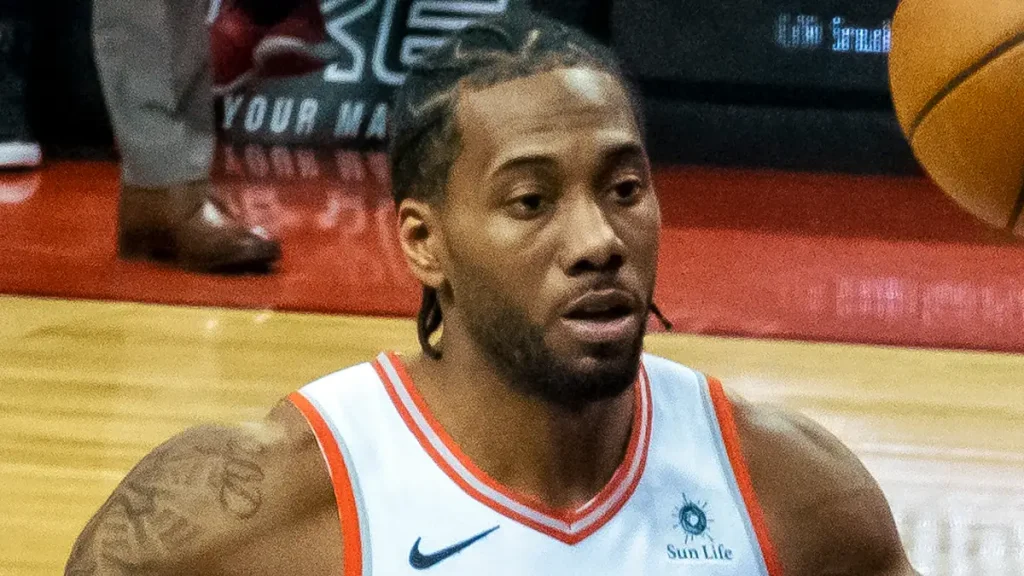
Kawhi Anthony Leonard (b. 1991-06-29, Los Angeles, California, United States) is a forward for the Los Angeles Clippers and a former member of the United States national-team pool. Listed at 2.01 m and ~102 kg, he carries the anthropometry of a heavy two-way wing whose visible signature on the league has been consistent peak-level performance interleaved with documented periods of patellar and quadriceps tendon issues that forced extended absences. The interesting case for sport science is not the absences themselves but the framework around them — the way a chronic lower-limb tendinopathy in an elite NBA forward is managed not by a single procedure or recovery month but by a long, cyclical relationship between training load and tissue tolerance. The variable underneath that story is tendinopathy recovery and load cycling — how a heavy forward who has accumulated tendon insult navigates the trade between the load required to keep the tendon adapting and the load that re-aggravates it.
Table of Contents
The Physiology — what tendinopathy recovery actually requires of the load profile
Tendinopathy in athletic populations is not a single discrete injury but a chronic, fluctuating tissue state in which collagen organisation, cellular activity, and mechanical tolerance drift away from healthy norms under repeated loading [1]. The pain and dysfunction visible at the surface are downstream of an underlying mismatch between the load applied and the load the tissue can currently absorb; the recovery question is therefore not “rest until pain is zero” but “how do I cycle load so that tolerance rises faster than insult”.
Gabbett’s training–injury prevention paradox provides the operating principle: undertrained athletes are not protected by their low load — they are exposed by it, because tissues that have never adapted to high loads cannot tolerate the spikes that competition imposes [1]. The protective state is high chronic load with controlled acute load, and tendinopathy adds a wrinkle: the chronic load that keeps the tendon adapting must be delivered through stimuli the tendon can currently absorb, which usually means a deliberate bias toward heavy slow-resistance and eccentric loading rather than reactive plyometric volume [1, 4, 5].
Hulin and colleagues’ acute:chronic workload-ratio work made the load-management language operational: an athlete whose recent acute load exceeds his chronic baseline by more than a defined margin carries a meaningfully elevated injury risk in the following weeks, and the elevated risk is most punishing for tissues already operating near their tolerance limit [2]. Bowen and colleagues showed that the most aggressive ACWR spikes are associated with injury rates 5–7 times the baseline — a finding that, applied to a tendinopathy case, argues for an operational conservatism that most healthy athletes would consider excessive [3].
The practical reading from the strength side of the equation is that maximal-strength reserve still matters [4, 5]. Wisløff’s correlation between maximal squat strength and lower-limb output, and Stølen’s broader physiology framing, both reinforce that a tendinopathic athlete who loses absolute strength loses the protective margin against the same external forces — and that the recovery model therefore prescribes continued loading, but loading shaped to the tendon’s current tolerance window rather than abandoned [4, 5]. Eccentric and heavy slow-resistance modalities have become the load-cycling backbone in clinical and elite-sport rehab precisely because they deliver substantial mechanical stimulus at controllable rate of force development.
The Case — Kawhi Leonard as a load-cycling case study
For a 2.01 m / ~102 kg two-way forward whose game is built on heavy defensive minutes against the league’s most demanding wing assignments and on offensive isolations that load the planted leg into deceleration, the mechanical bill on the patellar and quadriceps tendons is among the largest in the league at his position [1, 4]. The publicly visible pattern of Leonard’s career — long stretches of peak-level performance, interrupted by deliberate absences and missed games — is, read through the literature, the operational shape of a load-cycling protocol rather than a string of acute injuries [1, 2, 3].
The training-and-management approach reportedly built around Leonard maps onto exactly the variables the literature highlights as protective for chronic tendinopathy: maintenance of chronic load to keep the tendon adapting [1, 2]; aggressive control of acute spikes through scheduled rest, minute caps, and back-to-back avoidance to keep the ACWR inside its safe corridor [2, 3]; and continued strength loading shaped to the tendon’s current tolerance — heavy slow-resistance and eccentric work rather than uncontrolled plyometric volume [4, 5]. None of this is unusual in clinical rehab; the elite-sport version is the same principle applied to a season-long calendar with playoff implications.
A second feature is the asymmetry between the public narrative and the physiological one. Days off and minute caps in an elite athlete read in the press as caution or load management; in the load-cycling literature they read as the chronic-load-with-controlled-acute-spike state that is, on the evidence, the protective configuration for an athlete with documented tendon insult [1, 2, 3]. The trade-off is real — fewer regular-season minutes, more availability for the high-stake windows — and the outcome is contingent on whether the chronic-load floor stays high enough to keep the tissue adapting rather than detraining [1].
Match-context note: across his peak playoff runs Leonard’s per-game on-court output and offensive efficiency have placed him among the top of the league for forwards when available (Match data: NBA.com / Basketball-Reference). The discriminator is not absolute output across an 82-game schedule but the preservation of peak-level output inside the playoff window through deliberate in-season load shaping.

What This Means for the Reader
For amateur and developing athletes who carry chronic lower-limb tendon irritation, the lesson is that “rest until it stops hurting” is the wrong prescription — it lets chronic load collapse, removes the very stimulus that drives tendon adaptation, and sets up the next acute spike to do worse damage on a less-prepared tissue [1, 2, 3, 4, 5]. The protective configuration is high chronic load, controlled acute spikes, and a deliberate bias toward heavy slow-resistance and eccentric stimuli that the tendon can absorb at its current tolerance.
Practical assessment: track three indicators across a block — a session-load log with rolling 7-day and 28-day averages, a pain-on-loading scale on a standardised reference exercise, and a heavy-slow-resistance reference lift relative to body mass. A pain-rating spike inside a 4-week window is the early signal that the ACWR has drifted; a falling reference lift is the signal that the chronic-load floor has collapsed.
The diagnostic question for the tendinopathic athlete: am I cycling load through a tolerance window that is rising, or am I avoiding load until tolerance erodes and the next spike does the damage?
References
- Gabbett TJ. (2016). The training–injury prevention paradox: should athletes be training smarter and harder? British Journal of Sports Medicine, 50(5): 273–280. doi:10.1136/bjsports-2015-095788
- Hulin BT, Gabbett TJ, Lawson DW, Caputi P, Sampson JA. (2016). The acute:chronic workload ratio predicts injury: high chronic workload may decrease injury risk in elite rugby league players. British Journal of Sports Medicine, 50(4): 231–236. doi:10.1136/bjsports-2015-094817
- Bowen L, Gross AS, Gimpel M, Bruce-Low S, Pearce LB, Li FX. (2017). Spikes in acute:chronic workload ratio (ACWR) associated with a 5-7 times greater injury rate in English Premier League football players. Journal of Sports Sciences, 35(3): 279–286. doi:10.1136/bjsports-2018-099422
- Wisløff U, Castagna C, Helgerud J, Jones R, Hoff J. (2004). Strong correlation of maximal squat strength with sprint performance and vertical jump height. British Journal of Sports Medicine, 38(3): 285–288. doi:10.1136/bjsm.2002.002071
- Stølen T, Chamari K, Castagna C, Wisløff U. (2005). Physiology of soccer: an update. Sports Medicine, 35(6): 501–536. doi:10.2165/00007256-200535060-00004
Match-context data (descriptive only): NBA.com / Basketball-Reference.
The Athlete in One Paragraph
Kawhi Anthony Leonard (b. 1991-06-29, Los Angeles, California, United States) is a forward for the Los Angeles Clippers and a former member of the United States national-team pool. Listed at 2.01 m and ~102 kg, he carries the anthropometry of a heavy two-way wing whose…
The Physiology — what tendinopathy recovery actually requires of the load profile
Tendinopathy in athletic populations is not a single discrete injury but a chronic, fluctuating tissue state in which collagen organisation, cellular activity, and mechanical tolerance drift away from healthy norms under repeated loading [1]. The pain and dysfunction visible at the surface are downstream of…
The Case — Kawhi Leonard as a load-cycling case study
For a 2.01 m / ~102 kg two-way forward whose game is built on heavy defensive minutes against the league's most demanding wing assignments and on offensive isolations that load the planted leg into deceleration, the mechanical bill on the patellar and quadriceps tendons is…
What This Means for the Reader
For amateur and developing athletes who carry chronic lower-limb tendon irritation, the lesson is that "rest until it stops hurting" is the wrong prescription — it lets chronic load collapse, removes the very stimulus that drives tendon adaptation, and sets up the next acute spike…