Preview
Hüseyin Akbulut, MSc (2026). Mitochondria: How to Grow Your Cellular Power Plants. Sporeus. Retrieved, November 17, 2026. https://sporeus.com/en/science/mitochondria-training-adaptation/
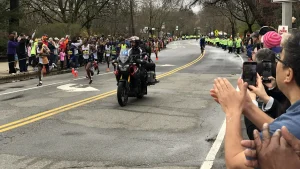
Los Angeles, 5 August 1984: the first Olympic women’s marathon. Joan Benoit won gold in 2:24:52. Holding a high fraction of VO₂max for more than two hours depends not only on the heart and lungs but on the mitochondrial density of the muscle fibres, above all the type I fibres. In elite endurance athletes mitochondrial volume density reaches 6–9%, almost double the 3–4% of sedentary people, and that doubling means roughly twice the capacity for oxidative phosphorylation. Mitochondria are your cellular power plants, and training can make them grow. Understanding how they grow means understanding the molecular basis of endurance adaptation.
Table of Contents
- What Are Mitochondria? The Cell's Energy Factory
- PGC-1α: The Master Switch
- Mitochondrial Adaptation in Numbers
- The Antioxidant Paradox: Why Supplements Can Undermine Training
- Ageing and Mitochondria: A Decline You Can Slow
- Metabolic Flexibility: Shifting the Crossover Point
- Conclusion: Growing Your Power Plants Is Up to You
- References
What Are Mitochondria? The Cell’s Energy Factory
Mitochondria are double-membraned organelles of roughly 1–10 micrometres, organised not as isolated spheres but as dynamic, branching networks. The inner membrane is densely folded into cristae and is about 70% protein by mass. More cristae surface area means more electron transport chain (ETC) complexes and more ATP synthase, and so more ATP per mitochondrion. Training increases both the number of mitochondria and the inner-membrane surface area of each one: a double mechanism. Around 90% of the cell’s aerobic ATP is made in the mitochondria. Complete oxidation of one glucose molecule yields about 30–32 net ATP; one palmitate (a 16-carbon fatty acid) yields about 106 ATP (129 in older calculations). Gram for gram, fat provides more than twice the energy of carbohydrate, but it is oxidised more slowly.
Peter Mitchell’s chemiosmotic theory of 1961 (Nobel Prize, 1978) explains the mechanism: electron flow is coupled to proton pumping, and the proton gradient drives ATP synthase to make ATP. Since Mitchell’s discovery we have known that much of exercise adaptation consists of enlarging and fine-tuning this microscopic machinery.
PGC-1α: The Master Switch
In 1998 Puigserver and colleagues isolated PGC-1α from brown adipose tissue. Handschin and Spiegelman’s 2008 review in Nature described it as a master regulator of mitochondrial biogenesis and oxidative metabolism. PGC-1α is a transcriptional coactivator: it does not bind DNA directly but amplifies the activity of transcription factors.
Its targets: NRF-1 and NRF-2 (nuclear respiratory factors) activate the genes for the nuclear-encoded subunits of the respiratory chain complexes. TFAM (mitochondrial transcription factor A) enters the mitochondria and directs mtDNA replication and transcription. The result is simultaneous upregulation of proteins from both the nuclear and the mitochondrial genome, a coordination of two genomes.
Three main signalling pathways activate PGC-1α during exercise:
AMPK (AMP-activated protein kinase): activated when the cell’s AMP/ATP ratio rises, it acts as an energy-crisis sensor and phosphorylates PGC-1α directly.
CaMKII (calcium/calmodulin-dependent kinase II): activated by the rise in intracellular calcium during contraction, it phosphorylates PGC-1α.
SIRT1 (NAD⁺-dependent deacetylase): activated when NAD⁺ rises during exercise, it removes inhibitory acetyl groups from PGC-1α.
Additional signals come from reactive oxygen species (ROS) and nitric oxide (NO). After exercise, a rise in PGC-1α mRNA can be detected within 1–3 hours and an increase in protein within 24 hours. Repeated training accumulates these signals over time.
Mitochondrial Adaptation in Numbers
Data from Zoladz and colleagues: after 20 weeks of endurance running, PGC-1α protein rose by 23%, TFAM by 29%, citrate synthase (CS) by 65% and cytochrome c oxidase (COX, complex IV) by 42%. In most training studies, mitochondrial volume density rises by 20–30%. In the sedentary vastus lateralis the mitochondrial volume fraction is about 3–4%; in well-trained cyclists and runners it is 6–8%, a doubling that corresponds to twice the oxidative phosphorylation capacity. In the type I fibres of elite marathoners it is about 6–9%. Total ETC complex activity per gram of muscle is two to three times higher in elite athletes than in sedentary people.
Capillarisation is a critical partner: about 308 capillaries/mm² in endurance runners versus 245/mm² in sedentary people, with capillary-to-fibre ratios of about 2.1 versus 1.9. VEGF-driven angiogenesis adds 20–30%. Shorter O₂ diffusion distances mean faster substrate delivery.
One more adaptation: intramuscular triglyceride (IMTG) droplets increase in type I fibres and sit right next to the mitochondria, ready for rapid beta-oxidation. This is the “athlete’s paradox”: trained athletes carry more IMTG yet show no insulin resistance, because their mitochondria turn fat over quickly.
The Antioxidant Paradox: Why Supplements Can Undermine Training
A controlled study by Ristow and colleagues in 2009 shook the sport science world. Participants who took 1,000 mg of vitamin C and 400 IU of vitamin E daily during a four-week exercise programme showed significantly smaller gains in insulin sensitivity and in the expression of endogenous antioxidant enzymes than those who did the same programme without supplements. The antioxidants did not just fail to help; they actively blocked adaptation.
The mechanism is hormesis. ROS produced during exercise are not harmful by-products but key signalling molecules. They activate PGC-1α, NRF2 (the master regulator of the body’s own antioxidant defences) and NF-κB. The exercise session is the “damage”; the adaptation that follows is the benefit. Blunt the ROS signal with antioxidant supplements and the cell never receives the message that it needs to adapt. Natural antioxidants from fruit and vegetables do not disrupt this signal; the problem is high-dose supplementation. Avoiding vitamin C above 500 mg and vitamin E above 400 IU around training sessions (especially in the two hours before and after) helps protect adaptation. Using them around competition, when adaptation is not the goal, remains reasonable.
Ageing and Mitochondria: A Decline You Can Slow
From the fourth decade of life, mitochondria decline in both quality and quantity. In untrained older adults, mitochondrial oxidative capacity is about 25–30% lower than in untrained young adults. VO₂max falls by about 1% a year from the third decade and faster after 60. But much of the decline can be reversed: 65-year-old masters athletes who trained five or more days a week for over 25 years have been found to have muscle mitochondrial content comparable to that of untrained young adults (data from Tarnopolsky’s group). Even in previously sedentary people aged 60–70, 12–16 weeks of aerobic training raised CS activity by 20–40%. Mitochondrial decline may look inevitable, but its rate depends largely on training status.
Metabolic Flexibility: Shifting the Crossover Point
In Brooks’s crossover concept, the point at which fat and carbohydrate contribute equally sits at about 50–60% of VO₂max in sedentary people and shifts to 65–75% in trained athletes. The fat oxidation enzyme HAD and the fat transport protein FAT/CD36 are upregulated. Lactate clearance speeds up as MCT expression increases, in line with Brooks’s lactate shuttle hypothesis. The result: at the same intensity, the trained athlete burns more fat and spares glycogen. A higher lactate threshold reflects mitochondrial capacity that can consume lactate as fast as it is produced. As the mitochondria grow, the threshold rises, and it keeps rising even after VO₂max has plateaued.
Conclusion: Growing Your Power Plants Is Up to You
When Holloszy showed in 1967 that training doubled the concentration of mitochondrial respiratory enzymes such as cytochrome c in rat muscle, he laid the foundation of exercise molecular biology. We have known ever since that endurance training transforms not the muscle fibres themselves but the energy factories inside them. Every aerobic run triggers a PGC-1α signal, every signal contributes to mitochondrial biogenesis, and every new mitochondrion adds to your oxidative capacity. The process takes months and years rather than weeks, but the cumulative effect is enormous. Even at 65, 12–16 weeks of training can raise mitochondrial enzymes by 20–40%. Ageing is inevitable; the rate of mitochondrial decline is not. Growing your power plants is up to you.
Related: The Lactate Shuttle · VO₂ Max Guide: What It Does, How to Improve It
References
- Holloszy, J.O. (1967). Biochemical adaptations in muscle: Effects of exercise on mitochondrial oxygen uptake and respiratory enzyme activity in skeletal muscle. Journal of Biological Chemistry, 242(9), 2278-2282.
- Puigserver, P., Wu, Z., Park, C.W., Graves, R., Wright, M. & Spiegelman, B.M. (1998). A cold-inducible coactivator of nuclear receptors linked to adaptive thermogenesis. Cell, 92(6), 829-839. https://doi.org/10.1016/S0092-8674(00)81410-5
- Handschin, C. & Spiegelman, B.M. (2008). The role of exercise and PGC1α in inflammation and chronic disease. Nature, 454(7203), 463-469. https://doi.org/10.1038/nature07206
- Ristow, M., Zarse, K., Oberbach, A. et al. (2009). Antioxidants prevent health-promoting effects of physical exercise in humans. Proceedings of the National Academy of Sciences, 106(21), 8665-8670. https://doi.org/10.1073/pnas.0903485106
- Lane, N. (2005). Power, Sex, Suicide: Mitochondria and the Meaning of Life. Oxford University Press.

Hüseyin Akbulut is the founder of Sporeus and author of THRESHOLD (EŞİK), a 540-page Turkish-language book on endurance science.
- 540pp THRESHOLD Book
- MSc Sport Sciences
- Marmara University
What Are Mitochondria? The Cell's Energy Factory
Mitochondria are double-membraned organelles of roughly 1–10 micrometres, organised not as isolated spheres but as dynamic, branching networks. The inner membrane is densely folded into cristae and is about 70% protein by mass. More cristae surface area means more electron transport chain (ETC) complexes and…
PGC-1α: The Master Switch
In 1998 Puigserver and colleagues isolated PGC-1α from brown adipose tissue. Handschin and Spiegelman's 2008 review in Nature described it as a master regulator of mitochondrial biogenesis and oxidative metabolism. PGC-1α is a transcriptional coactivator: it does not bind DNA directly but amplifies the activity…
Mitochondrial Adaptation in Numbers
Data from Zoladz and colleagues: after 20 weeks of endurance running, PGC-1α protein rose by 23%, TFAM by 29%, citrate synthase (CS) by 65% and cytochrome c oxidase (COX, complex IV) by 42%. In most training studies, mitochondrial volume density rises by 20–30%. In the…
The Antioxidant Paradox: Why Supplements Can Undermine Training
A controlled study by Ristow and colleagues in 2009 shook the sport science world. Participants who took 1,000 mg of vitamin C and 400 IU of vitamin E daily during a four-week exercise programme showed significantly smaller gains in insulin sensitivity and in the expression…
Ageing and Mitochondria: A Decline You Can Slow
From the fourth decade of life, mitochondria decline in both quality and quantity. In untrained older adults, mitochondrial oxidative capacity is about 25–30% lower than in untrained young adults. VO₂max falls by about 1% a year from the third decade and faster after 60. But…