Preview
Hüseyin Akbulut, MSc (2026). VO₂max Training: How to Raise Your Aerobic Ceiling. Sporeus. Retrieved, November 17, 2026. https://sporeus.com/en/science/vo2max-training-methods/
VO₂max describes the size of your aerobic engine: the point at which oxygen uptake stops rising no matter how much harder you work. It is arguably the most cited variable in endurance physiology. Two facts about it matter most. First, it is trainable, but the genetic ceiling is real. Second, raising it is a physiologically different process from raising the lactate threshold, and that difference shapes how training should be designed.
Table of Contents
- Why Does VO₂max Matter So Much?
- How Does VO₂max Improve? The Mechanism
- Method 1: Norwegian 4×4-Minute Intervals
- Method 2: Billat's 30-30 Protocol
- Method 3: 1,000-Metre Repeats
- Method 4: Long Tempo Runs
- How Does VO₂max Training Differ from Lactate Threshold Training?
- Planning VO₂max Sessions at Elite Level
- Avoiding Overtraining: How to Dose VO₂max Work
- Conclusion
- References
Why Does VO₂max Matter So Much?
Oxygen uptake (VO₂) is a direct indicator of the rate of aerobic energy production. Maximal oxygen uptake (VO₂max) measures the highest aerobic capacity the cardiopulmonary system and the working muscles can reach together. The Fick equation expresses the relationship: VO₂max = cardiac output × arteriovenous oxygen difference. In other words, both how much blood the heart pumps and how much oxygen the muscles can extract from it are decisive.
VO₂max sets the upper ceiling of endurance performance. However high your lactate threshold, you cannot go above that ceiling. That is why VO₂max is often compared to the size of the engine and the lactate threshold to how much of the engine you can use continuously. The two complement each other; optimal performance is not possible with only one of them.
VO₂max does have practical limits. In highly trained athletes it changes more slowly over the years, and it does not predict marathon performance as strongly as LT2. Even so, VO₂max training is especially valuable for intermediate athletes (whose ceiling has not yet reached its genetic limit), for rebuilding aerobic capacity after the winter, and for maximising the performance ceiling before the racing season.
How Does VO₂max Improve? The Mechanism
The training stimulus that raises VO₂max is different from the one that raises the lactate threshold. LT2 work focuses on peripheral adaptations (mitochondria, MCT transporters), whereas VO₂max training primarily targets cardiac output, and in particular stroke volume.
High-intensity interval training (HIIT) repeatedly pushes the left ventricle towards maximal filling. Over time this mechanical stress enlarges the left ventricle, a healthy structural adaptation known as the “athlete’s heart”. A larger left ventricle pumps more blood with each beat, and that rise in stroke volume translates into a higher VO₂ at the same heart rate.
VO₂max training also expands blood plasma volume, optimises haemoglobin concentration and densifies the capillary network around muscle fibres. Together these mechanisms improve both sides of the Fick equation: cardiac output and peripheral oxygen extraction both increase.
Method 1: Norwegian 4×4-Minute Intervals
This protocol is one of the best-supported VO₂max methods in the exercise physiology literature. In the Norwegian study led by Jan Helgerud and Jan Hoff, three sessions a week of 4×4-minute high-intensity intervals raised VO₂max by about 7% in eight weeks in moderately trained men (Helgerud et al., 2007), while long slow distance running and lactate-threshold training over the same period produced no significant change.
The protocol:
- 10-minute warm-up at an easy pace
- 4 × 4 minutes at maximal sustainable effort (90–95% of maximum heart rate)
- 3 minutes of active recovery between intervals (walking or very slow jogging)
- 10-minute cool-down
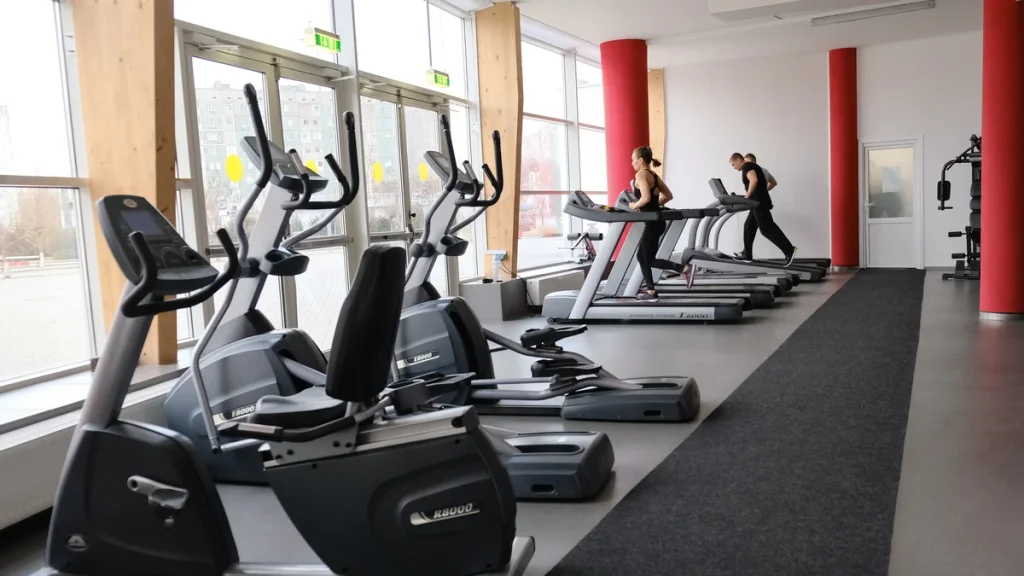
Getting the intensity right is critical. By the end of each 4 minutes you should be genuinely tired, but never exhausted. If the first interval feels too easy, increase the speed or the incline; if the last two fall apart too early, you started too fast. On a treadmill, using an incline is a good way to raise cardiac stress without increasing joint loading.
The session can be done twice a week, but there must be at least 48 hours between sessions, filled with rest or easy days.
Method 2: Billat’s 30-30 Protocol
Developed by Véronique Billat, this protocol takes a different approach. The core principle is to keep work and recovery periods very short in order to extend the total time spent near VO₂max.
In the 30-30 protocol the runner covers 30 seconds at vVO₂max (the minimum speed that elicits VO₂max, usually close to 3,000–5,000 m race pace), followed by 30 seconds of slow jogging or walking. The cycle is repeated for 20–30 minutes.
The physiological logic: 30 seconds at high intensity drives VO₂ rapidly towards its maximum, and 30 seconds of easy running does not allow full recovery but also keeps heart rate from dropping too far. Over the session, the time during which VO₂ stays high (usually above 90% of VO₂max) is extended. The same quality of stimulus could be sustained for far less time in a continuous run.
Thanks to its short repetitions, the method is a good bridging format for athletes not yet ready for long, hard intervals. Its drawbacks are that it requires a good estimate of vVO₂max and that pacing is hard to control.
Method 3: 1,000-Metre Repeats
A classic track format, 1,000 m repeats are the traditional VO₂max stimulus for middle- and long-distance runners. Run close to (or slightly faster than) 5 km race pace, each repeat brings VO₂ close to its maximum.
A typical session:
- 5–8 × 1,000 m at 5 km race pace or 95–100% of vVO₂max
- 2–3 minutes of full recovery between repeats (sitting or walking)
- Total interval distance: 5–8 km
Full recovery means each repeat can be completed with quality. Unlike protocols with partial recovery, every 1,000 m repeat produces a genuinely high heart rate and oxygen demand. The format is also valuable for biomechanical efficiency: reinforcing fast running form improves the ability to hold the same speed at a lower energy cost.
Without a track, the session can be run on a trail or a flat road using GPS pace targets. Wind and temperature have a large effect on heart rate, so on hot days expect heart rate to rise at the same pace, and the pace target may need to come down slightly.
Method 4: Long Tempo Runs
This method is less recognised as VO₂max training, but its physiological effect should not be ignored. In highly trained athletes, long tempo runs and threshold intervals (at or slightly below LT2) sustain a high cardiac load for a long time; this is thought to contribute to the heart’s structural adaptation.
Analyses of the training of elite Norwegian and East African runners show that high-volume work in the threshold zone has a prominent place in their programmes; how much it contributes to VO₂max is unclear. This approach works in the threshold zone rather than in the VO₂max zone. It suits athletes who run high weekly mileage and are not ready for short high-intensity intervals.
In practice, long tempo runs give high-volume athletes chronic cardiac stimulation at a low recovery cost. They can complement pure HIIT formats such as the 4×4: the two should not be combined in the same week, but they can be sequenced across different training blocks.
How Does VO₂max Training Differ from Lactate Threshold Training?
The distinction is often blurred in practice, and that leads to poor programming.
- Target intensity: LT2 training is done at threshold speed (roughly 85–90% of vVO₂max). VO₂max training is done at or above vVO₂max.
- Duration: LT2 intervals last 10–40 minutes. VO₂max intervals typically last 3–8 minutes.
- Primary adaptation: LT2: mitochondrial biogenesis, more MCTs, buffering capacity. VO₂max: stroke volume, cardiac output, plasma volume.
- Recovery cost: VO₂max training produces greater neuromuscular and cardiovascular stress; full recovery after a 4×4 session can take 48–72 hours.
- Lactate response: lactate accumulates much faster in the VO₂max range than at LT2, which is why the intervals are shorter.
The most common programming mistake is trying to target both systems at once and at high volume. Block periodisation offers one solution: some weeks focus on LT2, the following weeks on VO₂max. If both types of session appear in the same week, put the highest intensity (VO₂max) first and the threshold work a few days later.
Planning VO₂max Sessions at Elite Level
In elite programmes, the dose of a VO₂max session is judged not only by the number of repetitions but by the time spent above 90% of VO₂max; many coaches set targets for this from a few minutes up to around ten minutes per session (Buchheit & Laursen, 2013). Long intervals (3–5 min), short intervals (15–30 s) and repeated sprints produce this time with different neuromuscular and anaerobic costs; the choice depends on the athlete’s profile and the other loads in the calendar. Intensities are set from individual values derived from vVO₂max, critical speed or field tests.
Avoiding Overtraining: How to Dose VO₂max Work
VO₂max training is effective but expensive, both physiologically and in recovery terms. Dosing errors lead to performance decline rather than improvement.
Principles for safe programming:
- No more than 1–2 VO₂max sessions a week. For most intermediate athletes one is enough.
- Total VO₂max volume should not exceed 8–12% of weekly training.
- At least one, preferably two, easy days before every high-intensity session.
- A recovery week every 3–4 weeks (cut volume by 30–40%, leave intensity alone).
- Track your morning resting heart rate. A persistently elevated resting heart rate is a sign of overload.
Most runners who slide into overtraining syndrome either increased high-intensity work too quickly or did not keep their easy days truly easy. The long-term effect of VO₂max training does not come from chronic, low-volume high intensity but from a well-dosed stimulus applied in careful cycles.
Conclusion
VO₂max is the ceiling of the aerobic system, and that ceiling really can be raised, but only with a specific stimulus. Norwegian 4×4 intervals, Billat’s 30-30 protocol, 1,000 m repeats and long tempo runs each target cardiac output and peripheral adaptations through different mechanisms. None of them is a complete training programme on its own, but combined within a sound periodisation framework they measurably increase the size of your aerobic engine.
Understand how it differs from lactate threshold training: LT2 work determines how much of the engine you can use, while VO₂max training enlarges the engine itself. Both are essential components of endurance performance, but they cannot be targeted at the same time and at the same load. Applied in blocks, with disciplined dosing and genuine respect for recovery, VO₂max training keeps driving aerobic development for years.
Related articles:
- Lactate threshold training
- Strength training for endurance athletes
- VO₂ Max Guide: What It Does, How to Improve It
References
- Helgerud, J., Høydal, K., Wang, E., Karlsen, T., Berg, P., Bjerkaas, M., … & Hoff, J. (2007). Aerobic high-intensity intervals improve VO₂max more than moderate training. Medicine & Science in Sports & Exercise, 39(4), 665–671.
- Bassett, D. R. Jr., & Howley, E. T. (2000). Limiting factors for maximum oxygen uptake and determinants of endurance performance. Medicine & Science in Sports & Exercise, 32(1), 70–84.
- Buchheit, M., & Laursen, P. B. (2013). High-intensity interval training, solutions to the programming puzzle. Part I: cardiopulmonary emphasis. Sports Medicine, 43(5), 313–338.

Hüseyin Akbulut is the founder of Sporeus and author of THRESHOLD (EŞİK), a 540-page Turkish-language book on endurance science.
- 540pp THRESHOLD Book
- MSc Sport Sciences
- Marmara University
Why Does VO₂max Matter So Much?
Oxygen uptake (VO₂) is a direct indicator of the rate of aerobic energy production. Maximal oxygen uptake (VO₂max) measures the highest aerobic capacity the cardiopulmonary system and the working muscles can reach together. The Fick equation expresses the relationship: VO₂max = cardiac output × arteriovenous…
How Does VO₂max Improve? The Mechanism
The training stimulus that raises VO₂max is different from the one that raises the lactate threshold. LT2 work focuses on peripheral adaptations (mitochondria, MCT transporters), whereas VO₂max training primarily targets cardiac output, and in particular stroke volume.
Method 1: Norwegian 4×4-Minute Intervals
This protocol is one of the best-supported VO₂max methods in the exercise physiology literature. In the Norwegian study led by Jan Helgerud and Jan Hoff, three sessions a week of 4×4-minute high-intensity intervals raised VO₂max by about 7% in eight weeks in moderately trained men…
Method 2: Billat's 30-30 Protocol
Developed by Véronique Billat, this protocol takes a different approach. The core principle is to keep work and recovery periods very short in order to extend the total time spent near VO₂max.
Method 3: 1,000-Metre Repeats
A classic track format, 1,000 m repeats are the traditional VO₂max stimulus for middle- and long-distance runners. Run close to (or slightly faster than) 5 km race pace, each repeat brings VO₂ close to its maximum.