Preview
Hüseyin Akbulut, MSc (2026). Oleksandr Usyk and the Cardio Base and Round Pacing of an Elite Heavyweight Boxer. Sporeus. Retrieved, October 15, 2026. https://sporeus.com/en/science/oleksandr-usyk-boxing-cardio-base-and-round-pacing/
The Athlete in One Paragraph
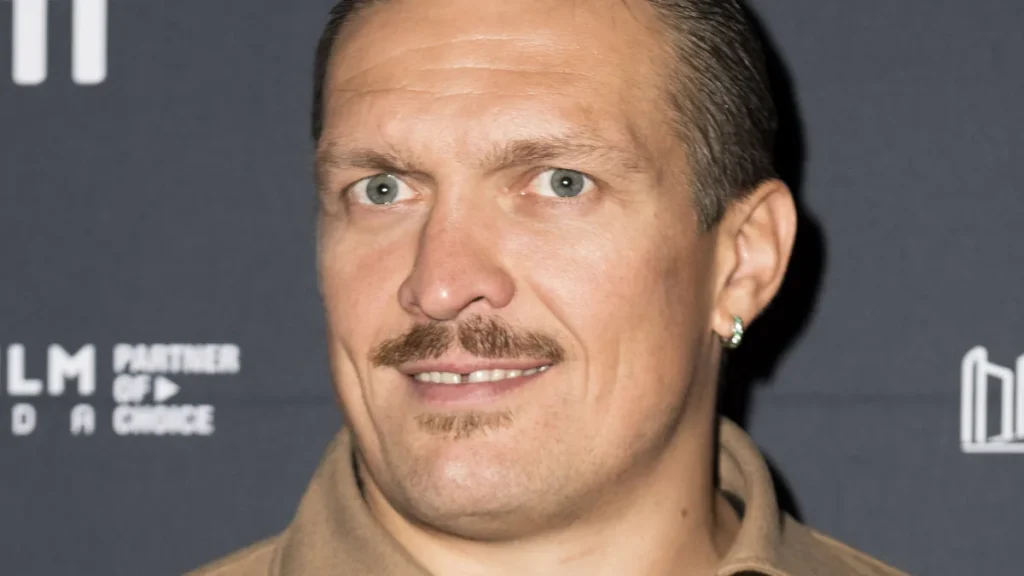
Oleksandr Oleksandrovych Usyk (b. 1987-01-17, Simferopol, Crimea, Ukraine) is the undisputed heavyweight world champion, having previously held the undisputed cruiserweight title — one of the very few fighters in the modern era to unify two divisions in the four-belt period. Listed at 1.91 m and ~100 kg, he carries an anthropometry that is, by heavyweight standards, light and tall; his style — high work-rate, late-round acceleration, southpaw movement that asks the opponent to chase across twelve rounds — depends on a conditioning base that other heavyweights typically cannot match. The interesting case for sport science is not any single combination but the underlying capacity question: how does an amateur cruiserweight aerobic base translate into championship-distance pacing at heavyweight, where round-to-round repeatability rather than single-burst force decides which fighter is still throwing in round eleven.
Table of Contents
The Physiology — what cardio base and round pacing actually require
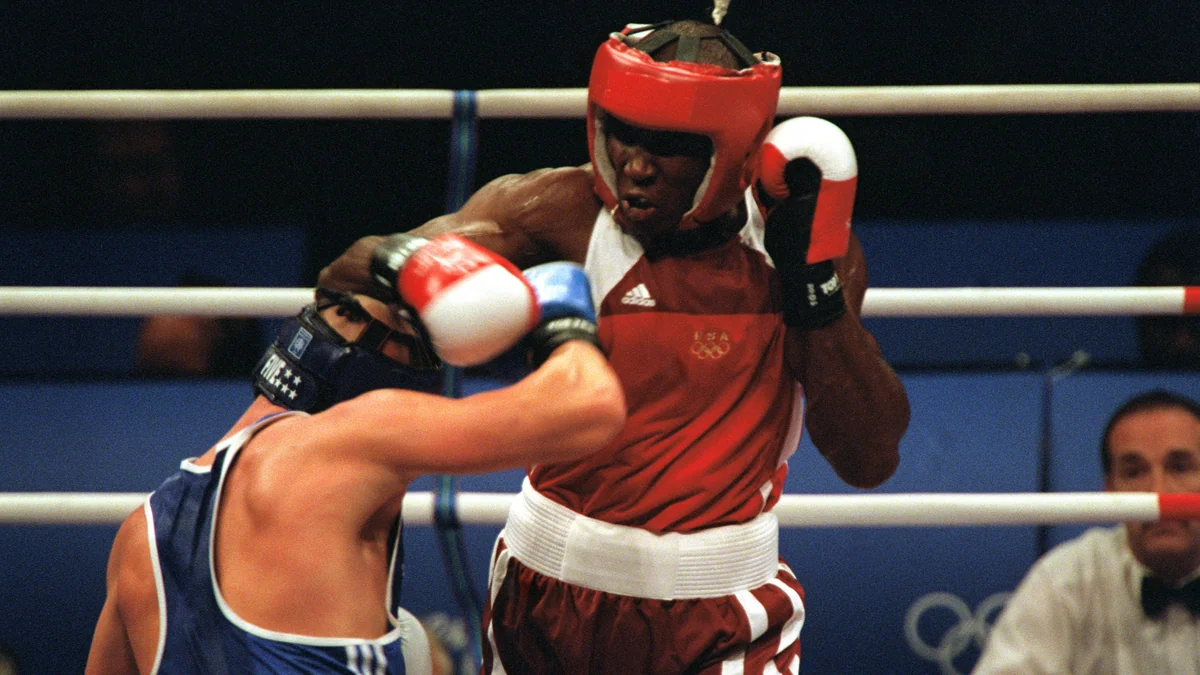
Championship boxing is a twelve-round, three-minute-on / one-minute-off intermittent activity in which the work bouts are dominated by short, high-intensity actions (punches, exchanges, defensive movement) layered over a continuous demand of footwork, postural control, and breathing under load. Joyner and Coyle’s framing of endurance performance — the interaction of maximal oxygen uptake, lactate threshold, and the economy with which oxygen is used — applies directly: an athlete with a higher VO2max and a higher fractional utilisation can sustain a given external work-rate at a lower physiological cost, which is exactly what late-round repeatability requires [1].
Bangsbo’s analysis of intermittent team-sport demand established the framework that has since been applied across combat and field sports: high-intensity efforts are repeated against an aerobic background, and the recovery between efforts is itself an aerobic process [2]. The fighter who recovers more between exchanges arrives at the next exchange with a greater fraction of his force-velocity capacity intact; the fighter whose recovery is incomplete arrives slower, throws fewer punches, and absorbs more.
Stølen and colleagues’ soccer-physiology review extends the same logic with a useful distinction for combat: the absolute aerobic capacity matters, but so does the ability to clear lactate and resynthesise phosphocreatine in the inter-effort window [3]. In a one-minute corner break, those clearance kinetics are the difference between starting round eight fresh and starting it already two strikes behind tempo. Helgerud’s classic study on aerobic-interval training showed that high-intensity aerobic work elevates VO2max and improves intermittent-running performance even in already-trained athletes, with corresponding improvements in the volume of high-intensity work tolerated within a session [4].
Buchheit and Laursen’s HIIT framework provides the programming layer: training round-pacing is not a generic running protocol but a deliberate manipulation of work duration, intensity, recovery duration, and modality to target either the cardiopulmonary ceiling, the metabolic clearance system, or the neuromuscular cost — and a championship fighter, across an eight-to-twelve week camp, must touch all three [5]. The aerobic base is the substrate; the HIIT layer is what converts the substrate into round-specific repeatability.
Two integrative points follow. First, the late-round fade most commonly attributed to “gas tank” is rarely a pure aerobic-ceiling problem; it is more often a clearance and economy problem layered over an inadequate base [1, 3]. Second, the base itself takes years to build — and athletes who arrive at championship boxing with a strong amateur-level aerobic history hold a structural advantage that single-camp work cannot manufacture [4].
The Case — Usyk as cardio-base translator
Usyk’s amateur and cruiserweight history is the relevant context. A long amateur career at international level, followed by an undisputed cruiserweight reign, builds the kind of aerobic and intermittent-recovery substrate that Joyner and Coyle, Bangsbo and Stølen describe as the discriminator between fighters who can sustain twelve-round work-rate and fighters who cannot [1, 2, 3]. The translation to heavyweight is the interesting variable: at ~100 kg he is on the lighter end of the modern heavyweight spectrum, and the metabolic cost of carrying that body across twelve rounds is correspondingly lower than for a 110–125 kg opponent — which means his base, applied to a smaller mechanical bill, looks even larger from the outside.
The stylistic signature is consistent with a fighter who treats round-pacing as a tactical variable. Late-round acceleration — being faster, more accurate and more willing in rounds nine through twelve than in rounds one through four — is what an aerobic-clearance advantage looks like in the ring; the opponent’s tempo collapses against a fighter whose tempo does not [2, 3, 4]. Helgerud-style aerobic-interval work, layered with HIIT round-simulation in camp, is the conventional path to that pattern [4, 5].
The under-discussed dimension is the cost paid in camp. Buchheit and Laursen’s emphasis on programming the puzzle — not just running intervals but choosing the right type of interval at the right phase — is what separates camps that produce twelve-round capacity from camps that produce eight-round capacity with a hopeful corner [5]. The amateur base is what allows the camp to reach for the higher end of the HIIT menu without breaking down.
Performance-context note: across the unified cruiserweight reign and the heavyweight unification path, Usyk’s late-round output and round-by-round work-rate sit at the upper end of the modern heavyweight distribution (Performance data: BoxRec). The discriminator is not any single round but the relative shape of the curve from round one to round twelve.

What This Means for the Reader
For the developing combat athlete, the lesson is that the championship cardio base is not built in the eight weeks before a fight; it is built across years of consistent aerobic and intermittent-recovery work, and camp converts that base into round-specific output [1, 2, 4]. Skipping the base and trying to compensate with high-intensity-only camp work produces an athlete who looks sharp in round one and disorganised in round seven.
Practical assessment for amateurs: track three indicators across a training block — a sub-maximal heart-rate-recovery measure after a standard interval set, a repeated-round shadow-boxing or pad-work test with punch-output counted per minute, and the ratio of round-one to round-six output in the same session. Drift in the recovery measure or in the late-round ratio is the early signal that the base is leaking before the camp has even started.
The diagnostic question for the developing fighter: am I still throwing my round-one volume in round six, or has the curve already started to bend by round three?
References
- Joyner MJ, Coyle EF. (2008). Endurance exercise performance: the physiology of champions. Journal of Physiology, 586(1): 35–44. doi:10.1113/jphysiol.2007.143834
- Bangsbo J, Mohr M, Krustrup P. (2006). Physical and metabolic demands of training and match-play in the elite football player. Journal of Sports Sciences, 24(7): 665–674. doi:10.1080/02640410500482529
- Stølen T, Chamari K, Castagna C, Wisløff U. (2005). Physiology of soccer: an update. Sports Medicine, 35(6): 501–536. doi:10.2165/00007256-200535060-00004
- Helgerud J, Engen LC, Wisløff U, Hoff J. (2001). Aerobic endurance training improves soccer performance. Medicine and Science in Sports and Exercise, 33(11): 1925–1931. doi:10.1097/00005768-200111000-00019
- Buchheit M, Laursen PB. (2013). High-intensity interval training, solutions to the programming puzzle. Sports Medicine, 43(5): 313–338. doi:10.1007/s40279-013-0029-x
Performance-context data (descriptive only): BoxRec.
Hüseyin Akbulut is the founder of Sporeus and author of THRESHOLD (EŞİK), a 540-page Turkish-language book on endurance science.
- 540pp THRESHOLD Book
- MSc Sport Sciences
- Marmara University
The Athlete in One Paragraph
Oleksandr Oleksandrovych Usyk (b. 1987-01-17, Simferopol, Crimea, Ukraine) is the undisputed heavyweight world champion, having previously held the undisputed cruiserweight title — one of the very few fighters in the modern era to unify two divisions in the four-belt period. Listed at 1.91 m and…
The Physiology — what cardio base and round pacing actually require
Championship boxing is a twelve-round, three-minute-on / one-minute-off intermittent activity in which the work bouts are dominated by short, high-intensity actions (punches, exchanges, defensive movement) layered over a continuous demand of footwork, postural control, and breathing under load. Joyner and Coyle's framing of endurance performance…
The Case — Usyk as cardio-base translator
Usyk's amateur and cruiserweight history is the relevant context. A long amateur career at international level, followed by an undisputed cruiserweight reign, builds the kind of aerobic and intermittent-recovery substrate that Joyner and Coyle, Bangsbo and Stølen describe as the discriminator between fighters who can…
What This Means for the Reader
For the developing combat athlete, the lesson is that the championship cardio base is not built in the eight weeks before a fight; it is built across years of consistent aerobic and intermittent-recovery work, and camp converts that base into round-specific output [1, 2, 4].…