Preview
Hüseyin Akbulut, MSc (2026). Shane Larkin and the EuroLeague Small-Guard Acceleration Profile. Sporeus. Retrieved, November 9, 2026. https://sporeus.com/en/science/shane-larkin-euroleague-small-guard-acceleration/
The Athlete in One Paragraph
Shane Larkin (b. 1992-10-02), the American-Turkish point guard of Fenerbahçe Beko as of September 2026 (formerly Anadolu Efes), is known throughout European basketball for first-step acceleration leveraged from a low centre of mass. At a listed 1.78 m and ~79 kg, he is one of the EuroLeague’s most talked-about performance types, and his current campaign keeps that type in focus. What interests sport science is less any highlight than the physiological and cognitive structure letting a player of his size repeat elite output through a 40-minute game, a season of 35 or more EuroLeague games and the playoffs after it. This profile calls that structure Small-guard acceleration, the trainable determinants of first-step acceleration and CoM advantages for short guards, and how they combine into the consistency the EuroLeague demands.
Table of Contents

The Physiology: what small-guard acceleration actually measures
Small-guard acceleration matters because of how often the game asks for it. Stojanović and colleagues’ systematic review of basketball match-play demands describes a sport built from repeated short, high-intensity efforts with brief active and passive recoveries in between, its mean intensities sitting clearly in the high-intensity intermittent range [1]. Ben Abdelkrim, El Fazaa and El Ati’s time-motion analysis of elite young players fills in the detail: dozens of activity changes every minute, frequent jumps and shuffles, a steady stream of accelerations and decelerations, and heart rates that hold at or above the lactate threshold for substantial parts of the game [2]. For a short point guard, each of those restarts is a chance to win the first step and a cost that has to be repaid.
Winning the first step is useless if it is taken in the wrong direction. Decisions in heavy traffic are limited by perceptual narrowing under fatigue and by the reach of visual search; Abernethy showed that where an athlete looks, when, and for how long distinguishes elite from sub-elite performers in racket and team sports [3]. Vickers’ quiet-eye paradigm takes this further, tying a longer, more stable final fixation before a critical action to better success in shooting and passing [4]. For a small EuroLeague point guard surrounded by longer defenders, whether acceleration becomes a good play or a turnover is often settled visually and decisionally, not athletically.
A short guard’s first step is built in the weight room as much as on the court. Cormie, McGuigan and Newton identify three trainable contributors to maximal neuromuscular power, maximal force, rate of force development and velocity and point to heavy strength training combined with explosive, ballistic training as the mix that produces results [5]. Larkin’s role rests on first-step bursts and lateral quickness on both ends, and a role like that holds only when the strength base grows alongside the cognitive and energy-system bases instead of in isolation.
The Case: Shane Larkin as a small-guard acceleration archetype
At 1.78 m and ~79 kg, Larkin has to beat taller defenders to the spot again and again across a EuroLeague season. Acceleration of that kind can be repeated only if a broad energy-system reservoir is paired with decision-making that stays clear; otherwise a late-game fade lays bare a weak physiological foundation [1, 2]. His current role sits on that intersection, because a point guard defined by skill, pace and judgement needs a small body able to sustain those qualities through all the games the EuroLeague schedule piles up.
Being small cuts both ways. Larkin’s 1.78 m frame and low centre of mass shape the advantage behind his first-step bursts and lateral quickness at each end, but moving any body explosively across the floor still takes an absolute strength reservoir [5]. In the longer EuroLeague playoff run, where tighter scheduling punishes any physiological weakness, the small guard with the most strength per kilogram and the cleanest motor pattern holds the steadiest profile [1, 2].
Shane Larkin’s archetype takes its specific shape from decisions made at full speed. Among elite players, what separates performers is not how fast the body travels but how well the eyes and prefrontal cortex break the court into options and settle on one while the clock runs [3, 4]. A small guard who keeps a stable fixation among longer defenders, anticipates the passing window his burst creates, and executes as three defenders converge is the one whose box score survives late in a playoff series. The EuroLeague has no shortage of athletes; the edge is judgement that repeats in closing minutes against Europe’s best defences [3, 4].
As descriptive context, Larkin’s per-game EuroLeague contributions over his career rank him in the upper group of point guards of his generation (sources: EuroLeague.net, Basketball-Reference; not used analytically).
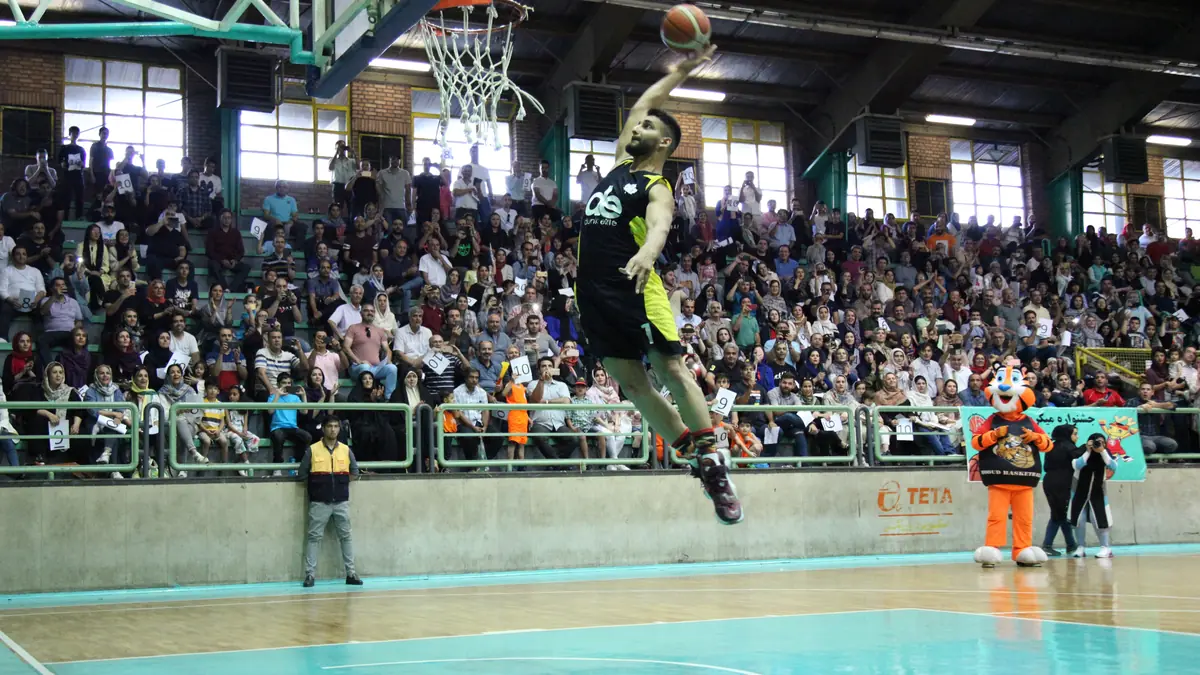
What This Means for the Reader
The message for a developing small guard is that EuroLeague performance combines three reservoirs, energy systems, neuromuscular power and decisional cognition and a shortfall in any one becomes the variable that caps the rest [1, 2, 3, 4, 5]. A quick first step does not make up for a small engine or slow reads; players who build only one side eventually meet opponents who have built all three.
What caps a small, acceleration-driven guard can be pinned down with three checks. Start with the energy systems that pay for every restart, a stepwise treadmill or bike test, or heart-rate recovery logged through the season. Then the first step itself: strength scaled to body mass and a countermovement jump expose whether the neuromuscular power is there. Last, the eyes: a video decision task scores how accurately he picks where that step should go. When one of these numbers slides, late-game presence is already giving way to decline. So the young short guard should ask: once my fourth-quarter burst no longer separates me from defenders, is the engine undersized, is power bleeding away, or have I stopped reading the floor?
References
- Stojanović E, Stojiljković N, Scanlan AT, Dalbo VJ, Berkelmans DM, Milanović Z. (2018). The activity demands and physiological responses encountered during basketball match-play: a systematic review. Sports Medicine, 48(1): 111–135. doi:10.1007/s40279-017-0794-z
- Ben Abdelkrim N, El Fazaa S, El Ati J. (2007). Time-motion analysis and physiological data of elite under-19-year-old basketball players during competition. British Journal of Sports Medicine, 41(2): 69–75. doi:10.1136/bjsm.2006.032318
- Abernethy B. (1991). Visual search strategies and decision-making in sport. International Journal of Sport Psychology, 22(3-4): 189–210.
- Vickers JN. (2007). Perception, Cognition, and Decision Training: The Quiet Eye in Action. Human Kinetics. doi:10.5040/9781492595519
- Cormie P, McGuigan MR, Newton RU. (2011). Developing maximal neuromuscular power: Part 1, biological basis of maximal power production. Sports Medicine, 41(1): 17–38. doi:10.2165/11537690-000000000-00000
Match-context data (descriptive only): EuroLeague.net / Basketball-Reference.

Hüseyin Akbulut is the founder of Sporeus and author of THRESHOLD (EŞİK), a 540-page Turkish-language book on endurance science.
- 540pp THRESHOLD Book
- MSc Sport Sciences
- Marmara University
The Athlete in One Paragraph
Shane Larkin (b. 1992-10-02), the American-Turkish point guard of Fenerbahçe Beko as of September 2026 (formerly Anadolu Efes), is known throughout European basketball for first-step acceleration leveraged from a low centre of mass. At a listed 1.78 m and ~79 kg, he is one of…
The Physiology: what small-guard acceleration actually measures
Small-guard acceleration matters because of how often the game asks for it. Stojanović and colleagues' systematic review of basketball match-play demands describes a sport built from repeated short, high-intensity efforts with brief active and passive recoveries in between, its mean intensities sitting clearly in the…
The Case: Shane Larkin as a small-guard acceleration archetype
At 1.78 m and ~79 kg, Larkin has to beat taller defenders to the spot again and again across a EuroLeague season. Acceleration of that kind can be repeated only if a broad energy-system reservoir is paired with decision-making that stays clear; otherwise a late-game…
What This Means for the Reader
The message for a developing small guard is that EuroLeague performance combines three reservoirs, energy systems, neuromuscular power and decisional cognition and a shortfall in any one becomes the variable that caps the rest [1, 2, 3, 4, 5]. A quick first step does not…