Preview
Hüseyin Akbulut, MSc (2026). HIIT Essentials, Part III: Variation. Sporeus. Retrieved, November 22, 2026. https://sporeus.com/en/sport/hiit-essentials-variation/
If we accept that HIIT adaptations are worth having, the next step is to build them into a plan that fits the rest of the programme and gives the best return on the work. Variation is a key part of that plan: it closes gaps in preparation and lets us set loads that suit the individual athlete.
Paul Laursen’s studies with well-trained cyclists, in which 40 km time-trial performance improved after a few weeks of interval training, are a good example. It can be surprising how effective these sessions are, given that they consist of short bouts at high intensity separated by rest. To get those results, however, HIIT has to be tailored to the sport and to the athlete.
As many studies have shown, athletes share a common goal whatever their sport, from the distance runner who wants to cover long distances faster and the triathlete, to the tennis player trying to reach the next ball in time and strike it cleanly: better, more efficient, higher exercise performance.
Looked at in detail, a training session is a whole made up of the type of exercise, the rest intervals and the athlete’s psychological and physiological responses. Considered together, these elements can be used to create variation and to steer the programme.
When adapting a session, the intensity, the rest periods and the number of sets and repetitions are all part of calculating the load the athlete is exposed to.
At elite level these settings matter even more. According to Laursen and Jenkins’s (2002) review, adding still more submaximal volume does little to improve performance in athletes who are already highly trained in endurance; further gains come largely from high-intensity interval work. In elite programmes, variation therefore means a small number of well-planned HIIT sessions placed carefully on top of a broad low-intensity base.
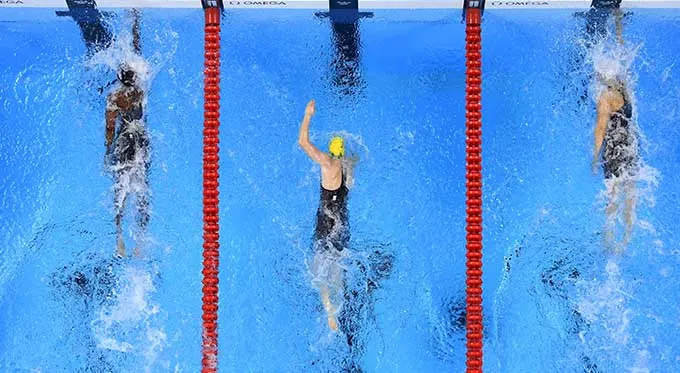
A HIIT session is easy to adapt by changing the intensity of the work bouts, their duration, the rest intervals and the type of exercise.
HIIT, which produces wide-ranging physiological effects through high-intensity bouts separated by active or passive rest, still has clearly useful effects when the intensity of the bouts is lowered and they are repeated with rest intervals.
Beyond the gains seen in type II (fast-twitch) muscle fibres, HIIT increases the number of mitochondria (mitochondrial content and respiratory function are positively related to maximal oxygen uptake) and supports better endothelial function (the endothelium is the thin layer lining the blood vessels and the heart, and it plays an important role in regulating blood pressure and in homeostasis) (Gibala et al., 2006; Ramos et al., 2015). These effects make HIIT worth a place in the programme, and they show that lower-intensity variations can also support the body’s development efficiently.
Several other factors can be used to change the load:
- the sport in which the bouts are performed (running, swimming, cycling and so on);
- the surface (hard, soft and so on);
- the gradient (uphill, downhill and so on);
- environmental conditions.*
Environmental conditions usually need to be considered separately and in some depth. Temperature, humidity and oxygen pressure have strong effects on the body and force our physiological responses to readjust. They can also be used to create variation.
What needs particular care with HIIT is that, because sessions are planned at high intensities and close to the athlete’s performance limits, factors that make only a small physiological difference elsewhere can have destructive effects during a HIIT session.
Small changes interact physiologically and create situations that are hard to read. How these interactions are reflected in performance is one of the most error-prone questions in sport science.
Buchheit and Laursen (2013) list nine basic variables: the intensity and duration of the work bouts, the intensity and duration of the recovery periods, the number of repetitions, the number of series, the duration and intensity of the recovery between series, and the type of exercise. Combined with the sport, the surface, the gradient and the environment, they produce an almost unlimited number of HIIT variations. Using these differences deliberately makes it possible to plan sessions that fit the athlete’s needs better.
As a checklist, the points we need to watch and can use for variation are:
- the intensity of the session;
- the duration of the session;
- the duration of the work bouts;
- the rest intervals;
- the type of exercise;
- technique;
- environmental conditions.
*For examples, see Performance in the Heat: Thermoregulation and Hydration and Factors Limiting Performance: the Athlete’s Weak Points; for planning more broadly, see planning a training programme.
See also:
- HIIT Essentials, Part I: Adaptation
- HIIT Essentials, Part II: Energy (in Turkish)
- HIIT Essentials, Part IV: Types of HIIT

Hüseyin AKBULUT
Coach. He graduated from the Faculty of Sport Sciences at Marmara University in 2017, wrote his master’s thesis in the university’s Information Technologies in Sport programme on the neural dynamics of performing and observing movement, and has worked on many research projects examining high-level exercise performance.
References
- Laursen PB, Jenkins DG. (2002). The scientific basis for high-intensity interval training: optimising training programmes and maximising performance in highly trained endurance athletes. Sports Medicine, 32(1): 53-73. doi:10.2165/00007256-200232010-00003
- Buchheit M, Laursen PB. (2013). High-intensity interval training, solutions to the programming puzzle. Part I: cardiopulmonary emphasis. Sports Medicine, 43(5): 313-338. doi:10.1007/s40279-013-0029-x
- Gibala MJ, Little JP, van Essen M, Wilkin GP, Burgomaster KA, Safdar A, et al. (2006). Short-term sprint interval versus traditional endurance training: similar initial adaptations in human skeletal muscle and exercise performance. The Journal of Physiology, 575(3): 901-911. doi:10.1113/jphysiol.2006.112094
- Ramos JS, Dalleck LC, Tjonna AE, Beetham KS, Coombes JS. (2015). The impact of high-intensity interval training versus moderate-intensity continuous training on vascular function: a systematic review and meta-analysis. Sports Medicine, 45(5): 679-692. doi:10.1007/s40279-015-0321-z

Hüseyin Akbulut is the founder of Sporeus and author of THRESHOLD (EŞİK), a 540-page Turkish-language book on endurance science.
- 540pp THRESHOLD Book
- MSc Sport Sciences
- Marmara University