Preview
Hüseyin Akbulut, MSc (2026). 1.5-Mile Run Test: Protocol, Norms and Application. Sporeus. Retrieved, November 4, 2026. https://sporeus.com/en/egzersiz-testleri-en/1-5-mile-run-test/
Measures: Aerobic endurance, estimated VO₂max
Table of Contents
Difficulty: Moderate | Category: Aerobic
Protocol
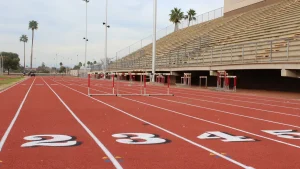
The 1.5-Mile Run Test is a field test widely used by the US military and defense organizations to assess aerobic capacity based on time. Similar in structure to the Cooper test, it is based on the principle of completing a fixed distance in the shortest possible time. Preparation: A 2.414 km (1.5 mile) course must be measured in advance. On a 400m track, this equals 6 full laps plus approximately 14 meters. Strenuous exercise should be avoided for at least 24 hours before the test. A 5-minute dynamic warm-up is mandatory. Test Procedure: The participant runs 1.5 miles (2.414 km) in the shortest possible time. Walking is permitted but significantly reduces performance. Pacing is critical; most runners prefer to keep the first 800m conservative and accelerate in the final 800m. The stopwatch is started at the test beginning and stopped when the last participant crosses the finish line. Data Recording: Each participant’s individual completion time is recorded in minutes and seconds. Calculation: VO₂max (ml/kg/min) = (483 / time_minutes) + 3.5. For example, 10 minutes 30 seconds (10.5 min) = (483/10.5) + 3.5 ≈ 49.5 ml/kg/min. Post-Test: The participant transitions to slow walking rather than stopping abruptly. A 5–10 minute cool-down walk and static stretching are performed. Results are compared to military or general normative tables.Formula
VO₂max (ml/kg/min) = (483 / time_minutes) + 3.5
Equipment Required
measured 1.5 mile (2.414 km) course, stopwatch
Normative Values (Age: 17-21 (army standard))
| Classification | Male | Female |
|---|---|---|
| Excellent | <9:30 min | <11:57 min |
| Good | 9:30-10:30 min | 11:57-13:57 min |
| Average | 10:30-12:00 min | 13:57-15:57 min |
| Below Average | 12:00-13:30 min | 15:57-17:57 min |
| Poor | >13:30 min | >17:57 min |
Practical Applications
This test is used as a core component in military personnel selection exams, police academies, and fitness assessment batteries. The fixed-distance format simplifies logistical planning.Limitations
Requires high motivation. Environmental conditions (temperature, humidity, wind) significantly affect results. May generate high cardiac stress in sedentary individuals.Related Tests: Cooper 12-Minute Run Test, 2000m Rowing Ergometer Test, 20m Multi-Stage Fitness Test (Beep Test)
Sources: George JD et al., 1993, Med Sci Sports Exerc; US Army Physical Fitness Test Standards, 2020
References
- George JD, Vehrs PR, Allsen PE, Fellingham GW, Fisher AG. (1993). VO2max estimation from a submaximal 1-mile track jog for fit college-age individuals. Medicine and Science in Sports and Exercise, 25(3): 401-406.
- American College of Sports Medicine. (2021). ACSM’s Guidelines for Exercise Testing and Prescription (11th ed.). Wolters Kluwer.

Hüseyin Akbulut is the founder of Sporeus and author of THRESHOLD (EŞİK), a 540-page Turkish-language book on endurance science.
- 540pp THRESHOLD Book
- MSc Sport Sciences
- Marmara University
Protocol The 1.5-Mile Run Test is a field test widely used by the US military and defense organizations to assess aerobic capacity based on time. Similar in structure to the Cooper test, it is based on the principle of completing a fixed distance in the shortest possible time. Preparation: A 2.414 km (1.5 mile) course must be measured in advance. On a 400m track, this equals 6 full laps plus approximately 14 meters. Strenuous exercise should be avoided for at least 24 hours before the test. A 5-minute dynamic warm-up is mandatory. Test Procedure: The participant runs 1.5 miles (2.414 km) in the shortest possible time. Walking is permitted but significantly reduces performance. Pacing is critical; most runners prefer to keep the first 800m conservative and accelerate in the final 800m. The stopwatch is started at the test beginning and stopped when the last participant crosses the finish line. Data Recording: Each participant's individual completion time is recorded in minutes and seconds. Calculation: VO₂max (ml/kg/min) = (483 / time_minutes) + 3.5. For example, 10 minutes 30 seconds (10.5 min) = (483/10.5) + 3.5 ≈ 49.5 ml/kg/min. Post-Test: The participant transitions to slow walking rather than stopping abruptly. A 5–10 minute cool-down walk and static stretching are performed. Results are compared to military or general normative tables. Formula
VO₂max (ml/kg/min) = (483 / time_minutes) + 3.5
Equipment Required
measured 1.5 mile (2.414 km) course, stopwatch