
Preview
Hüseyin Akbulut, MSc (2026). Antonio Rüdiger and the Maximal Strength Profile of an Elite 1v1 Defender. Sporeus. Retrieved, October 10, 2026. https://sporeus.com/en/science/antonio-rudiger-maximal-strength-and-1v1-duels/
The Athlete in One Paragraph
Antonio Rüdiger (b. 1993-03-03, Berlin, Germany) is, as of September 2026, a centre-back for Real Madrid and the Germany national team, listed at 1.90 m and ~85 kg. He is treated by analysts as a modern reference for the duelling centre-back: the player whose distinctive defensive currency is not interception range or aerial reach but the contested 1v1 — the sliding tackle that wins ball cleanly, the shoulder-to-shoulder shielding contest at full stride, the standing tackle made under load and angle. The interesting case for sport science is not Rüdiger’s vertical jump or his sprint top speed in isolation, but the maximal-strength and horizontal-force production profile that underwrites the duelling style — strength expressed against a moving opponent, in non-vertical planes, under decision pressure.
Table of Contents
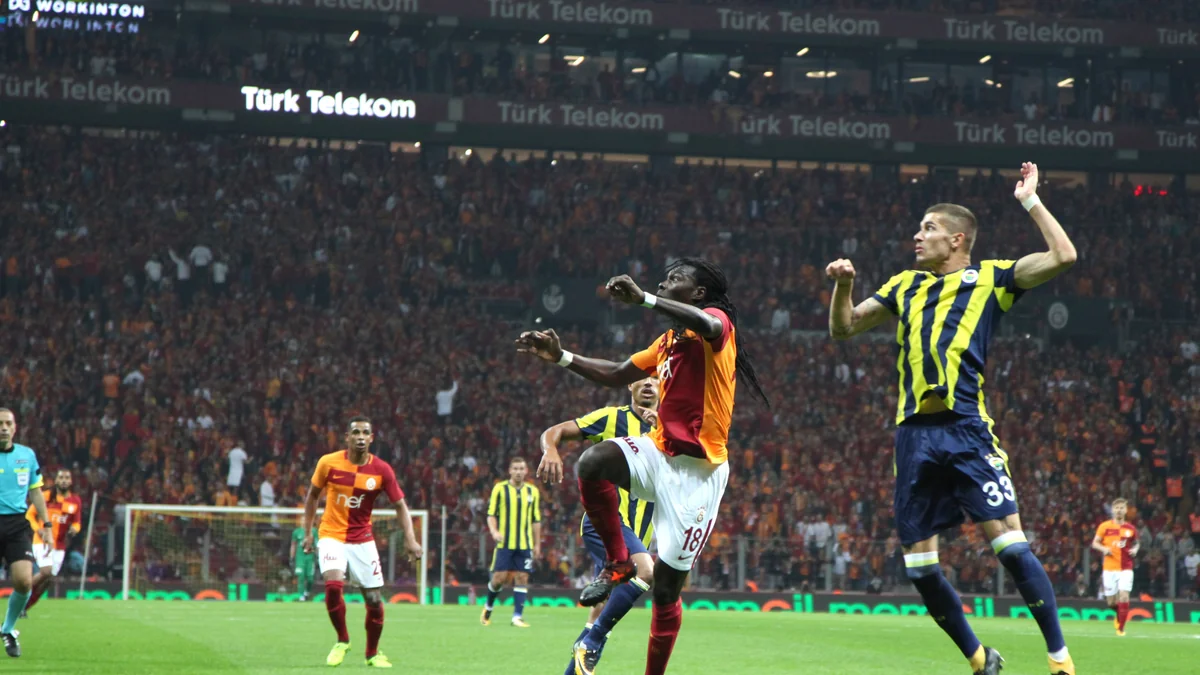
The Physiology — what maximal strength actually contributes to a duel
Maximal strength is the highest force a muscle or muscle group can produce in a given task, typically expressed as a 1RM in compound lifts such as the back squat, deadlift, or hex-bar variants. Suchomel, Nimphius and Stone’s review formalised the relationship between maximal strength and athletic performance: above a strength threshold (commonly framed as roughly 1.5–2.0× body weight in the back squat), athletes have greater capacity to produce both speed and power, and the strength foundation transfers to specific tasks such as accelerating, jumping, changing direction and absorbing eccentric load [1]. The mechanism is partly muscular (cross-sectional area, fibre-type composition) and partly neural (motor-unit recruitment, rate coding, inter-muscular coordination).
Wisløff and colleagues, working with elite Norwegian footballers, demonstrated that maximal half-squat strength was strongly correlated with both 30 m sprint time and vertical jump height — a finding that links lower-limb force production to expressions as varied as straight-line acceleration and counter-movement jump height [2]. The implication is that a single underlying strength capacity, rather than separate “sprint” and “jump” capacities, explains a large share of the variance in football-relevant power tasks.
The duelling layer is where horizontal force production matters. A 1v1 contest at speed is a horizontal-impulse problem more than a vertical-impulse problem: the defender must apply force into the ground in the direction of the opponent’s path, generate eccentric absorption when contact is made and concentric re-acceleration when the contest is won [3]. Stølen and colleagues’ physiology-of-soccer review is explicit that match demands are repeatedly anaerobic and contact-rich, with the strength-power complex acting as the substrate for the highest-intensity actions [4]. Bangsbo, Mohr and Krustrup add that the metabolic cost of these actions is non-linear, and the capacity to repeat them is bounded by phosphocreatine resynthesis and lactate clearance kinetics [5].
The takeaway is that maximal strength is not an end in itself but a foundation: above the threshold, it sets the ceiling for sprint, jump and tackle performance; below the threshold, it limits each separately, and no amount of speed or technical work fully compensates [1, 2].
The Case — Rüdiger as 1v1-strength archetype
For a 1.90 m, 85 kg centre-back, Rüdiger’s anthropometric profile sits in the upper-mid range of the modern position, but the way he plays the duel reads less like a tall-and-rangy line-holder and more like a leveraged 1v1 specialist. The recovery sprints are aggressive into contact rather than away from it; the slide-tackle attempts are timed for ball-contact at full extension; the shoulder-to-shoulder shielding contests are played at full stride rather than from a static set. Each of these is a horizontal-impulse expression of maximal strength rather than a vertical jump expression [1, 2].
The strength-foundation argument matters because the duel is decided not by the absolute force the defender can produce in a static squat but by the proportion of that force he can apply in the direction of motion under contact. Suchomel, Nimphius and Stone make the case that above the strength threshold, additional gains in maximal force translate into expressions of velocity and rate of force development — that is, the strength reservoir is the upstream variable and the technical / ballistic skill is the downstream expression [1]. A defender below the threshold cannot fully convert technical training into duel-winning performance; a defender above the threshold can convert it asymmetrically well.
The match-context layer matters because the duel does not happen in isolation. Stølen’s review describes football as a sport in which players make 1000–1400 short, often forceful changes of activity per game, with high-intensity bursts interspersed across the full ninety minutes [4]; Bangsbo and colleagues quantify the metabolic price of those bursts and the late-match decline that follows [5]. A defender whose strength reservoir is high enters minute 75 with more headroom for a duel that must be won at sprint pace — and exits the same duel with a lower relative load than a less-strong defender would carry.
The injury-and-durability context follows. Heavy compound strength training is consistent with — though not proof of — eccentric-tolerance adaptations that reduce hamstring and adductor strain susceptibility under high-velocity deceleration and lateral cutting; Suchomel and colleagues frame strength as a protective variable as much as a performance variable [1]. A duelling defender carries a high cumulative eccentric load by virtue of the role itself, and the strength foundation that enables the duels also helps tolerate them.
(Match data: SofaScore.) Reporting on Rüdiger across recent La Liga, Bundesliga and European campaigns places his ground-duel and tackle volumes in the upper centre-back band, with success rates consistent with a defender whose strength expression in horizontal directions is unusually robust for the position.
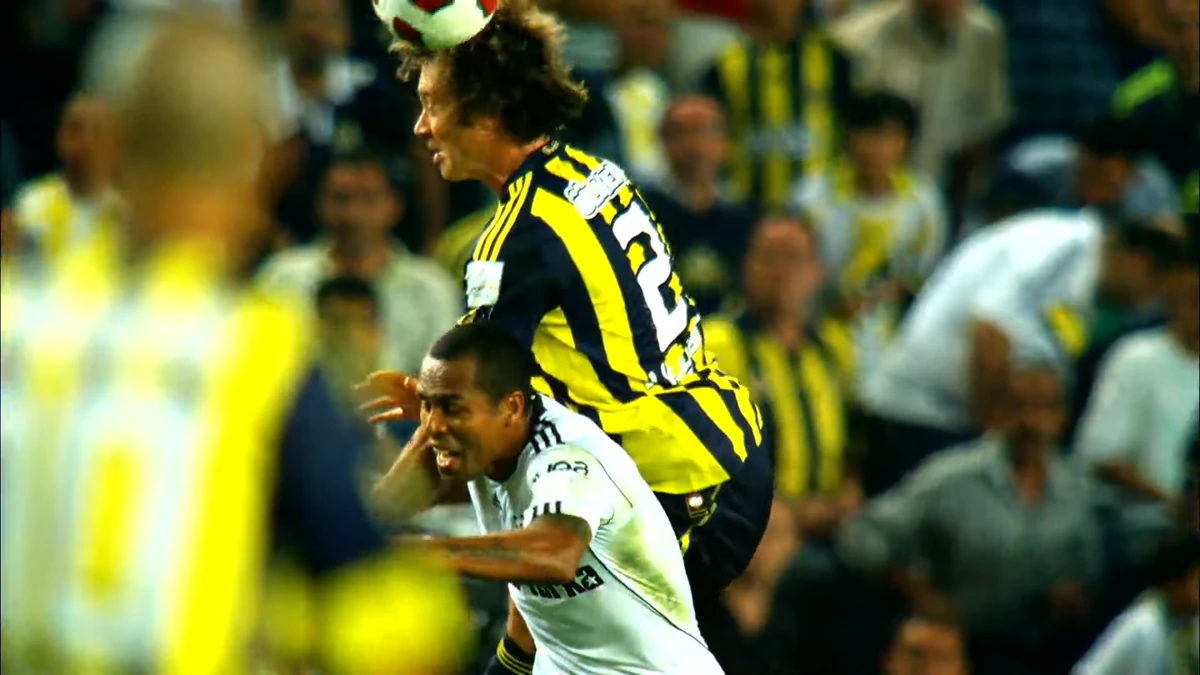
What This Means for the Reader
For amateur and developing defenders — and for any field-sport athlete whose role demands repeated 1v1 contests at speed — the takeaway is that the duel is decided upstream of technique. A defender whose squat or hex-bar deadlift sits below a sport-realistic threshold (the literature converges around 1.5–2.0× body weight as a useful working figure) will be technique-limited even if his footwork is excellent; a defender whose strength sits above that threshold will be expression-limited and benefits from technical and ballistic work [1, 2].
A practical self-assessment uses two measurements rather than one: a maximal-strength benchmark (1RM or estimated 1RM in a compound lift, normalised to body weight) and a horizontal-force expression test (a short acceleration over 5–10 metres, ideally with a contact element such as a partner-pad or sled-resisted variant). Athletes whose strength benchmark is below the threshold should prioritise compound strength work [1]; athletes who clear the threshold should prioritise the rate-of-force-development and contact-tolerant work that converts strength into duel performance [3, 4].
The diagnostic question for the developing defender is not “how heavy do I lift?” or “how fast do I run?” but “is my strength ceiling high enough that technique becomes the limiting variable?” The answer determines training emphasis.
References
- Suchomel TJ, Nimphius S, Stone MH. (2016). The importance of muscular strength in athletic performance. Sports Medicine, 46(10): 1419–1449. doi:10.1007/s40279-016-0486-0
- Wisløff U, Castagna C, Helgerud J, Jones R, Hoff J. (2004). Strong correlation of maximal squat strength with sprint performance and vertical jump height in elite soccer players. British Journal of Sports Medicine, 38(3): 285–288. doi:10.1136/bjsm.2002.002071
- Cormie P, McGuigan MR, Newton RU. (2011). Developing maximal neuromuscular power: Part 1 — biological basis of maximal power production. Sports Medicine, 41(1): 17–38. doi:10.2165/11537690-000000000-00000
- Stølen T, Chamari K, Castagna C, Wisløff U. (2005). Physiology of soccer: an update. Sports Medicine, 35(6): 501–536. doi:10.2165/00007256-200535060-00004
- Bangsbo J, Mohr M, Krustrup P. (2006). Physical and metabolic demands of training and match-play in the elite football player. J Sports Sci, 24(7): 665–674. doi:10.1080/02640410500482529
Match-context data (descriptive only): SofaScore.

Hüseyin Akbulut is the founder of Sporeus and author of THRESHOLD (EŞİK), a 540-page Turkish-language book on endurance science.
- 540pp THRESHOLD Book
- MSc Sport Sciences
- Marmara University
The Athlete in One Paragraph
Antonio Rüdiger (b. 1993-03-03, Berlin, Germany) is, as of September 2026, a centre-back for Real Madrid and the Germany national team, listed at 1.90 m and ~85 kg. He is treated by analysts as a modern reference for the duelling centre-back: the player whose distinctive…
The Physiology — what maximal strength actually contributes to a duel
Maximal strength is the highest force a muscle or muscle group can produce in a given task, typically expressed as a 1RM in compound lifts such as the back squat, deadlift, or hex-bar variants. Suchomel, Nimphius and Stone's review formalised the relationship between maximal strength…
The Case — Rüdiger as 1v1-strength archetype
For a 1.90 m, 85 kg centre-back, Rüdiger's anthropometric profile sits in the upper-mid range of the modern position, but the way he plays the duel reads less like a tall-and-rangy line-holder and more like a leveraged 1v1 specialist. The recovery sprints are aggressive into…
What This Means for the Reader
For amateur and developing defenders — and for any field-sport athlete whose role demands repeated 1v1 contests at speed — the takeaway is that the duel is decided upstream of technique. A defender whose squat or hex-bar deadlift sits below a sport-realistic threshold (the literature…