Preview
Hüseyin Akbulut, MSc (2026). Helen Glover and the Post-Pregnancy Elite Return Physiology of an Elite Rower. Sporeus. Retrieved, October 10, 2026. https://sporeus.com/en/science/helen-glover-post-pregnancy-elite-return-physiology/
The Athlete in One Paragraph
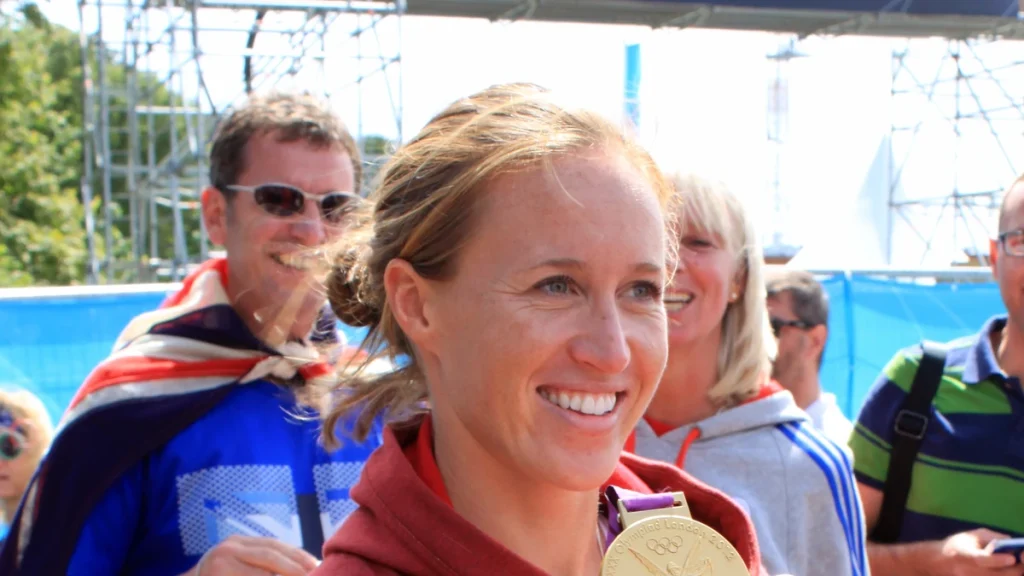
Helen Glover (b. 1986-06-17, Truro, England) is a rower for the British national programme and a two-time Olympic champion in the women’s pair (London 2012, Rio 2016) whose competitive narrative was reopened when she returned to elite training after the birth of her children and qualified for Tokyo 2020 as part of the GB pair. Listed at 1.78 m and roughly 75 kg, she carries the long-levered, lean-muscled profile of an elite heavyweight female rower into a discipline where the 2000-metre race is decided by aerobic ceiling, threshold position, and the durability that comes from years of accumulated training load. The interesting case for sport science is not whether a rower can come back from a pregnancy in principle — they obviously can — but how the underlying physiology actually reorganises itself, what variables move first, and how a coach prescribes load on a body that has just been through the most metabolically extended event of any athletic career. The variable underneath that pattern is post-pregnancy elite return physiology — the staged restoration of pelvic-floor and abdominal function, aerobic-base reload, and progressive training-load ramping that converts a recovered athlete back into a competing one.
Table of Contents
The Physiology — what post-pregnancy return actually involves
Pregnancy and the post-partum period are the largest single perturbation an endurance athlete’s body will undergo in a competitive career. Plasma volume, cardiac output, ligamentous laxity, abdominal-wall geometry, and pelvic-floor neuromuscular function all shift substantially during gestation and do not return to baseline on a uniform timeline post-partum. The Joyner and Coyle endurance framework — VO₂max, sustainable fraction, and exercise economy — is unchanged in principle for the returning athlete, but each of the three components needs to be rebuilt against a moving baseline of structural and hormonal recovery [1].
The first physiological priority is the pelvic-floor and abdominal-wall reload. The connective-tissue and neuromuscular adaptations that allow high-impact loading and forceful trunk-bracing under rowing-stroke load do not regenerate on a fixed timeline; the rowing stroke applies repeated, large intra-abdominal pressure spikes through the catch and drive, and a returning rower whose pelvic-floor and rectus-abdominis function is not restored will pay the cost in continence, lower-back stability, or hernia risk before the cost shows up as power leakage on the ergometer.
The second priority is the aerobic-base reload. Helgerud and colleagues’ work showed that aerobic ceiling and threshold velocity in trained athletes both respond to high-intensity aerobic intervals, but the structural prerequisites for that stimulus — connective-tissue tolerance, joint integrity, training-state baseline — must be present before the intervals deliver returns [2]. The returning elite athlete starts the aerobic-base block with a residual aerobic ceiling that is much higher than an untrained equivalent’s; the climb back to race-fit threshold position is faster than building it from scratch, but it is not a switch.
The third priority is training-load management. Gabbett’s training–injury paradox showed that injuries cluster not in the highest-loaded weeks per se but in the weeks where acute load spikes sharply above chronic load [3]; Hulin’s acute-to-chronic workload ratio (ACWR) work formalised the diagnostic, and load spikes above an ACWR of approximately 1.5 are associated with substantially elevated injury rates in the following weeks [4]. For the returning rower, whose chronic load has been at zero or near-zero for months, the temptation is to push the acute load up to subjective former-self levels; the ratio mathematics warn that exactly this period is when the injury exposure is highest.
Stølen and colleagues’ broader endurance review reinforces that the underlying physiology — aerobic ceiling, threshold position, economy — is the same target before and after the perturbation [5]; what changes is the rate at which load can be re-introduced, and the sequencing in which structural prerequisites must be met before high-intensity work returns.
The Case — Glover as a return-physiology lens
For a returning Olympic rower, the case is unusual not because returning is rare in elite endurance sport — it is not — but because the timeline available between recovery and the next Olympic qualification window is unforgiving, and the body has to be brought through every stage of the staged-return protocol without short-cutting any of them. Glover’s Tokyo 2020 selection in the GB pair is the cleanest applied demonstration that an elite rower can re-cross the qualification threshold post-children when the staged physiological restoration is honoured rather than compressed [1].
Her anthropometry is consistent with the heavyweight female rowing archetype — long levers, lean musculature distributed for the leg-drive of the stroke, and a frame that supports the absolute aerobic capacity an elite rower’s race-pace wattage demands. The post-partum reload of that frame is structurally driven; the order of operations is pelvic-floor and abdominal-wall function first, aerobic base second, threshold-and-VO₂max work third, race-pace pieces last [3, 4].
The load-monitoring discipline is the operational expression of the underlying physiology. A returning athlete who tracks acute-to-chronic workload ratio, internal load (session-RPE), and external load (ergometer-watt and rowed-distance metrics) gains a quantitative early-warning system for the weeks in which injury exposure is mathematically highest [3, 4]. Glover’s career consistency in the pair after the Tokyo return is descriptively consistent with a programme that respected the staged-return logic rather than substituting subjective readiness for physiological readiness [2, 5].
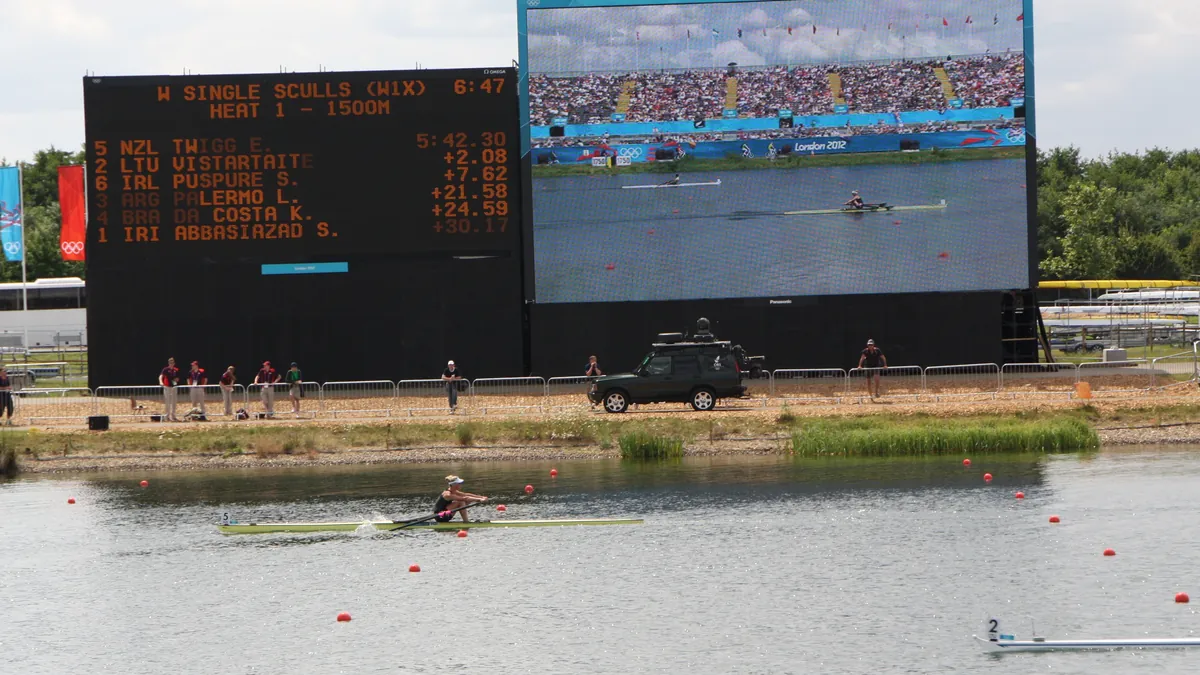
(Performance data: World Rowing)
What This Means for the Reader
For the recreational endurance athlete returning from any significant interruption — pregnancy, surgery, prolonged illness — the takeaway is that the physiology can be rebuilt, but the order of operations matters more than the absolute volume in the first block. Pelvic-floor and core function come first; aerobic base second; threshold and VO₂max work third; sport-specific high-intensity pieces last [1, 2].
The training implication is that load-monitoring becomes diagnostic rather than decorative. The acute-to-chronic workload ratio is most informative precisely when chronic load is low — the returning athlete is the ACWR’s intended audience [3, 4]. The athlete who tracks the ratio and respects its warnings buys back competitive form faster than the athlete who chases pre-interruption volumes by feel and re-injures.
The diagnostic question for the returning athlete: given my chronic load average over the last four weeks, what is the acute load my last seven days actually delivered — and is that ratio in the corridor where progression continues, or in the corridor where injury exposure rises?
References
- Joyner MJ, Coyle EF. (2008). Endurance exercise performance: the physiology of champions. The Journal of Physiology, 586(1): 35–44. doi:10.1113/jphysiol.2007.143834
- Helgerud J, Engen LC, Wisløff U, Hoff J. (2001). Aerobic endurance training improves soccer performance. Medicine & Science in Sports & Exercise, 33(11): 1925–1931. doi:10.1097/00005768-200111000-00019
- Gabbett TJ. (2016). The training–injury prevention paradox: should athletes be training smarter and harder? British Journal of Sports Medicine, 50(5): 273–280. doi:10.1136/bjsports-2015-095788
- Hulin BT, Gabbett TJ, Lawson DW, Caputi P, Sampson JA. (2016). The acute:chronic workload ratio predicts injury. British Journal of Sports Medicine, 50(4): 231–236. doi:10.1136/bjsports-2015-094817
- Stølen T, Chamari K, Castagna C, Wisløff U. (2005). Physiology of soccer: an update. Sports Medicine, 35(6): 501–536. doi:10.2165/00007256-200535060-00004
Performance data (descriptive only): World Rowing.

Hüseyin Akbulut is the founder of Sporeus and author of THRESHOLD (EŞİK), a 540-page Turkish-language book on endurance science.
- 540pp THRESHOLD Book
- MSc Sport Sciences
- Marmara University
The Athlete in One Paragraph
Helen Glover (b. 1986-06-17, Truro, England) is a rower for the British national programme and a two-time Olympic champion in the women's pair (London 2012, Rio 2016) whose competitive narrative was reopened when she returned to elite training after the birth of her children and…
The Physiology — what post-pregnancy return actually involves
Pregnancy and the post-partum period are the largest single perturbation an endurance athlete's body will undergo in a competitive career. Plasma volume, cardiac output, ligamentous laxity, abdominal-wall geometry, and pelvic-floor neuromuscular function all shift substantially during gestation and do not return to baseline on a…
The Case — Glover as a return-physiology lens
For a returning Olympic rower, the case is unusual not because returning is rare in elite endurance sport — it is not — but because the timeline available between recovery and the next Olympic qualification window is unforgiving, and the body has to be brought…
What This Means for the Reader
For the recreational endurance athlete returning from any significant interruption — pregnancy, surgery, prolonged illness — the takeaway is that the physiology can be rebuilt, but the order of operations matters more than the absolute volume in the first block. Pelvic-floor and core function come…