
Preview
Hüseyin Akbulut, MSc (2026). Casemiro and the Defensive Aerial Dominance of an Elite Holding Midfielder. Sporeus. Retrieved, October 19, 2026. https://sporeus.com/en/science/casemiro-defensive-aerial-dominance/
The Athlete in One Paragraph
Carlos Henrique Casimiro (b. 1992, São José dos Campos, Brazil), known as Casemiro, is, as of September 2026, the Inter Miami (formerly Real Madrid and Manchester United) and Brazil defensive midfielder whose career arc has been defined less by the long ball forward and more by the decisive header against it. Listed at 1.85 m and ~84 kg, he is built for a duty most modern holding midfielders avoid: the recurring central-third aerial duel, fielded against opposition strikers and second-balls inside a defensive shape that depends on his timing to reset. Now nearing the late-career phase, the variable that has consistently defined his contribution is not pressing volume nor passing range but defensive aerial dominance, the integration of vertical jump, neck and upper-body strength, and predictive timing that determines whether the ball is cleared, won, or conceded at the apex of contact.
Table of Contents
The Physiology: what defensive aerial dominance actually measures
Aerial duels are short, repeated, high-power events embedded inside a long aerobic match. Wisløff, Castagna, Helgerud, Jones and Hoff’s foundational paper showed that maximal squat strength correlates strongly with both sprint performance and vertical jump height in elite football players, with the squat-to-vertical-jump relationship operating through the same lower-limb force-production substrate that underwrites the duel takeoff [1]. The athlete who jumps higher in the gym jumps higher in the box; the athlete who is stronger in the half-squat is, on average, the athlete who reaches the second ball first.
Cormie, McGuigan and Newton’s two-part review on developing maximal neuromuscular power formalised the physiological scaffolding. Power output across the force-velocity curve is trainable through targeted strength work at high loads and ballistic work at lower loads, with the optimal load for power expression varying by athlete and by movement [2]. For a holding midfielder whose duels happen with a brief run-up rather than a long approach, the power expression at the lower-load end of the curve, the rate of force development that converts a one-step plant into a vertical takeoff, is the determinant component.
Markovic’s meta-analysis of plyometric training quantified the trainability of the variable directly. Plyometric protocols produce reliable improvements in vertical jump height, typically in the range of ~4–8% across moderate-duration interventions, through both neural and mechanical adaptation, with stretch-shortening cycle efficiency as the primary mechanism [3]. The implication for the defensive midfielder is that the ceiling is not anatomy alone; the timing and elasticity of the takeoff are themselves trained.
Bangsbo, Mohr and Krustrup’s match-demand decomposition supplies the context that distinguishes a vertical-jump test from a defensive aerial duel. Match running in elite football is intermittent, total distance ~10–12 km, of which ~8–12% is high-intensity and the duels are layered onto an already-fatigued aerobic background, which means the duel is rarely contested at maximum freshness [4]. The relevant performance variable is not peak vertical jump in the lab but the retained takeoff capacity at minute 75 with fifteen prior duels in the legs.
Bradley and colleagues’ Premier League high-intensity-running analysis sharpened the positional layer. Central midfielders cover the most total high-intensity distance of any outfield position, with the running profile dominated by short bursts rather than long sprints, and the duel events distributed across the match rather than clustered [5]. The holding midfielder whose duel performance does not collapse late in the match is a player whose strength-power substrate is robust enough to absorb the cumulative aerobic load without degrading the neuromuscular output that the duel requires.
The Case: Casemiro as aerial-duel anchor
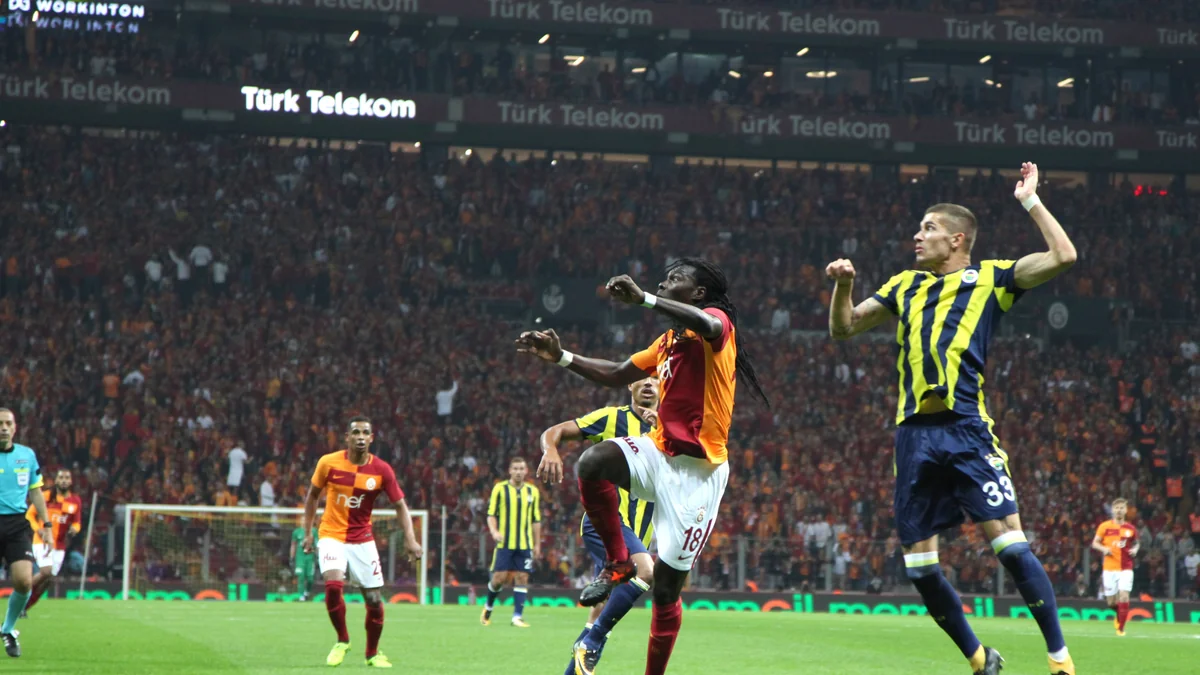
For a 1.85 m / 84 kg defensive midfielder operating in a high-line system, the aerial-duel profile is consistent with an emphasis on absolute strength and timing rather than peak vertical jump alone. The 84 kg of largely lean mass produces a higher absolute force at takeoff than a lighter midfielder generates from the same relative jump height, and at the apex of contact the heavier player imposes a larger momentum, the reason why duel-win-rate maps better to body-mass-adjusted strength than to centimetres of jump [1, 2]. The mechanical case for a duel specialist of this build is not that he jumps the highest; it is that he wins the contact at any reasonable jump.
The neuromuscular layer is where timing dominates. Cormie’s framework implies that for short-approach duels the rate of force development across the first 100 ms of plant is the determinant variable, not the peak force achieved in a static squat [2]. The midfielder who sets his plant earlier converts a fractionally lower vertical jump into a higher contact apex, because the ball is reached before the opposing forward’s elastic energy fully unloads. This is the mechanical content of “reading the cross”, the cognitive cue arriving 50 ms earlier translates into a takeoff that is biomechanically completed before the opponent’s.
The neck and upper-body component is the under-discussed dimension. The header itself transmits force through the cervical spine, and the strength to direct the ball with intent, rather than passively meet it, depends on shoulder-girdle stability that is not captured in any vertical-jump test [3]. The duel-dominant midfielder is the player who clears the ball with placement, not just height, and the placement is upper-body work as much as lower-body work.
Match-context note: Casemiro’s per-match aerial-duel volume and ground-duel volume across Premier League and Champions League play sit in the upper band for defensive midfielders (Match data: SofaScore), with the discriminator being not raw count but the win-rate retained across the late stages of matches and across short turnaround weeks.
The late-career layer is the case-defining context. Bangsbo’s framework on intermittent match demand implies that the ageing midfielder loses recovery margin first and peak power second, so the duel-dominance signature in a late-career holding midfielder reflects an unusually preserved strength-power substrate [4, 5]. A player operating at the top of two competitions across multiple seasons without a measurable decline in duel-win-rate is, by inference, sitting near the upper bound of the position on the strength-timing axis rather than only on the jump-height axis.

What This Means for the Reader
For a developing defensive midfielder, the takeaway is that aerial dominance is not a single trait but a small system, strength, timing, jump, neck and shoulder stability and the system is trainable in pieces. Three measurements diagnose the limiting variable: a half-squat 1RM relative to body mass to estimate force capacity, a counter-movement jump height to estimate stretch-shortening cycle efficiency, and a recorded duel-win-rate across a season-long sample broken out by minute window to detect late-match decline [1, 3].
The training prescription targets the diagnostic finding: athletes with low squat strength relative to body mass need a strength block before plyometrics will compound; athletes with respectable strength but flat jump scores need plyometric volume to convert force into rate of force development; athletes whose duel-win-rate declines after minute 60 need aerobic-base work, not more jumps [2, 4]. The single diagnostic question for the developing holding midfielder: when I lose a duel late in a match, is it because I jumped lower, or because I planted later than the forward I was marking?
References
- Wisløff U, Castagna C, Helgerud J, Jones R, Hoff J. (2004). Strong correlation of maximal squat strength with sprint performance and vertical jump height in elite soccer players. British Journal of Sports Medicine, 38(3): 285–288. doi:10.1136/bjsm.2002.002071
- Cormie P, McGuigan MR, Newton RU. (2011). Developing maximal neuromuscular power: Part 1, biological basis of maximal power production. Sports Medicine, 41(1): 17–38. doi:10.2165/11537690-000000000-00000
- Markovic G. (2007). Does plyometric training improve vertical jump height? A meta-analytical review. British Journal of Sports Medicine, 41(6): 349–355. doi:10.1136/bjsm.2007.035113
- Bangsbo J, Mohr M, Krustrup P. (2006). Physical and metabolic demands of training and match-play in the elite football player. Journal of Sports Sciences, 24(7): 665–674. doi:10.1080/02640410500482529
- Bradley PS, Sheldon W, Wooster B, Olsen P, Boanas P, Krustrup P. (2009). High-intensity running in English FA Premier League soccer matches. Journal of Sports Sciences, 27(2): 159–168. doi:10.1080/02640410802512775
Match-context data (descriptive only): SofaScore.

Hüseyin Akbulut is the founder of Sporeus and author of THRESHOLD (EŞİK), a 540-page Turkish-language book on endurance science.
- 540pp THRESHOLD Book
- MSc Sport Sciences
- Marmara University
The Athlete in One Paragraph
Carlos Henrique Casimiro (b. 1992, São José dos Campos, Brazil), known as Casemiro, is, as of September 2026, the Inter Miami (formerly Real Madrid and Manchester United) and Brazil defensive midfielder whose career arc has been defined less by the long ball forward and more…
The Physiology: what defensive aerial dominance actually measures
Aerial duels are short, repeated, high-power events embedded inside a long aerobic match. Wisløff, Castagna, Helgerud, Jones and Hoff's foundational paper showed that maximal squat strength correlates strongly with both sprint performance and vertical jump height in elite football players, with the squat-to-vertical-jump relationship operating…
The Case: Casemiro as aerial-duel anchor
For a 1.85 m / 84 kg defensive midfielder operating in a high-line system, the aerial-duel profile is consistent with an emphasis on absolute strength and timing rather than peak vertical jump alone. The 84 kg of largely lean mass produces a higher absolute force…
What This Means for the Reader
For a developing defensive midfielder, the takeaway is that aerial dominance is not a single trait but a small system, strength, timing, jump, neck and shoulder stability and the system is trainable in pieces. Three measurements diagnose the limiting variable: a half-squat 1RM relative to…