
Preview
Hüseyin Akbulut, MSc (2026). Diana Taurasi and the WNBA Veteran Cognitive Edge of an Elite Guard. Sporeus. Retrieved, October 7, 2026. https://sporeus.com/en/science/diana-taurasi-wnba-veteran-cognitive-edge/
The Athlete in One Paragraph
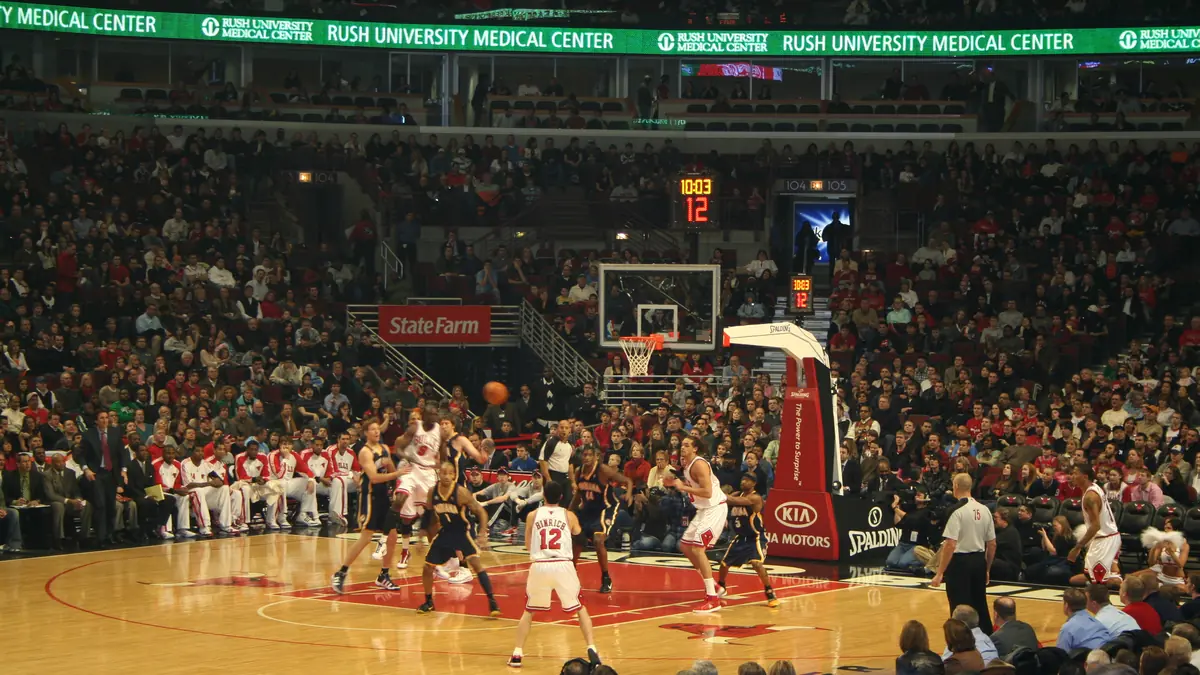
Diana Lurena Taurasi (b. 1982-06-11, Glendale, California, United States) is a recently retired guard who closed out her career with the Phoenix Mercury in 2025 after more than two decades at the top of professional women’s basketball, including a stint as the WNBA’s all-time scoring leader and a long run with the United States national team. Listed at 1.83 m and ~74 kg, she carried the anthropometry of a moderately built combo guard whose game lived in shot creation, deep range, and orchestration — and whose late-career reputation was built on continuing to deliver elite output well into her forties. The interesting case for sport science is not any single deep three or step-back finish but the underlying mechanism by which a guard preserves elite output deep into a fifth decade; the discriminator at that age is not the physical peak that won her early MVPs but the cognitive-perceptual mastery that the game itself layered onto her over twenty seasons. The variable underneath that story is veteran cognitive edge — how anticipatory scanning, pattern recognition, decision speed under fatigue, and constrained shot selection compound across a long career to substitute for the physical headroom that age inevitably narrows.
Table of Contents
The Physiology — what veteran cognitive edge actually substitutes for
The late-career elite athlete is operating in a system in which the physical end is no longer the limiting factor. Young and Farrow’s review of agility for strength and conditioning practitioners draws the line clearly: the elite player does not just react faster, she reads earlier, and the anticipatory model she runs in real time compresses the apparent reaction time and frees the mechanical system to execute without hesitation [1]. The same conclusion applies in reverse at the back end of a career — when raw mechanical speed begins to drift, the anticipatory model is what holds the apparent reaction time constant.
Paul, Gabbett and Nassis’s review of agility in team sports re-frames the picture as a multi-component system — a base of strength and power, a sprint-and-deceleration mechanical layer, a perceptual-cognitive layer, and the integration between them — and concludes that the perceptual-cognitive layer continues to develop with deliberate practice well past the physical peak [2]. The veteran who has spent twenty seasons reading shot trajectories, defensive rotations and teammate spacing has built a layer of internal modelling that no younger athlete, however physically gifted, can replicate from a standing start.
Henry, Dawson, Lay and Young examined decision-making accuracy under reactive-agility constraints and showed that, under time pressure, more skilled players preserved both speed and accuracy of decision, while less skilled players traded accuracy for speed once the time window contracted [3]. Mapped onto the late-career elite athlete the implication is direct: the veteran who plays with a constrained, well-cued shot diet protects her decision accuracy precisely when the time window is shortest, and the resulting efficiency profile reads on the box score as a peak that has not actually peaked.
Stølen, Chamari, Castagna and Wisløff’s physiology-of-soccer review, although a football reference, captures the energetic context that translates directly to elite basketball: repeated near-maximal efforts are gated by aerobic conditioning, repeated-sprint capacity, and recovery between bursts [4]. Joyner and Coyle’s framework for endurance performance closes the loop on the back end of a career — the discriminator between athletes who keep producing and athletes who collapse out of the league is the training reserve maintained against the underlying biology, with sustained training stimulus protecting the aerobic, neuromuscular and recovery layers far longer than chronological age alone would predict [5].
The concise summary is that the veteran cognitive edge is not free — it is paid for with a maintained physical floor — but above that floor, the perceptual-cognitive layer is the variable that compounds rather than degrades.
The Case — Diana Taurasi as veteran-cognitive-edge archetype
For a 1.83 m / ~74 kg combo guard, the ageing curve through the late thirties and early forties is steep on the mechanical end. Acceleration, deceleration and contested-shot vertical are paid for in tendon stiffness, neuromuscular function and recovery between possessions, all of which drift with age unless the training stimulus holds [4, 5]. What does not drift, and in fact continues to accumulate, is the perceptual-cognitive layer — the speed at which a defence is read, the angle at which a screen is exploited, the half-second earlier at which a teammate’s cut is anticipated [1, 2].
The decision-economy layer is where the veteran profile shows. The player whose shot diet is increasingly drawn from looks she has solved a thousand times before is making decisions whose accuracy is robust under time pressure and under fatigue, while a younger player on the same possession is operating in a noisier perceptual model and is more likely to trade accuracy for speed when the window closes [3]. Taurasi’s late-career reputation for high-leverage shotmaking and constrained shot selection is consistent with the profile of a guard whose perceptual model is doing the work that her younger legs used to do.
The training-reserve layer matters because the cognitive edge cannot operate from a collapsed physical base. Sustaining a training stimulus that protects aerobic conditioning, lower-limb strength reserve and joint integrity across the late career is what allows the perceptual-cognitive layer to express itself in real possessions; the veteran who lets the physical floor drop loses the platform on which the cognitive edge operates [4, 5]. Taurasi’s longevity at the top of WNBA scoring is consistent with both layers having been maintained — a physical floor held above the threshold and a perceptual ceiling that kept rising.
The legacy framing is operationally important. Reading Taurasi’s late-career numbers through younger-athlete jump norms understates how the output was generated; the discriminator at the elite veteran level is the same one Young and Farrow named two decades ago — early reads, well-cued decisions, and the integration between the perceptual model and the mechanical system that finally executes [1, 2].
Match-context note: across her late career Taurasi’s per-game scoring efficiency and on-court orchestration sat among the upper band for guards (Match data: WNBA.com / Basketball-Reference), with the discriminator being the consistency of high-leverage decision-making rather than any single-game peak.
What This Means for the Reader
For an ageing competitive athlete the takeaway is that the late-career edge is not a discount on the physical floor but a compounding return on the perceptual-cognitive layer, paid for by a maintained physical floor [1, 2, 3, 4, 5]. The athlete who lets the strength reserve, aerobic base and joint integrity drift will lose the platform on which her cognitive edge operates, and the cognitive edge alone cannot compensate for a collapsed floor.
Three indicators diagnose the limiting variable in a late-career profile: a heavy-strength reference lift relative to body mass, a constrained-shot or constrained-decision drill scored on accuracy under time pressure, and a season-on-season decision-making review against film. Drift in any of the three is the early signal that the late-career engine is degrading at one of its three operating layers. The diagnostic question for the late-career athlete: am I still buying the same training reserve I had three years ago, or am I quietly spending it down while my reads continue to improve?
References
- Young W, Farrow D. (2006). A review of agility: practical applications for strength and conditioning. Strength and Conditioning Journal, 28(5): 24–29. doi:10.1519/00126548-200610000-00004
- Paul DJ, Gabbett TJ, Nassis GP. (2016). Agility in team sports: testing, training and factors affecting performance. Sports Medicine, 46(3): 421–442. doi:10.1007/s40279-015-0428-2
- Henry GJ, Dawson B, Lay BS, Young WB. (2013). Decision-making accuracy in reactive agility: quantifying the cost of poor decisions. Journal of Strength and Conditioning Research, 27(11): 3190–3196. doi:10.1519/JSC.0b013e31828b8da4
- Stølen T, Chamari K, Castagna C, Wisløff U. (2005). Physiology of soccer: an update. Sports Medicine, 35(6): 501–536. doi:10.2165/00007256-200535060-00004
- Joyner MJ, Coyle EF. (2008). Endurance exercise performance: the physiology of champions. Journal of Physiology, 586(1): 35–44. doi:10.1113/jphysiol.2007.143834
Match-context data (descriptive only): WNBA.com / Basketball-Reference.
Hüseyin Akbulut is the founder of Sporeus and author of THRESHOLD (EŞİK), a 540-page Turkish-language book on endurance science.
- 540pp THRESHOLD Book
- MSc Sport Sciences
- Marmara University
The Athlete in One Paragraph
Diana Lurena Taurasi (b. 1982-06-11, Glendale, California, United States) is a recently retired guard who closed out her career with the Phoenix Mercury in 2025 after more than two decades at the top of professional women's basketball, including a stint as the WNBA's all-time scoring…
The Physiology — what veteran cognitive edge actually substitutes for
The late-career elite athlete is operating in a system in which the physical end is no longer the limiting factor. Young and Farrow's review of agility for strength and conditioning practitioners draws the line clearly: the elite player does not just react faster, she reads…
The Case — Diana Taurasi as veteran-cognitive-edge archetype
For a 1.83 m / ~74 kg combo guard, the ageing curve through the late thirties and early forties is steep on the mechanical end. Acceleration, deceleration and contested-shot vertical are paid for in tendon stiffness, neuromuscular function and recovery between possessions, all of which…
What This Means for the Reader
For an ageing competitive athlete the takeaway is that the late-career edge is not a discount on the physical floor but a compounding return on the perceptual-cognitive layer, paid for by a maintained physical floor [1, 2, 3, 4, 5]. The athlete who lets the…