
Preview
Hüseyin Akbulut, MSc (2026). Emma Twigg and the Women’s Single Sculls Late-Career Physiology of an Elite Rower. Sporeus. Retrieved, October 6, 2026. https://sporeus.com/en/science/emma-twigg-women-single-sculls-late-career-physiology/
The Athlete in One Paragraph
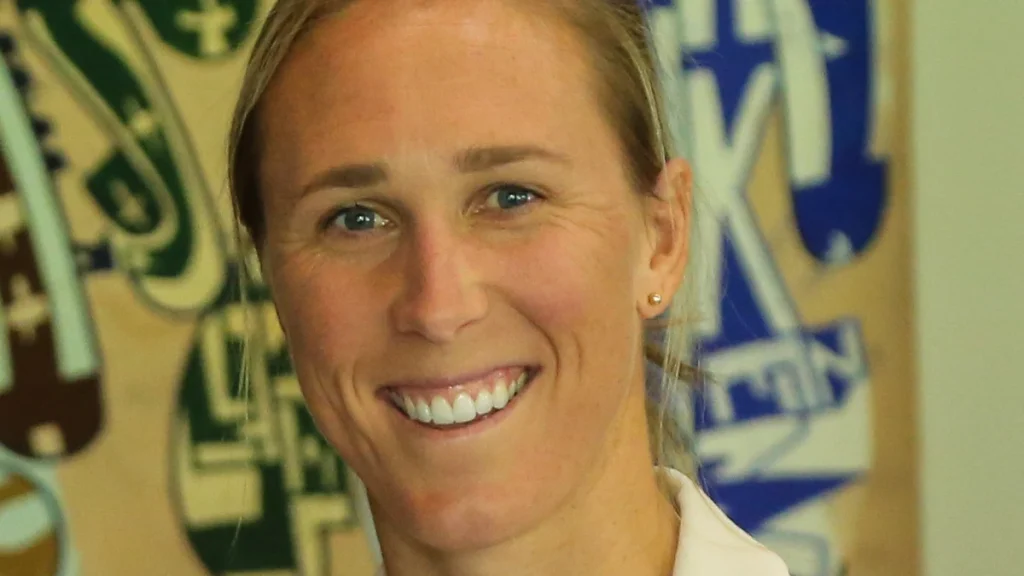
Emma Twigg (b. 1987-03-01, Hawke’s Bay, New Zealand) is a single sculler for the New Zealand national programme and the Tokyo 2020 Olympic champion in the women’s single sculls — a result delivered after three previous Olympic cycles, multiple finals, and a competitive career that has spanned more than a decade and a half at the international level. Listed at 1.83 m and roughly 76 kg, she carries the long-levered heavyweight-rowing frame on a female anatomy whose performance variables behave differently from her male counterparts in ways the literature is only recently formalising. The interesting case for sport science is not a single race; it is the structural question of how a women’s-single-sculls athlete preserves world-best output across four Olympic cycles, when each cycle compounds training load, accumulates mechanical wear, and demands that the threshold–ceiling relationship be defended against age. The variable underneath that pattern is women’s single sculls late-career physiology — the female-specific 2-kilometre rowing profile sustained across the back half of an elite athletic life.
Table of Contents
The Physiology — what late-career single-sculls physiology actually is
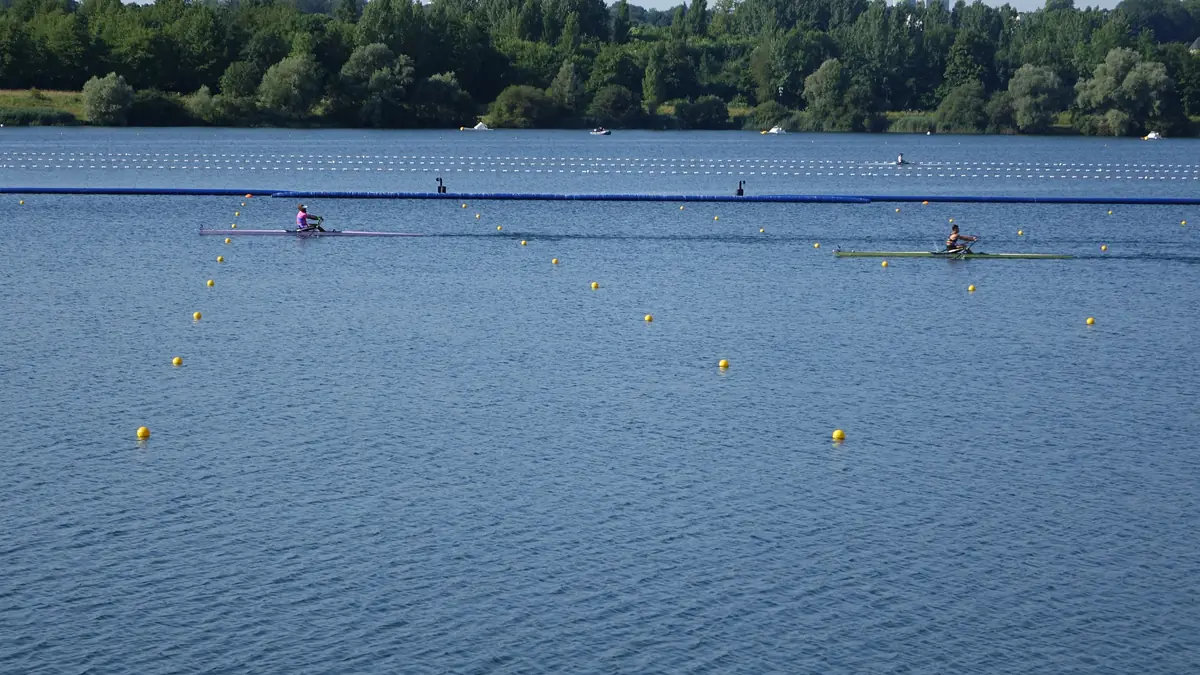
The 2000-metre single-sculls race is, in any decade of an athlete’s career, an aerobic-power event with an anaerobic top layer; the duration is short enough that a non-trivial fraction of total ATP turnover comes from anaerobic glycolysis, and long enough that the aerobic system supplies the majority. Joyner and Coyle’s framework — VO₂max, the sustainable fraction of that ceiling, and exercise economy — applies here with the additional twist that all of the work is produced by a single athlete, in a single boat, against the integrated drag of water and air [1]. Where the men’s heavyweight category resolves at one set of absolute numbers, the women’s heavyweight category resolves at a different set; what does not change is the structure of the determinants.
Saunders and colleagues’ work on running economy, and its rowing analogue — the oxygen cost of producing a given submaximal wattage on the ergometer or in the boat — is particularly relevant for the late-career athlete, because economy is one of the few endurance variables that continues to refine across years of consistent training even as VO₂max begins its slow age-related decline [2]. The athlete who has spent fifteen years grooving the same stroke produces a given race-pace wattage at a lower oxygen cost than her younger self; that economy reserve buys back some of what age has taken from the ceiling.
Faude and colleagues’ review of lactate-threshold concepts establishes the second pillar: the highest sustainable steady-state intensity is the maximal lactate steady state, and the position of that threshold relative to VO₂max determines how much of the 2000-metre race can be wrestled aerobically before the anaerobic top layer must take over [3]. Helgerud and colleagues’ interval-training work showed that VO₂max and threshold velocity in trained athletes both respond to high-intensity aerobic intervals — the same logic that organises the women’s single-sculls racing season, where the threshold is migrated upward toward the ceiling year after year [4]. Stølen and colleagues’ broader endurance review reinforces the energy distribution: even a 6-to-7-minute event sits much closer to a long-distance profile than the duration alone suggests, which is why heavy aerobic-base volume sits underneath every elite rowing programme [5].
The late-career twist — the female athlete in particular — is that durability of the aerobic system, of the threshold position, and of the economy variable does not happen by default; it is preserved by deliberate training design.
The Case — Twigg as a women’s single-sculls late-career lens
For a 1.83 m / ~76 kg single sculler whose international career has crossed four Olympic cycles, the signature feat is not the peak race in any single cycle but the ability to keep producing peak races across the span. The arithmetic of women’s-heavyweight 2000-metre pace is unforgiving in the same direction the men’s is — sustained mechanical power output normalised to body mass — and the discipline is even more exposing than the team boat, because there is no rowing partner to share the cost or hide a deficit [1, 5].
Her anthropometry is consistent with the women’s heavyweight-sculls archetype: long levers convert into a longer effective stroke at a given rating, which means more impulse per stroke and lower stroke-rate demand for the same boat speed; substantial skeletal muscle mass supports a high absolute VO₂ value that, when normalised to a 76 kg frame, still expresses a per-kilogram capacity competitive with smaller endurance athletes [5]. The economy variable — the oxygen cost of producing a given submaximal wattage on the rowing ergometer or in the boat — is exactly where the late-career single sculler holds her advantage; fifteen years of grooved stroke pattern is fifteen years of refining the cost side of the equation [2].
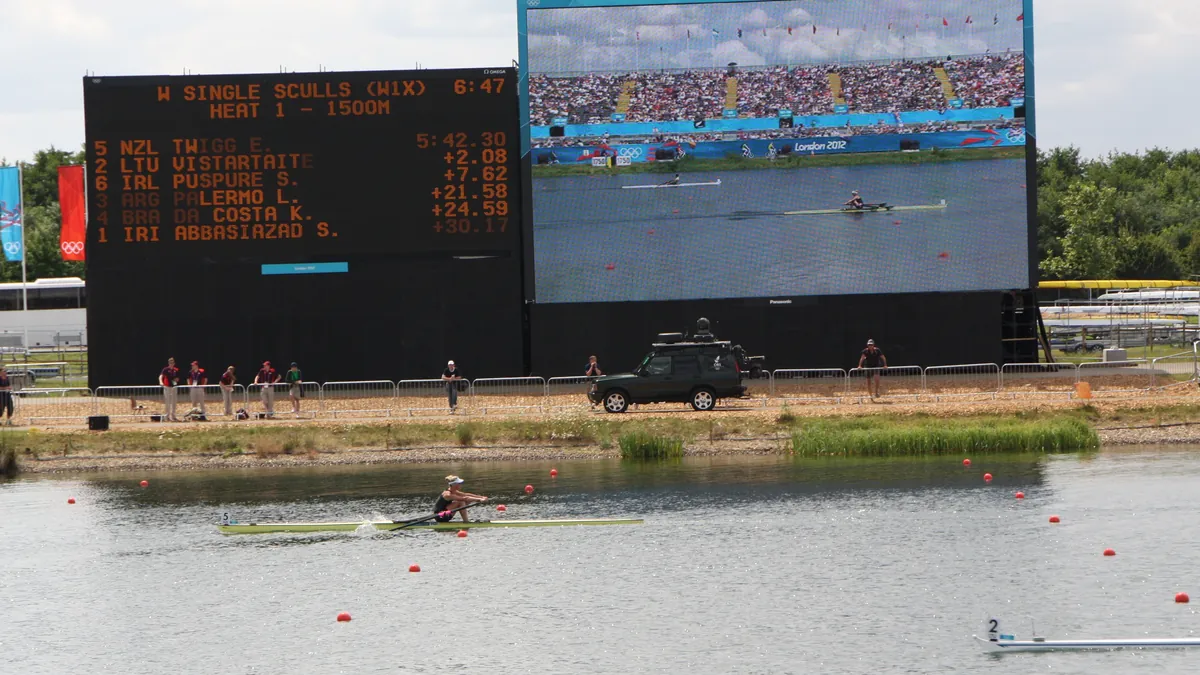
The pacing implication is structural. Faude’s threshold work makes clear that the 2000-metre race cannot be paced purely aerobically; the start and the final-quarter sprint are above-threshold by design, and the second-half durability rests on how high the threshold sits relative to the ceiling [3]. The athlete who arrives at the 1500-metre mark with a higher remaining aerobic share — because her threshold has been migrated upward across years of intervals — is the athlete who can hold race-pace wattage when the boat is hurting. Twigg’s competitive longevity in the single, capped by the Tokyo gold and supported by repeated finals across earlier cycles, is descriptively consistent with a threshold–ceiling profile that has been defended, not merely maintained, across the back half of her career [1, 4].
(Performance data: World Rowing)
What This Means for the Reader
For the developing sculler — and especially for the female endurance athlete planning a long career — the takeaway is that late-career performance is built by what is not given up. The aerobic ceiling drifts down with age; the threshold position can be defended; economy can continue to improve. The single-sculls 2000-metre race is decided by all three at once [1, 2, 3].
The training implication is the classical polarised approach with intent applied to durability — substantial low-intensity volume to defend the ceiling, layered with focused threshold and VO₂max-eliciting intervals to keep the threshold migrating upward, and the same grooved stroke pattern continuously refined so that economy keeps trending in the right direction [4, 5]. The athlete who treats every season as a new build, abandoning earlier work, throws away the one variable — economy — that becomes a competitive asset only in the long run.
The diagnostic question for the late-career sculler: across this Olympic cycle, did my threshold migrate further toward my ceiling, did my economy at race-pace wattage continue to refine, and have I preserved enough aerobic ceiling to keep the gap meaningful?
References
- Joyner MJ, Coyle EF. (2008). Endurance exercise performance: the physiology of champions. Journal of Physiology, 586(1): 35–44. doi:10.1113/jphysiol.2007.143834
- Saunders PU, Pyne DB, Telford RD, Hawley JA. (2004). Factors affecting running economy in trained distance runners. Sports Medicine, 34(7): 465–485. doi:10.2165/00007256-200434070-00005
- Faude O, Kindermann W, Meyer T. (2009). Lactate threshold concepts: how valid are they? Sports Medicine, 39(6): 469–490. doi:10.2165/00007256-200939060-00003
- Helgerud J, Engen LC, Wisløff U, Hoff J. (2001). Aerobic endurance training improves soccer performance. Medicine & Science in Sports & Exercise, 33(11): 1925–1931. doi:10.1097/00005768-200111000-00019
- Stølen T, Chamari K, Castagna C, Wisløff U. (2005). Physiology of soccer: an update. Sports Medicine, 35(6): 501–536. doi:10.2165/00007256-200535060-00004
Performance data (descriptive only): World Rowing.
The Athlete in One Paragraph
Emma Twigg (b. 1987-03-01, Hawke's Bay, New Zealand) is a single sculler for the New Zealand national programme and the Tokyo 2020 Olympic champion in the women's single sculls — a result delivered after three previous Olympic cycles, multiple finals, and a competitive career that…
The Physiology — what late-career single-sculls physiology actually is
The 2000-metre single-sculls race is, in any decade of an athlete's career, an aerobic-power event with an anaerobic top layer; the duration is short enough that a non-trivial fraction of total ATP turnover comes from anaerobic glycolysis, and long enough that the aerobic system supplies…
The Case — Twigg as a women's single-sculls late-career lens
For a 1.83 m / ~76 kg single sculler whose international career has crossed four Olympic cycles, the signature feat is not the peak race in any single cycle but the ability to keep producing peak races across the span. The arithmetic of women's-heavyweight 2000-metre…
What This Means for the Reader
For the developing sculler — and especially for the female endurance athlete planning a long career — the takeaway is that late-career performance is built by what is not given up. The aerobic ceiling drifts down with age; the threshold position can be defended; economy…