Preview
Hüseyin Akbulut, MSc (2026). HRV: Tracking Recovery with Heart Rate Variability. Sporeus. Retrieved, November 19, 2026. https://sporeus.com/en/science/hrv-heart-rate-variability-recovery-monitoring/
Summary: Heart rate variability (HRV) is a biomarker that reflects the current state of the autonomic nervous system. Tracked regularly, it is a powerful tool for adjusting training load, spotting the early signs of overtraining and judging the quality of recovery.
Table of Contents
What Is HRV?
The heart does not beat at perfectly even intervals. The time between successive beats changes by a few milliseconds from one beat to the next. This variation is called heart rate variability (HRV).
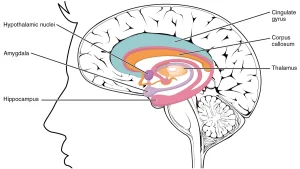
High HRV indicates that the parasympathetic nervous system is dominant: the body is in rest-and-repair mode. Low HRV points to sympathetic dominance: stress, fatigue or illness.
At first this seems counter-intuitive: is an “irregular” heartbeat healthy? Yes. A healthy heart adapts quickly to changes in breathing, posture and stress, and that capacity to adapt shows up as HRV.
Measurement: rMSSD and the Morning Protocol
The most widely used and reliable HRV metric in sport is rMSSD (root mean square of successive differences). It is calculated by squaring the differences between successive R-R intervals, averaging them and taking the square root, and it reflects parasympathetic (vagal) tone.
For a reliable HRV reading:
- Measure every morning straight after waking, while still in bed
- Use the same position (lying on your back) and the same duration (60 to 90 seconds)
- A chest-strap sensor gives the most accurate result; finger sensors are acceptable
- A single reading means little: build a personal baseline over at least two weeks
Plews and colleagues (2013) showed that morning heart-rate measures, and rMSSD in particular, are useful for tracking how athletes adapt to training, and that values averaged over a week reflect adaptation better than a reading taken on a single day. With elite athletes, practitioners therefore follow the 7-day rolling average of the natural log of rMSSD (Ln rMSSD) and its day-to-day variation (coefficient of variation, CV), rather than daily values. Decisions are made when the smallest worthwhile change for that individual (often half of their own standard deviation) is exceeded. A clear and persistent fall in the weekly average, especially when it coincides with poorer performance and well-being scores, is a strong signal to reduce the load.
What HRV Shows, and What It Doesn’t
HRV is a powerful tool, but it is not a crystal ball.
What HRV shows:
- Autonomic balance (parasympathetic versus sympathetic)
- Overall recovery status
- Early warning signs of overtraining
- The effect of sleep quality
- In some athletes, a drop ahead of an oncoming illness
What HRV does not show:
- Which muscle group is fatigued
- Glycogen status
- A specific training prescription (how much, what kind)
- The meaning of a single day’s change (the trend matters, not the individual value)
In Practice: HRV-Guided Training
In the study by Kiviniemi and colleagues (2007), the group whose training was guided by daily HRV improved maximal running velocity more than the group following a fixed programme; the difference in VO₂max between the groups was less clear. The method is simple:
- Build your baseline: measure every morning for 14 days and calculate a 7-day rolling average
- Interpret: at or above your average = a day for hard training; below your average = light training or rest
- Follow the trend: a chronic decline in the weekly average = risk of overtraining
Buchheit (2014) covered the topic in a comprehensive review: heart-rate-based measures are valuable when they are taken under standardised conditions and interpreted as trends, but they should never be read in isolation. They belong alongside training load, performance and subjective well-being data.
Apps and Technology
Modern smartwatches (Garmin, Polar, WHOOP, Apple Watch) can take a morning HRV reading. Under resting conditions some devices now come close to a chest strap, but the error of optical sensors varies by device and measurement conditions. For research, the ECG remains the standard.
App options include HRV4Training (backed by published validation work), Elite HRV, or the watch brand’s own app. What matters most is consistency: the same app, the same time of day and the same protocol.
HRV in Overtraining
A chronic fall in HRV is one possible sign of excessive load, but the picture is not always that simple. Le Meur and colleagues (2013) showed that in triathletes who became functionally overreached during an intensive training block, HRV could rise rather than fall, a pattern described as parasympathetic hyperactivity. So an HRV that is rising while performance is falling can also be a warning sign.
This early-warning window is critical: once overtraining syndrome has developed, recovery takes weeks or longer. Monitored together with other markers, HRV can help catch the process while it is still at the functional overreaching stage, when a full return is still possible.
References
- Plews, D.J., Laursen, P.B., Kilding, A.E., & Buchheit, M. (2013). Evaluating training adaptation with heart-rate measures: a methodological comparison. International Journal of Sports Physiology and Performance, 8(6), 688-691.
- Kiviniemi, A.M., et al. (2007). Endurance training guided individually by daily heart rate variability measurements. European Journal of Applied Physiology, 101(6), 743-751.
- Buchheit, M. (2014). Monitoring training status with HR measures: do all roads lead to Rome? Frontiers in Physiology, 5, 73.
- Le Meur, Y., et al. (2013). Evidence of parasympathetic hyperactivity in functionally overreached athletes. Medicine & Science in Sports & Exercise, 45(11), 2061-2071.
Related: Heart Rate Zones: The 5-Zone System

Hüseyin Akbulut is the founder of Sporeus and author of THRESHOLD (EŞİK), a 540-page Turkish-language book on endurance science.
- 540pp THRESHOLD Book
- MSc Sport Sciences
- Marmara University
What Is HRV?
The heart does not beat at perfectly even intervals. The time between successive beats changes by a few milliseconds from one beat to the next. This variation is called heart rate variability (HRV).
Measurement: rMSSD and the Morning Protocol
The most widely used and reliable HRV metric in sport is rMSSD (root mean square of successive differences). It is calculated by squaring the differences between successive R-R intervals, averaging them and taking the square root, and it reflects parasympathetic (vagal) tone.
What HRV Shows, and What It Doesn't
HRV is a powerful tool, but it is not a crystal ball.
In Practice: HRV-Guided Training
In the study by Kiviniemi and colleagues (2007), the group whose training was guided by daily HRV improved maximal running velocity more than the group following a fixed programme; the difference in VO₂max between the groups was less clear. The method is simple:
Apps and Technology
Modern smartwatches (Garmin, Polar, WHOOP, Apple Watch) can take a morning HRV reading. Under resting conditions some devices now come close to a chest strap, but the error of optical sensors varies by device and measurement conditions. For research, the ECG remains the standard.