Preview
Hüseyin Akbulut, MSc (2026). Key Variables in Cycling: From Power to Functional Threshold. Sporeus. Retrieved, November 19, 2026. https://sporeus.com/en/sport/cycling-power-watts-functional-threshold-power/
If you train on a bike or enjoy watching bike races, you will have heard riders talk about power and watts. Talking and writing about them is easy; training at high wattages is anything but.
Table of Contents
When we know the limits of our body and use reference values such as watts in training, we see how effective they are for development. But what does a watt actually mean? Is it as important as we think? How does a power meter give a rider information as valuable as heart rate? Let’s look for answers.
For elite cyclists, heart rate matters for periodising training, but it may be less useful than expected within a single session. Heart rate rises with intensity only up to a point. When intensity gets very high, heart rate approaches its maximum and plateaus there; even if power keeps rising, heart rate shows no further increase. In other words, at high intensities heart rate can no longer tell intensity levels apart. Let’s look at this alongside power.
Heart Rate and Power in Cycling
Heart rate is the number of times the heart beats per minute; you may also know it as pulse.
Beyond a certain point, a higher heart rate may make little difference to the rider, because physiologically what matters more is how well the tissues use the blood, and therefore the oxygen, that is delivered to them. And the difficulties of using heart rate in cycling do not end there.

Another point is that more beats per minute cannot be directly linked to performance capacity. Of two people training at the same intensity, the less fit or heavier one will have the higher heart rate. A higher heart rate does not mean you will perform better.
Power is more useful in cycling because physiological parameters such as heart rate are affected by many factors, including heat, stress and diet. For that reason, heart rate is more valuable as a supporting measure than as a direct training target.
Of course, experienced athletes who know their bodies well can sense their heart rate during training. Many riders estimate it closely without a watch or chest strap and use it in their training.
Another area where heart rate is of little use is short interval training. The heart’s responses, its rises and falls, are clear at rest, but at high heart rates these changes become hard to detect even with a chest strap. In short work bouts, for example 15 seconds on and 15 seconds off, a delay of just a few seconds in the heart’s response is enough to make it useless as a guide.
Gaps like these appear in many training metrics, which is why collecting more measurements matters for the things you cannot otherwise see. Let’s look at the basic parameters we already use, or would like to use, in cycling training. The goal is to use these measurements as references for other sessions and for planning future training, so that we can track our progress.
Power (Watts)
If you are reading this, you are probably wondering how to use these values in your training. So how do we measure power in sport, and what does it tell us?
We said that in cycling heart rate should be seen not as an output of performance but as one of its inputs. Power, in contrast, is a direct measure of performance: an output.
Power is so valuable because, unlike heart rate or the speed of the bike, it is not changed by many outside factors. The speed of the bike depends on wind, gradient, road surface, weight and aerodynamics.
Power shows what the rider is really producing, regardless of those conditions: 250 W into a headwind and 250 W with a tailwind represent the same mechanical load for the rider, even though the speeds are very different.
Power is the rate at which measurable work is done, and it is expressed in watts. The work here is the movement of your body and your bike together: the calculation does not treat rider and bike separately but as one system. That is why, as our fitness improves, our capacity to do work on the bike increases.
Think of it as transferring energy to the bike through the pedals; the bike has to move with you. If you apply force but nothing moves, no work is done, because there is no shared movement of body and bike (unless, of course, you are on an indoor trainer).
The Power Formula
To be more precise, the force you apply to the pedals multiplied by the distance it moves gives you work. If work is W, force is F and distance is D, then W = F × D.
Power, P, is the rate of doing work (you may also see the term “work rate”), so we divide work by time:
P = W / T
or, substituting F × D for W:
P = (F × D) / T
We also know that distance (D) is velocity (V) multiplied by time (T), so the formula becomes:
P = [F × (V × T)] / T
The two time values cancel out, leaving the definition of power as force multiplied by velocity:
P = F × V
On a bike, power therefore comes down to how hard you push on the pedals and how fast you turn them.
The fitter the rider, the higher the power they can produce, but the rider’s efficiency also comes into play here. For more detail on this, see Cycling Training: Effects on the Human Body.
Using these relationships, power can be measured at the crank arm, the hub or the pedal; older systems even measured it from the tension in the chain.
Now let’s look at the other values we can use alongside power.
Cadence (RPM)
In the equation above, V represents how fast you turn the pedals or crank arms while applying force. This rate of rotation is called cadence and is expressed in revolutions per minute, or RPM.
Kilojoules (kJ)
Kilojoules measure the work done during a ride. One watt equals one joule of work per second, and the total is expressed in kilojoules. Because the mechanical efficiency of the human body on a bike is about 20 to 25%, each kilojoule delivered to the pedals corresponds roughly to one kilocalorie of energy expenditure. This handy equivalence is widely used to plan fuelling during races.
Average Power
Average power is the mean power, in watts, produced over a given period. It is a basic measure, but an important one.
Functional Threshold Power (FTP)
The best power output a rider can sustain for one hour is called functional threshold power (FTP).
It is one of the most valuable parameters in cycling. The definition is based on one hour, but because a one-hour test is very demanding, the most common practical method is to take about 95% of the average power from a 20-minute maximal test. This estimate can deviate noticeably between individuals; Allen and Coggan themselves later acknowledged that the time a rider can sustain FTP varies from about 30 to 70 minutes.
You have probably heard of a rider’s heart rate threshold, lactate threshold or ventilatory threshold: values that describe physiological limits. These thresholds generally mark the intensity or speed above which performance cannot be sustained for the same length of time.
In cycling, power can be used in a similar but simpler way to track your progress over a season: the average wattage you can produce for one hour can serve as your functional threshold. You can also divide it by your body mass in kilograms to get a relative value (watts per kilogram), or estimate it with a 20-minute test.
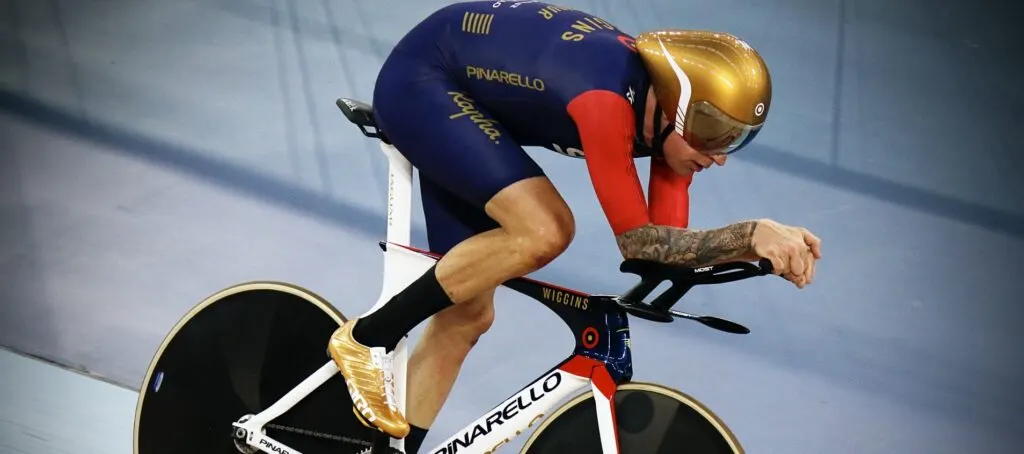
FTP is probably the most important performance measure in cycling. Two other measures deserve a mention here: lactate threshold and maximal oxygen uptake. How these three values relate to one another is one of the broadest areas of physiological research in sport science.
A simple example: imagine you go on a two-hour ride or training session and afterwards tell a friend that you averaged 200 W. If your friend’s FTP is 180 W, they will know immediately that your numbers are better.
Now imagine your friend’s FTP is 350 W. This time you will realise that your friend is a far higher-level rider than you. The key point is that, for cyclists, body and bike can be described by one shared, easily understood parameter.
Wrapping Up
As we have seen, power eliminates many factors that could mislead us and gives us a common value to use in training.
Alongside FTP, another widely used parameter is the best time over a set distance. The most common example is the 40 km time trial: as the name suggests, the rider covers 40 km as fast as possible and the time is recorded as the test result.
Another parameter is the setting of power zones, which is very useful for planning training. It is a broad subject that deserves an article of its own.
For now we have covered the most basic values we can measure and calculate on the bike. For this data to translate into performance, we have to draw the right conclusions from it.
At elite level: threshold power in professional road cyclists is generally reported at around 5.5 to 6.5 W/kg, and at that level FTP alone does not explain the differences between riders. Elite teams therefore increasingly monitor critical power and W′ (the limited amount of work that can be done above threshold), as well as “durability”: how well a rider maintains their power profile after three to four hours of work. Races are often decided not on fresh legs but after thousands of kilojoules.
Data are essential for an athlete’s development, but only when they are analysed correctly. Otherwise they can steer training in the wrong direction, and the athlete may struggle to make up the lost time.
For examples of sessions planned with power and FTP, see Why smart cyclists train with watts.
References
- Allen, H., & Coggan, A.R. (2010). Training and Racing with a Power Meter (2nd ed.). VeloPress.
- Jones, A.M., & Vanhatalo, A. (2017). The ‘Critical Power’ Concept: Applications to Sports Performance with a Focus on Intermittent High-Intensity Exercise. Sports Medicine, 47(Suppl 1), 65-78.

Hüseyin Akbulut is the founder of Sporeus and author of THRESHOLD (EŞİK), a 540-page Turkish-language book on endurance science.
- 540pp THRESHOLD Book
- MSc Sport Sciences
- Marmara University
Heart Rate and Power in Cycling
Heart rate is the number of times the heart beats per minute; you may also know it as pulse.
Power (Watts)
If you are reading this, you are probably wondering how to use these values in your training. So how do we measure power in sport, and what does it tell us?
The Power Formula
To be more precise, the force you apply to the pedals multiplied by the distance it moves gives you work. If work is W, force is F and distance is D, then W = F × D.
Cadence (RPM)
In the equation above, V represents how fast you turn the pedals or crank arms while applying force. This rate of rotation is called cadence and is expressed in revolutions per minute, or RPM.
Kilojoules (kJ)
Kilojoules measure the work done during a ride. One watt equals one joule of work per second, and the total is expressed in kilojoules. Because the mechanical efficiency of the human body on a bike is about 20 to 25%, each kilojoule delivered to the…