Preview
Hüseyin Akbulut, MSc (2026). Jonas Vingegaard and the Lactate Threshold Pacing of an Elite Stage-Race Cyclist. Sporeus. Retrieved, September 30, 2026. https://sporeus.com/en/science/jonas-vingegaard-lactate-threshold-pacing-stage-race/
The Athlete in One Paragraph
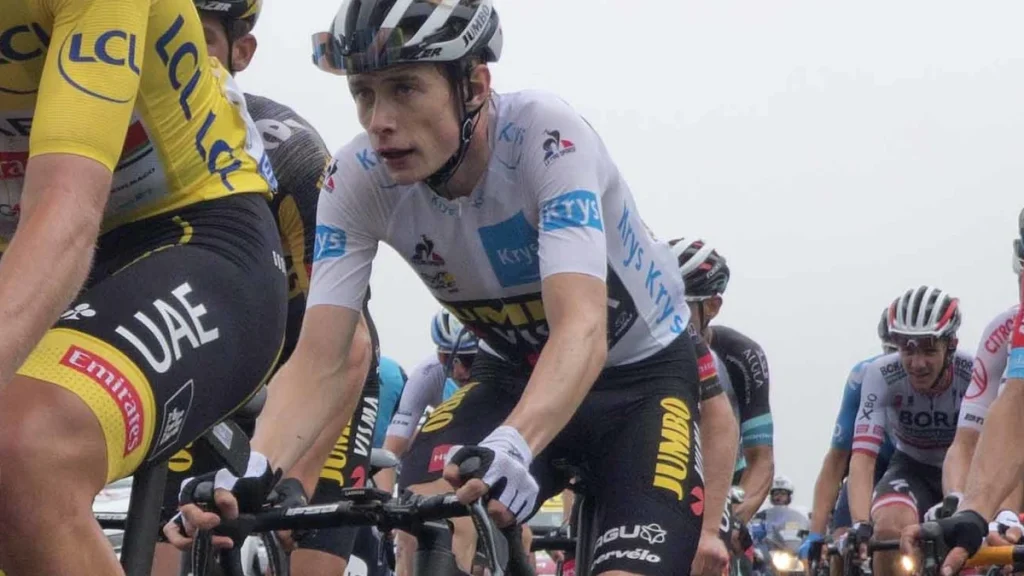
Jonas Vingegaard Hansen (b. 10 December 1996, Hillerslev, Denmark) is a road cyclist for Visma–Lease a Bike and the Danish national team. Listed at 1.75 m and ~60 kg, he is a pure stage-race general-classification rider whose multiple Tour de France victories sit on a profile defined less by a single peak watt number and more by his ability to hold a remarkably high fraction of VO₂max for hours at a time across three weeks of racing. The interesting case for sport science is the tactical-physiological intersection that decides every grand tour: lactate-threshold-based pacing across a stage race — the discipline of riding sub-threshold for the bulk of every stage, punctuating it with surgical supra-threshold attacks, and protecting the muscle-glycogen and central-nervous-system reserves that decide the third week. Below the topic phrase, every other variable a stage-race rider trains is essentially a route to the same destination.
Table of Contents
The Physiology — what threshold pacing in a grand tour actually is
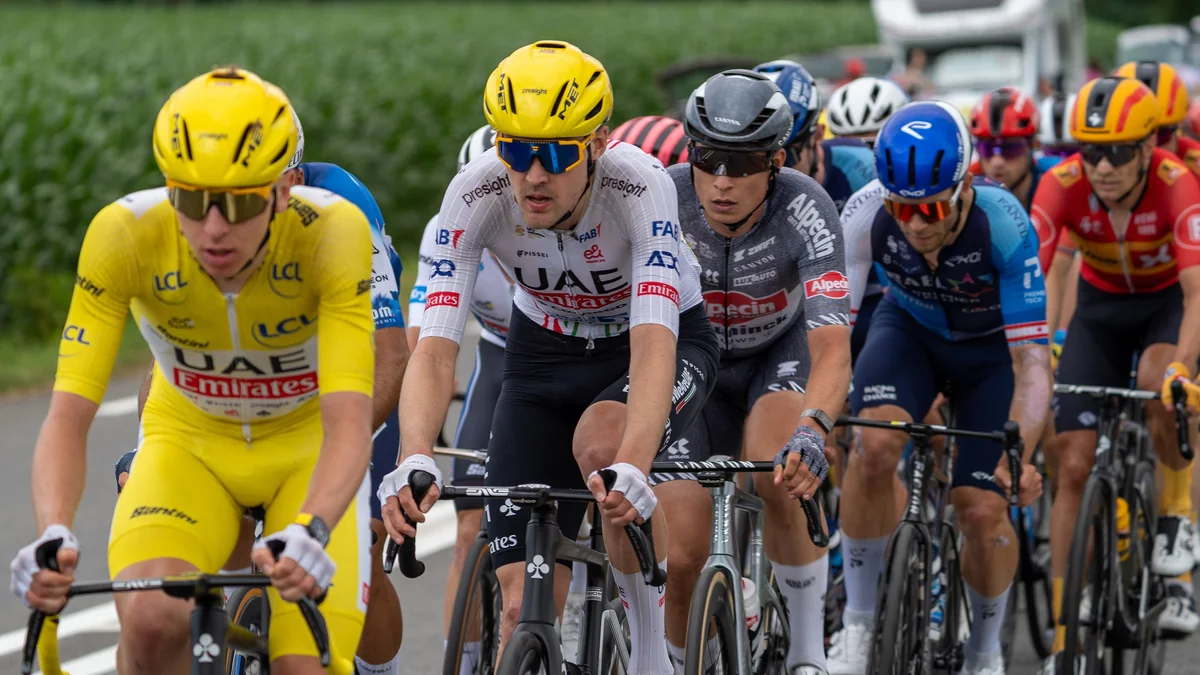
The maximal lactate steady state (MLSS) is the highest exercise intensity at which lactate production and lactate clearance remain in equilibrium [1]. Faude and colleagues’ review distinguished MLSS from the various submaximal lactate thresholds — fixed-concentration, individual-anaerobic, ventilatory — and concluded that MLSS, while methodologically demanding to measure, remains the gold-standard reference for what is sustainable for 30–60 minutes of continuous effort [1]. Above MLSS, blood lactate accumulates uncontrollably and effort becomes self-limiting; below it, the athlete can hold a remarkably high steady-state intensity for hours.
For a single race against the clock, the answer is to ride at threshold for as long as the distance permits. For a three-week grand tour, the answer is the opposite: ride well below threshold for the bulk of every stage, because every minute spent at supra-threshold intensity costs muscle-glycogen and accelerates cumulative fatigue across the 21-day window [2, 5]. Billat’s lactate-measurement review formalised the principle that performance prediction in endurance sport is not about how high VO₂max climbs but about how high a fraction of it can be held for the relevant duration [2].
The Joyner and Coyle framework names the three controlling variables: VO₂max as the ceiling, the lactate threshold as the sustainable fraction of that ceiling, and economy as the oxygen cost of the pace [3]. In a grand tour the third variable becomes survival-defining, because economy determines how much glycogen each kilometre of submaximal riding consumes; the rider with cheaper kilometres arrives at the third-week climbs with a deeper substrate reserve.
The fourth variable, harder to measure but central to grand-tour racing, is the cost of crossing threshold: Buchheit and Laursen’s HIIT framework demonstrated that the well-trained aerobic system supports faster recovery from supra-threshold efforts, because the aerobic machinery is what restores phosphocreatine and clears the lactate produced by the attack [4]. A rider whose aerobic system is highly developed pays a smaller residual cost for each attack and can repeat the attacks within the same stage and across consecutive stages.
The Case — Vingegaard as MLSS-anchored pacer
For a 60 kg rider in a three-week grand tour, the metabolic accounting is unforgiving: muscle glycogen stores are finite, the daily refuel window is narrow, and every supra-threshold minute compounds across stages. Vingegaard’s competitive identity — patient stage-by-stage management, decisive but sparingly used attacks on summit finishes — is consistent with a pacing model in which threshold is treated as a ceiling not to be casually crossed [1, 5]. The economy of that approach is not visible in any single stage’s results; it is visible in the difference between week one and week three, when rivals who attacked too freely begin to lose minutes that cannot be recovered.
Stølen and colleagues’ physiology-of-soccer review, while written for football, names a principle that translates directly: in any sport with sustained submaximal demand and intermittent supra-threshold work, the position of the lactate threshold relative to VO₂max is more predictive than VO₂max alone [5]. A grand-tour climber with a threshold at a high fraction of VO₂max can hold a tempo that drops rivals while still riding sub-threshold himself; the rivals are forced into supra-threshold work just to stay on the wheel, and the metabolic bill comes due across the following days.
The third-week phenomenon — riders gaining minutes on the cumulative ledger while appearing to ride conservatively — is the visible signature of conservative threshold pacing across the prior fortnight. Vingegaard’s grand-tour results pattern is descriptively consistent with this physiological model, though no peer-reviewed study isolates his specific MLSS profile [3, 4].
(Performance data: UCI / ProCyclingStats)
What This Means for the Reader
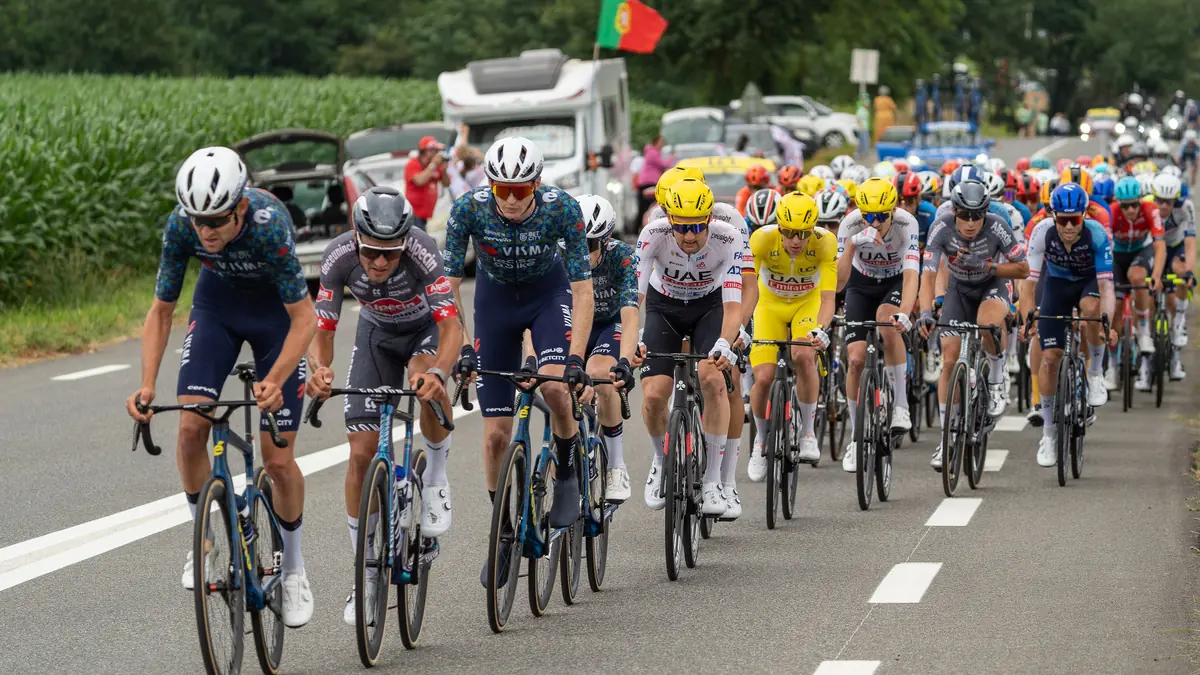
For the amateur endurance cyclist or runner preparing for a multi-day event — a sportive series, a tour, a stage race — the takeaway is that pacing discipline is the variable most often left untrained. VO₂max gets the headline; the lactate threshold gets the interval block; the discipline of staying below threshold when the legs feel good rarely gets explicitly trained at all.
The training implication is that long, sub-threshold rides — Zone 2 in heart-rate language, conversational pace in feel — are not “junk miles” but the substrate that determines whether the athlete arrives at the closing climbs of stage three with reserves intact [3, 4]. The amateur who trains every long ride at tempo intensity will produce a different physiological profile than the amateur who trains the same hours predominantly sub-threshold; the difference appears not in the first hour but in the fifth, sixth, and seventh.
The diagnostic question for the amateur stage-race aspirant: at what fraction of your threshold heart rate can you complete a four-hour ride and still hold the same wattage in the final hour as in the first? The fraction — not the peak — predicts the multi-day outcome.
References
- Faude O, Kindermann W, Meyer T. (2009). Lactate threshold concepts: how valid are they? Sports Medicine, 39(6): 469–490. doi:10.2165/00007256-200939060-00003
- Billat VL. (1996). Use of blood lactate measurements for prediction of exercise performance and for control of training. Sports Medicine, 22(3): 157–175. doi:10.2165/00007256-199622030-00003
- Joyner MJ, Coyle EF. (2008). Endurance exercise performance: the physiology of champions. The Journal of Physiology, 586(1): 35–44. doi:10.1113/jphysiol.2007.143834
- Buchheit M, Laursen PB. (2013). High-intensity interval training, solutions to the programming puzzle. Sports Medicine, 43(5): 313–338. doi:10.1007/s40279-013-0029-x
- Stølen T, Chamari K, Castagna C, Wisløff U. (2005). Physiology of soccer: an update. Sports Medicine, 35(6): 501–536. doi:10.2165/00007256-200535060-00004
Performance data (descriptive only): UCI / ProCyclingStats.
The Athlete in One Paragraph
Jonas Vingegaard Hansen (b. 10 December 1996, Hillerslev, Denmark) is a road cyclist for Visma–Lease a Bike and the Danish national team. Listed at 1.75 m and ~60 kg, he is a pure stage-race general-classification rider whose multiple Tour de France victories sit on a…
The Physiology — what threshold pacing in a grand tour actually is
The maximal lactate steady state (MLSS) is the highest exercise intensity at which lactate production and lactate clearance remain in equilibrium [1]. Faude and colleagues' review distinguished MLSS from the various submaximal lactate thresholds — fixed-concentration, individual-anaerobic, ventilatory — and concluded that MLSS, while methodologically…
The Case — Vingegaard as MLSS-anchored pacer
For a 60 kg rider in a three-week grand tour, the metabolic accounting is unforgiving: muscle glycogen stores are finite, the daily refuel window is narrow, and every supra-threshold minute compounds across stages. Vingegaard's competitive identity — patient stage-by-stage management, decisive but sparingly used attacks…
What This Means for the Reader
For the amateur endurance cyclist or runner preparing for a multi-day event — a sportive series, a tour, a stage race — the takeaway is that pacing discipline is the variable most often left untrained. VO₂max gets the headline; the lactate threshold gets the interval…