Preview
Emre Köse (2026). Novak Djoković and the Late-Career Recovery Protocols of an Elite Tennis Player. Sporeus. Retrieved, October 24, 2026. https://sporeus.com/en/science/novak-djokovic-tennis-late-career-recovery-protocols/
The Athlete in One Paragraph
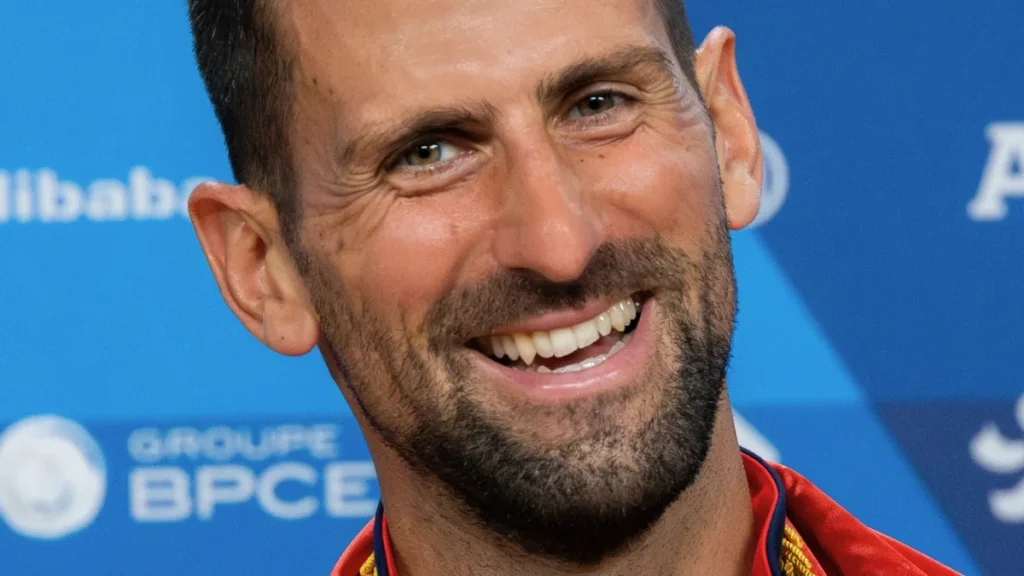
Novak Djoković (b. 1987-05-22, Belgrade, Serbia) is a professional tennis player on the ATP tour and a long-time fixture of the Serbia Davis Cup squad. Listed at 1.88 m and ~77 kg, he has accumulated more Grand Slam singles titles than any other man in the history of the sport, with the bulk of those titles arriving after the age at which most ATP players have already drifted out of the top ten. The interesting case for sport science is not any single backhand or any single five-set comeback but the underlying physiological infrastructure that allows a 35-plus-year-old to play seven best-of-five matches across a fortnight, against opponents who are often a decade younger, and arrive at the final with the legs still moving. The variable underneath that story is late-career recovery, how sleep architecture, hydration discipline, nutrition cycling, and the management of inter-match windows interact to keep an aging system from running into the wall that the calendar would otherwise build.
Table of Contents
The Physiology: what late-career recovery actually requires
A best-of-five match at a Grand Slam routinely lasts three to five hours; the metabolic demand sits inside the intermittent high-intensity profile that Stølen, Chamari, Castagna and Wisløff describe for soccer, with repeated sub-maximal sprints, rapid changes of direction, and submaximal aerobic ticking-over between points [1]. For an athlete in the 35-plus bracket the question is not whether the system can produce the work in any single match, the elite player can, but whether the recovery window between matches, often less than 48 hours, is long enough to refill what was emptied. Joyner and Coyle’s framework on champion endurance physiology emphasises that the limiting factors at the elite tail are not raw aerobic ceilings but the rate-limiting steps in recovery: substrate replenishment, fluid balance, neuromuscular re-priming, and the central-fatigue clearance that allows the next match to begin from a non-degraded baseline [2].
Buchheit and Laursen’s high-intensity-interval-training framework, written for the prescription of work, can be read backwards as a framework for the prescription of rest: the physiological cost of a session, the time it takes for cardiac, neuromuscular and metabolic markers to return to baseline, scales with the intensity, density, and duration of the work that produced it [3]. For a five-set match the cost is large; for a fortnight of seven such matches the cumulative cost is enormous unless the inter-match windows are programmed with the same care that the on-court training is programmed.
Gabbett’s training–injury prevention paradox adds the load-management layer [4]. The athletes who survive are not those who train least but those whose chronic load supports the acute spikes that competition imposes, and who do not let chronic load drift away in down-weeks. For a tennis player the chronic-load substrate built across a season, endurance base, eccentric strength reserve, tendon stiffness, is what determines whether the seventh match in a fortnight is still recoverable, or whether it is the one that breaks the system.
Helgerud, Engen, Wisløff and Hoff’s classic on aerobic endurance training in soccer reminds us that a high VO₂max base is not just about running further; it is about recovering faster between high-intensity efforts, because aerobic capacity governs phosphocreatine resynthesis and lactate clearance during the sub-maximal periods that punctuate the high-intensity ones [5]. For an aging tennis player, the aerobic base is the silent infrastructure under every recovery protocol; without it, no amount of sleep or hydration can restore the system inside 48 hours.
The takeaway is that late-career recovery is not a single technique but a stack, aerobic substrate, chronic-load reserve, recovery-window programming, sleep architecture, and nutrition cycling and the athletes who play deep into their thirties have not bought the longevity with any one of them but with the disciplined maintenance of all of them simultaneously.
The Case: Djoković as late-career recovery exemplar
For a 1.88 m / 77 kg ATP player still winning slams in his mid-thirties, the underlying profile is consistent with an aerobic ceiling and recovery infrastructure that have not been allowed to drift; the publicly discussed elements of his routine, strict sleep windows, hydration protocols, gluten-free nutrition cycling, breathing and mobility work, and the use of inter-match windows for tissue work and active recovery, map onto exactly the variables that the literature highlights as rate-limiting in recovery between repeated high-intensity bouts [2, 3]. None of these elements is unusual at the elite level; the combination, sustained without interruption across a decade-plus, is.
The chronic-load layer is the one most easily missed by spectators. The athlete who arrives at a slam with a robust chronic-load base built across the prior months absorbs the acute spike of seven best-of-five matches with a smaller fraction of his recovery capacity than the athlete who arrives undercooked [4]; this is the same paradox Gabbett identified in team sport, applied to a calendar that compresses seven competitive efforts into fourteen days.
The aerobic-base layer matters mechanically. A higher aerobic substrate accelerates the sub-maximal recovery between points and between games within a single match, which means the within-match cost is lower, which means the between-match recovery starts from a less-depleted baseline [1, 5]. Across a fortnight this compounds; the athlete with the larger aerobic ceiling pays a smaller cumulative tax than the athlete who relies on glycolytic capacity alone.
(Match data: ATP) Djoković’s slam-final appearances and five-set win-rate after age 33 sit at or above his prior-decade benchmarks, with the discriminator being inter-match availability rather than any single peak match.
What This Means for the Reader
For a developing or amateur player thinking past the next season, the lesson is that late-career capacity is built every year by refusing to let the chronic-load base, the aerobic ceiling, or the recovery infrastructure drift in the off-season [2, 3, 4, 5]. A tapered career-end is not what produces longevity; the disciplined maintenance of training stimulus across decades is.
Practical assessment: track three indicators across the year, a sub-maximal aerobic reference (five-minute steady-state heart-rate at a fixed pace), a chronic-load consistency metric (rolling four-week training volume), and an inter-session recovery marker (morning HRV trend or sleep continuity). Drift in any of the three is the early signal that the recovery window between competitive efforts is shrinking.
The diagnostic question for the long-career player: am I still recovering between matches the way I did three years ago, or am I quietly compounding deficit?
References
- Stølen T, Chamari K, Castagna C, Wisløff U. (2005). Physiology of soccer: an update. Sports Medicine, 35(6): 501–536. doi:10.2165/00007256-200535060-00004
- Joyner MJ, Coyle EF. (2008). Endurance exercise performance: the physiology of champions. Journal of Physiology, 586(1): 35–44. doi:10.1113/jphysiol.2007.143834
- Buchheit M, Laursen PB. (2013). High-intensity interval training, solutions to the programming puzzle. Sports Medicine, 43(5): 313–338. doi:10.1007/s40279-013-0029-x
- Gabbett TJ. (2016). The training–injury prevention paradox: should athletes be training smarter and harder? British Journal of Sports Medicine, 50(5): 273–280. doi:10.1136/bjsports-2015-095788
- Helgerud J, Engen LC, Wisløff U, Hoff J. (2001). Aerobic endurance training improves soccer performance. Medicine and Science in Sports and Exercise, 33(11): 1925–1931. doi:10.1097/00005768-200111000-00019
Match-context data (descriptive only): ATP.

Tennis coach at Istanbul Beykoz Tennis Club for over 12 years. Graduate of the Coaching Education programme at Marmara University Faculty of Sport Sciences.
- 12+ Years on Court
- Graduate of Marmara University Faculty of Sport Sciences
The Athlete in One Paragraph
Novak Djoković (b. 1987-05-22, Belgrade, Serbia) is a professional tennis player on the ATP tour and a long-time fixture of the Serbia Davis Cup squad. Listed at 1.88 m and ~77 kg, he has accumulated more Grand Slam singles titles than any other man in…
The Physiology: what late-career recovery actually requires
A best-of-five match at a Grand Slam routinely lasts three to five hours; the metabolic demand sits inside the intermittent high-intensity profile that Stølen, Chamari, Castagna and Wisløff describe for soccer, with repeated sub-maximal sprints, rapid changes of direction, and submaximal aerobic ticking-over between points…
The Case: Djoković as late-career recovery exemplar
For a 1.88 m / 77 kg ATP player still winning slams in his mid-thirties, the underlying profile is consistent with an aerobic ceiling and recovery infrastructure that have not been allowed to drift; the publicly discussed elements of his routine, strict sleep windows, hydration…
What This Means for the Reader
For a developing or amateur player thinking past the next season, the lesson is that late-career capacity is built every year by refusing to let the chronic-load base, the aerobic ceiling, or the recovery infrastructure drift in the off-season [2, 3, 4, 5]. A tapered…