Preview
Hüseyin Akbulut, MSc (2026). Heart Rate: Maximum, Resting and What They Mean for Training. Sporeus. Retrieved, November 22, 2026. https://sporeus.com/en/sport/heart-rate-maximum-resting-training/
As always, we can picture the human heart as a pump and treat heart rate as the number of heartbeats per minute. To increase a pump’s output, we have to increase either the amount of blood it sends out with each beat or the number of beats per minute.
The reason is that the body’s tissues must be supplied with enough oxygen.
The route seen in athletes, and the more efficient one, is to increase the amount of blood the heart sends out with each beat (stroke volume).
When you judge a pump, the criterion is usually something like litres per hour. For the cardiovascular system, oxygen transport capacity is a useful criterion. One example is maximal oxygen uptake, VO2max, expressed in ml/kg/min.
Maximum and Minimum Heart Rate
As you train, the heart becomes more efficient at delivering more blood and more oxygen to the muscles. During exercise, heart rate rises in a nearly linear relationship with intensity until it approaches its maximum.
Maximum heart rate as the upper limit
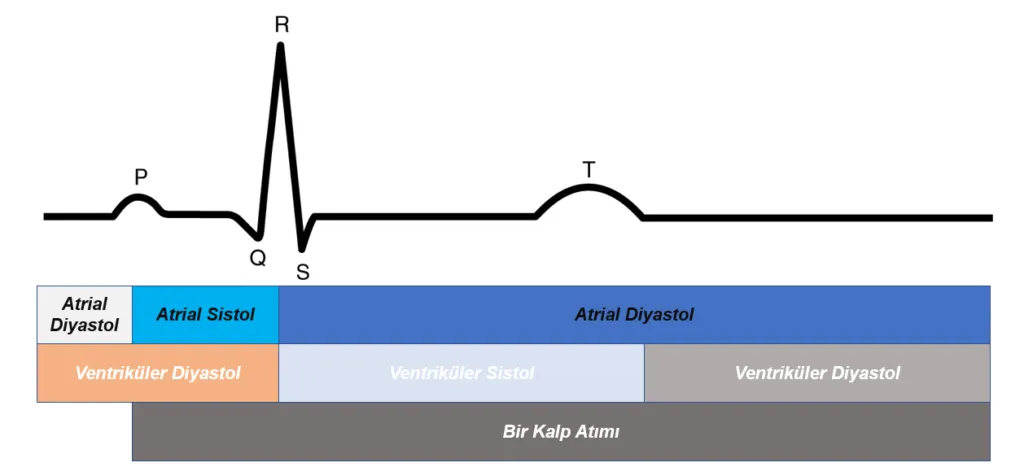
There is an upper limit to how fast the human heart can beat. As heart rate rises, the filling time between beats (diastole) shortens; 180 beats per minute means three beats per second, which leaves the heart very little time to fill. As the maximum approaches, heart rate can no longer respond to further increases in intensity and reaches a plateau.
Maximum heart rate declines with age and in adults usually lies between 150 and 200 beats per minute. It can be estimated with moderate accuracy using formulas such as:
220 − age
205.8 − 0.685 × age (for men)
206 − 0.88 × age (for women)
The first formula (220 − age) is a general rule of thumb; the other two are equations derived for men and for women respectively, from specific study populations. Even so, the error of all these estimates for an individual is large.
That is why maximum heart rate measured during a graded exercise test, such as a maximal oxygen uptake test, gives more accurate results. For more on maximal oxygen uptake, see our complete guide to VO₂max.
Resting heart rate as the lower limit
Resting heart rate is one of the clearest differences between trained athletes and sedentary people.
Trained athletes, especially endurance athletes, usually have lower resting heart rates; in endurance athletes the resting rate is often around 40-50 beats per minute.
In sedentary adults the resting heart rate is usually between 60 and 80. Individual variation in the heart is very common, however.
Because trained athletes pump a larger volume of blood with each beat, they can supply their tissues at a lower resting heart rate.
So at rest they can deliver the blood flow the body’s metabolism needs with fewer beats.
At the elite level: resting heart rates in the 30s can be seen in elite endurance athletes. For a long time this “athlete’s bradycardia” was explained solely by increased parasympathetic (vagal) activity; a study by D’Souza and colleagues (2014), however, showed that training also changes the intrinsic electrical properties of the sinus node. In practice, morning heart rate and heart rate variability in elite athletes are monitored not as single values but against the athlete’s own baseline: marked deviations lasting several days can point to inadequate recovery or the onset of illness.
References
- Robergs, R.A., & Landwehr, R. (2002). The Surprising History of the “HRmax=220-age” Equation. Journal of Exercise Physiology Online, 5(2), 1-10.
- Inbar, O., Oten, A., Scheinowitz, M., Rotstein, A., Dlin, R., & Casaburi, R. (1994). Normal cardiopulmonary responses during incremental exercise in 20-70-yr-old men. Medicine & Science in Sports & Exercise, 26(5), 538-546.
- Gulati, M., Shaw, L.J., Thisted, R.A., Black, H.R., Bairey Merz, C.N., & Arnsdorf, M.F. (2010). Heart Rate Response to Exercise Stress Testing in Asymptomatic Women: The St. James Women Take Heart Project. Circulation, 122(2), 130-137. https://doi.org/10.1161/CIRCULATIONAHA.110.939249
- D’Souza, A., Bucchi, A., Johnsen, A.B., et al. (2014). Exercise training reduces resting heart rate via downregulation of the funny channel HCN4. Nature Communications, 5, 3775.

Hüseyin Akbulut is the founder of Sporeus and author of THRESHOLD (EŞİK), a 540-page Turkish-language book on endurance science.
- 540pp THRESHOLD Book
- MSc Sport Sciences
- Marmara University
Maximum and Minimum Heart Rate
As you train, the heart becomes more efficient at delivering more blood and more oxygen to the muscles. During exercise, heart rate rises in a nearly linear relationship with intensity until it approaches its maximum.
Maximum heart rate as the upper limit
There is an upper limit to how fast the human heart can beat. As heart rate rises, the filling time between beats (diastole) shortens; 180 beats per minute means three beats per second, which leaves the heart very little time to fill. As the maximum…
Resting heart rate as the lower limit
Resting heart rate is one of the clearest differences between trained athletes and sedentary people.